

In the modern landscape of aesthetic medicine, the most important instrument a doctor possesses isn’t a laser or a high-end injectable—it is the ability to say “No.”
For the past decade, the cosmetic industry has moved at the speed of social media. Trends like the “fox eye,” “Russian lips,” or “liquid rhinoplasty” sweep through the public consciousness, creating a retail-like environment where patients walk into clinics expecting to purchase a specific feature. As a doctor, I have watched this evolution with a mix of fascination and caution. While technology has never been better, the pressure to conform to a homogenised, “filtered” beauty standard has never been higher.
I have realised that my greatest responsibility to my patients lies in my role as a gatekeeper. Today, I am advocating for a shift in how we view beauty. I am choosing subtlety over trends and harmonisation over augmentation. Here is why, as a doctor, I believe the power of “No” is the ultimate tool for patient satisfaction.
The Clinical Danger of the “Trend-Driven” Face
The primary issue with following aesthetic trends is that they are, by definition, temporary. However, the medical interventions used to achieve them often are not.
The Illusion of Dissolvability
For years, the industry marketed hyaluronic acid fillers as completely temporary and easily reversible. While we do have dissolving agents, modern imaging (such as facial MRIs) shows that filler can persist in the tissue for years, sometimes migrating far from the original injection site. When a doctor says “Yes” to repeated trending treatments—like over-filling the cheeks to achieve a “snatched” look—they risk creating “Filler Fatigue.” This is where the skin becomes stretched and the natural facial ligaments are weighed down, eventually requiring more invasive surgery to correct.
Anatomical Subunit Overfill (ASO)
When we focus on a single trending feature, we often ignore the Anatomical Subunits of the face. For example, over-injecting the lips without considering the distance between the nose and the upper lip (the philtrum) can create an unnatural “muzzle” appearance. As a doctor, my job is to look at the transition zones. If a treatment disrupts the natural flow from the cheek to the lower eyelid, it is my clinical duty to say “No.”
Defining Facial Harmonisation: The Science of “Self”
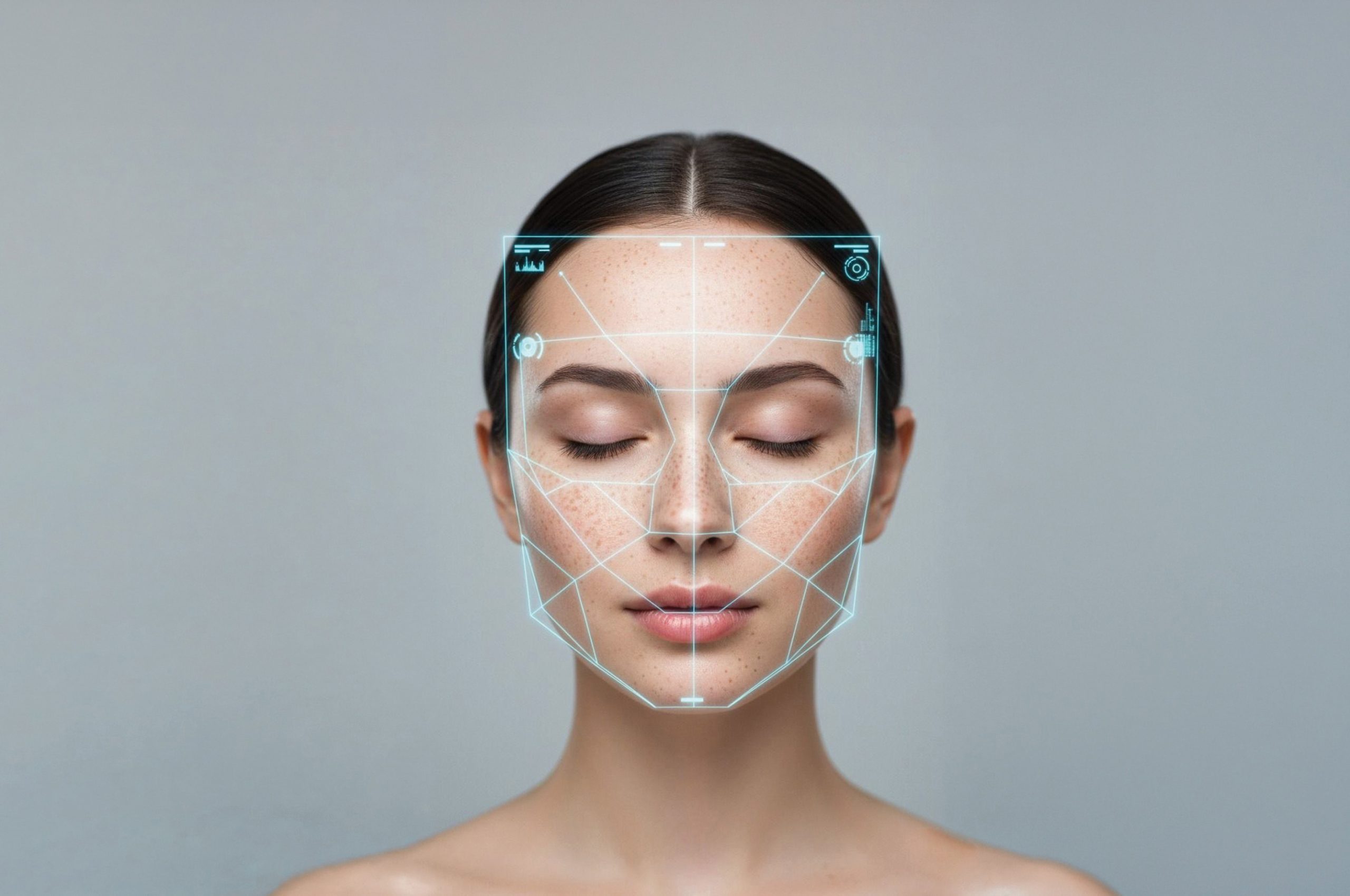
Facial harmonisation is a medical philosophy that treats the face as a three-dimensional, dynamic system of bone, fat, muscle, and skin. It is the antithesis of the “cookie-cutter” approach.
The Golden Ratio vs. Individual Anatomy
While we often reference the “Golden Ratio” in aesthetics, a doctor knows that mathematical perfection does not always equal beauty. True harmonisation is about proportionality. If a patient has a delicate jawline, a “bold” trending chin filler will look like an implant rather than a natural part of their face. Harmonisation is the art of restoring what time has taken—such as lost bone density in the temples or chin—to bring the features back into a balanced relationship with one another.
Static vs. Dynamic Beauty
A “trend” is usually captured in a static photograph. But a human being lives in motion. We speak, we laugh, and we express complex emotions. A doctor must evaluate how an injectable will behave when the patient is animated. If a “bold statement” filler looks like a hard lump when a patient smiles, it is a failure of harmonization. Subtlety ensures that the work remains “quiet” even during the most animated conversation.
The Psychology of the Aesthetic Consultation
As a doctor, the consultation is the most vital part of the procedure. It is where I assess not just the skin, but the patient’s motivations.
Managing Expectations in a Filtered World
We are seeing a rise in “Snapchat Dysmorphia,” where patients desire to look like their digitally altered images. These images often defy the laws of human anatomy—removing the “nasolabial folds” entirely or creating eyes that are physically impossible to achieve without damaging the surrounding tissue. In these cases, “No” is an act of medical ethics. It is about protecting the patient from chasing an impossible, digital ghost.
The Confidence of Subtlety
There is a profound psychological shift happening in 2026. Patients are starting to realize that “looking fake” is a sign of insecurity, while “looking refreshed” is a sign of self-assurance. By choosing subtlety, I am helping my patients project a version of themselves that feels authentic. When a patient returns and says, “My friends told me I look like I’ve been on a great holiday, but they couldn’t figure out why,” I know I have succeeded as a doctor.
The Physician’s Toolkit for Subtle Rejuvenation
How do we achieve a “bold statement” through subtle work? It requires a sophisticated understanding of different “bio-materials” and how they interact with human tissue.
Biostimulators: The “Quiet” Revolution
Instead of “filling” a hole with a gel, I am increasingly using biostimulators. These treatments (like Sculptra or Radiesse) act as a signal to the body to produce its own Type I collagen. The results are not seen for months, which is the ultimate “quiet” approach. Because it is the patient’s own collagen providing the lift, the results are entirely natural in texture and movement.
Micro-Dosing and Precision
The “frozen” look of the early 2000s is a relic of the past. Today, I use Micro-Botox (or Baby Botox). By using smaller units in more precise locations, we can relax the muscles that cause deep “angry” lines while preserving the muscles that allow for warmth and expression. It is the difference between a mask and a masterpiece.
The Importance of the “Canvas”
No amount of filler can hide poor skin quality. As a doctor, I often insist on a “Skin-First” approach. By using medical-grade skincare and energy-based devices (like lasers or Morpheus8), we can tighten the skin and improve its reflectivity. When the skin is healthy, we actually need significantly less injectable product to achieve a “wow” factor.
The Long-Term Vision: Aging with Agency
Aesthetic medicine should not be a “quick fix”; it should be a lifelong strategy for aging with grace and agency.
The Two-Year Plan
In my practice, I don’t believe in doing everything at once. This “staged” approach is part of the power of “No.” By adding small amounts of product over several months, the facial tissues have time to adapt and integrate. This prevents the “sudden” change that often leads to patient regret. We are building a foundation, not just painting a wall.
The Beauty of “Character”
There is a dangerous trend in aesthetics toward erasing all signs of a life lived. As a doctor, I find beauty in the subtle lines around the eyes that indicate a lifetime of laughter. I believe in softening these lines, not deleting them. A face without a single wrinkle is a face without a story. Subtlety allows us to keep the story while removing the “tiredness.”
Why “No” is the Ultimate Statement of Care
When a doctor says “No” to a trending procedure, it isn’t a rejection of the patient; it is an investment in the patient’s future. It is a promise that I will not let you become a “trend” that you will regret in five years.
The “Quiet Cosmetic” is not a lack of change. It is a highly technical, medically sound approach to restoration. It requires more skill to be subtle than it does to be obvious. It requires an understanding of light, shadow, anatomy, and psychology.
By choosing facial harmonisation, we are reclaiming the human face from the pressures of perfection. We are proving that the most “bold” statement a person can make in 2026 is to look like a healthy, vibrant, and refreshed version of themselves.
In my clinic, we don’t just change appearances; we restore the confidence that comes from knowing you look your best—without looking like someone else. Subtlety is the new luxury. And as a doctor, it is a privilege to provide it.
Key Takeaways from a Medical Perspective:
• Harmonisation over Hype: Focus on how features balance each other, not on isolated trends.
• The Science of Skin: Prioritise skin health to reduce the need for heavy injectables.
• Respect the Anatomy: Every face has a limit; exceeding it leads to “filler fatigue.”
• The Long Game: Real beauty is a marathon of subtle maintenance, not a sprint of drastic changes.
• Trust the Professional: A doctor who says “No” is a doctor who has your best interests at heart.
– Dr Hemamalini Rajinikanth is a Certified Clinical Cosmetologist and Director, Dr Aesthetix International Cosmetic Clinic, Khader Nawas Khan Road & Nungambakkam, Chennai.