

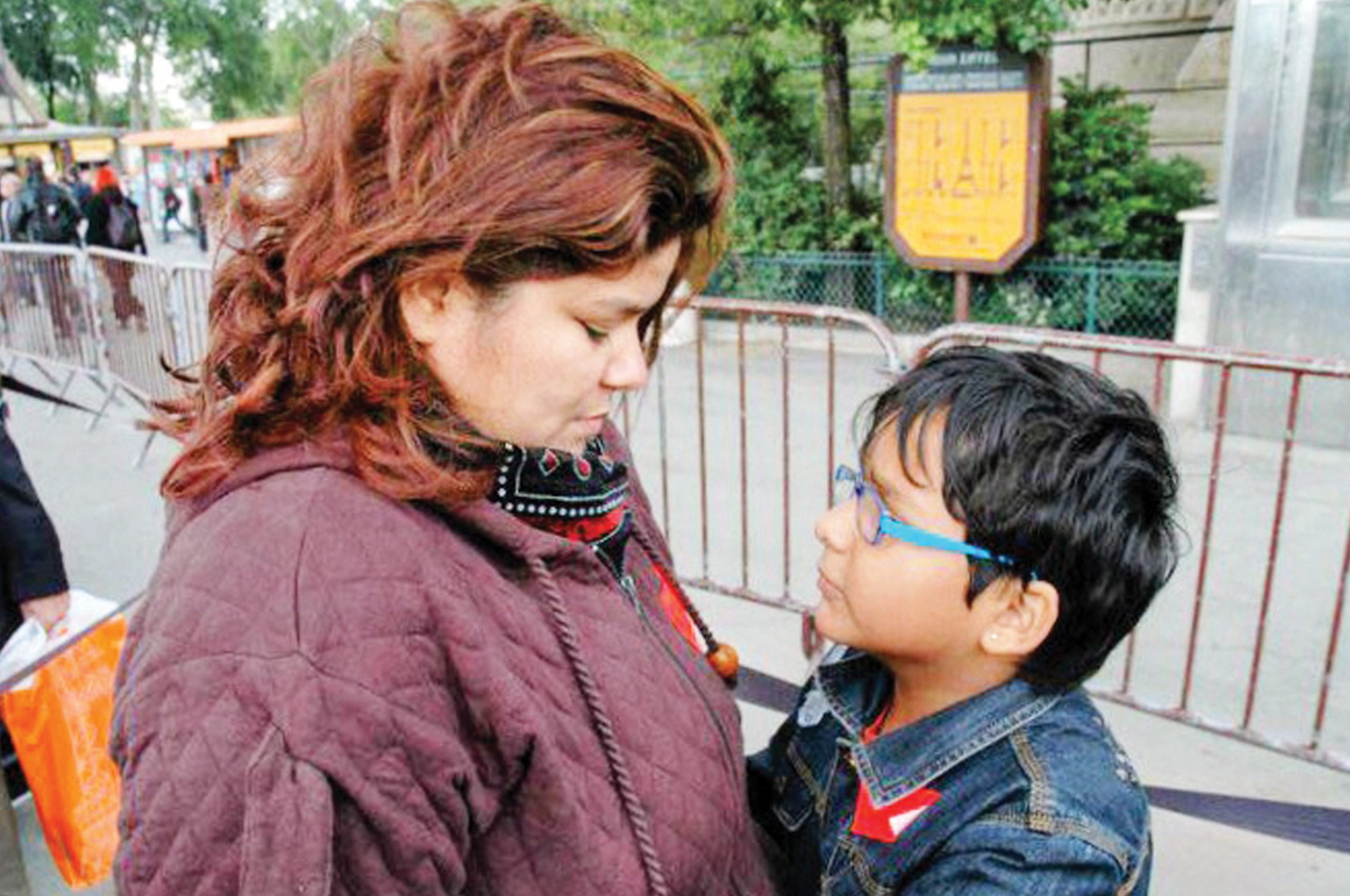
Iremember being scared. Not the kind of fear you speak about easily, but the quiet, unsettling kind that sits inside your chest and whispers questions you don’t yet have answers to. I was scared to become a mother. Scared of being responsible for another life when I was still trying to understand my own. I wasn’t sure if I was ready, or if anyone ever truly is. And yet, somewhere in that fear, something shifted.
The moment I stepped into motherhood, I didn’t feel like I had lost myself. In fact, I felt like I had stepped into a new identity, one that gave me a strange, unexpected sense of power. I wasn’t just me anymore. I was someone’s mother. And that identity, instead of shrinking me, expanded me.
There is a narrative we have been fed for generations, that motherhood is about sacrifice. That to be a good mother, you must give up parts of yourself. Your desires. Your needs. Your identity.
But I want to say this to you, directly and honestly, without dressing it up.
Motherhood is not about sacrificing yourself. Motherhood is about finding the courage to own yourself. Because when you are raising another human being, you are constantly being invited to grow, to reflect, to transform. You are forced to meet parts of yourself you may have otherwise ignored. And in that process, if you allow it, you do not disappear, you evolve. In my early years of motherhood, my world felt so complete with my children that I did not even pause to ask if anyone was seeing me. I did not look outward for validation. My universe was right there, in their tiny hands, their dependence, their presence.
And yet, there is a truth most mothers carry quietly. Exhaustion.
Not just physical, but emotional exhaustion. The kind that comes from constantly holding space, constantly thinking ahead, constantly trying to make things right. Because that is what mothers do, is it not. We carry this deep, almost instinctive desire to turn every wrong in our child’s life into a right. To cushion their falls, to soften their pain, to rewrite their experiences. But somewhere along the way, we forget. We are human too. We cannot control everything. We cannot fix everything. And we are not meant to.
As a therapist today, I see this pattern over and over again in mothers. The silent pressure. The invisible load. The belief that they must hold everything together. And underneath it all, a deep yearning to just be seen. Seen not just as a mother. But as a person.
As the years passed, motherhood did not remain the same for me. It evolved, just as my children did. My boys are now 21 and 23, and if there is one thing I have learnt, it is this. Motherhood is not static. It demands that you grow with your children. It takes effort. Real effort. To change your instincts. To not treat a 23-year-old like a child when every part of you still wants to protect him the same way you did when he was three. To understand their individuality, their choices, their emotional worlds. Motherhood is not just about raising children.
It is about constantly relearning how to be a mother. And in this journey, there have been moments, simple, quiet, deeply personal moments, that have defined joy for me. The first time I held my firstborn. That moment lives inside me.
The random hugs from my second son, unannounced, unasked for, just pure love. The times I catch them observing me. Watching my moods. Adjusting themselves. The care I see in their eyes and in their actions moves me in ways I cannot explain.
And then there is a deeper joy.
Watching them become who they are. Seeing them grow into compassionate, emotional, aware human beings. Watching them chase their dreams, make their own choices, stand in their own individuality. In those moments, I feel something quietly settle within me. Maybe I did something right. But even in all this beauty, there is something we cannot ignore.
We have focused so much on safe childbirths, and rightly so. But somewhere, we have forgotten to create safe spaces for mothers.
This is what led me to create Echoes from the Past, which I presented at the Commission on the Status of Women (CSW70).
The intention was simple, but urgent. Let us not just bring a child safely into the world. Let us ensure the mother survives emotionally too. Because maternal mental health is not just about the mother. It shapes the child. It shapes the family. It shapes society. An emotionally supported mother is more likely to raise a compassionate child.
An emotionally deprived mother may unknowingly pass on her pain.
This is not about blame. It is about awareness. We need to start seeing mothers, not just as caregivers, not just as nurturers, not just as bodies that give birth, but as whole individuals with emotional worlds, identities, struggles, and needs. And to every mother reading this, I want to say something to you, something I wish someone had said more openly, more gently. You do not have to do this alone.
It is human to feel exhausted. It is human to feel overwhelmed. It is human to not have all the answers.
You are allowed to pause. You are allowed to seek support. You are allowed to not be perfect. And to those around mothers, partners, families, communities. See her.
Not just for what she does. But for who she is. See her beyond the role she plays. See her as a person navigating one of the most complex emotional journeys there is.
Because when you truly see a mother, you do not just support her. You strengthen an entire generation. Motherhood did not take me away from myself. It brought me closer.
It challenged me, stretched me, reshaped me. But in doing so, it helped me find parts of myself I may have never discovered otherwise.
So no, motherhood is not about losing yourself. It is about becoming.
And this Mother’s Day, maybe all a mother really needs is this. To be seen.
So no, motherhood is not about losing yourself. It is about becoming.
And this Mother’s Day, maybe all a mother really needs is this. To be seen. And if you are willing to pause for a moment longer, I invite you to sit with Echoes from the Past, a small piece of my heart that I shared at the Commission on the Status of Women (CSW70).
You will find it through the QR code.
Perhaps in those stories, you will not just see the mother.
You might finally feel her too.