

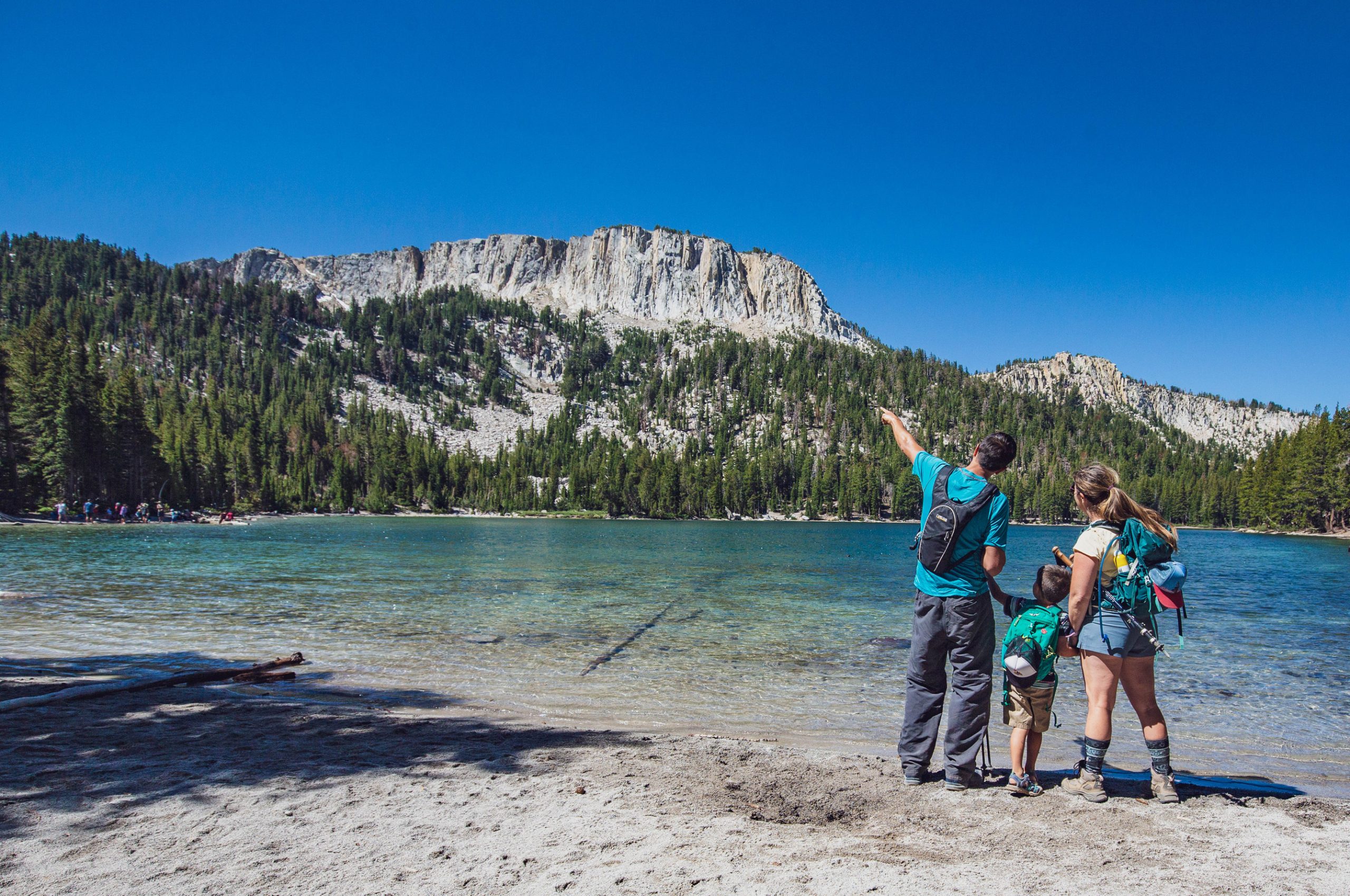
Mammoth Mountain
One of California’s most popular and iconic volcanoes, Mammoth Mountain’s gondola-accessed promontory sits at an elevation of 11,000 feet above the town of Mammoth Lakes and provides visitors with unparalleled views and outdoor recreation throughout the year. This geologically young mountain was formed by a series of violent eruptions that occurred roughly 110,000 to 55,000 years ago as proof of the geologic unrest in the Eastern Sierra. Each of the many individual eruptions left layers of volcanic rock called rhyolite and dacite, with distinctly coloured intervals of rock representing separate tectonic events. While the volcano itself is no longer considered active today, the mountain is still alive with evidence of an explosive past. Fumaroles discharge steam and volcanic gases from the flanks of Mammoth Mountain and on the southwest side in the Mammoth Lakes Basin, as well as releases of carbon dioxide, have killed the forests around Horseshoe Lake.
The area is a hotspot for adventurous experiences, starting from riding the scenic gondola to the summit of Mammoth Mountain. Once you have reached the top, explore the Eleven53 Interpretive Centre where you can chat with US Forest Service scientists to learn more about the geology of the area while enjoying an unforgettable view from the summit. Summers call for thrilling mountain biking as well as hiking to the Mammoth Lakes Basin, while skiing takes over during winter. Make sure to take breaks in between adventures at the on-site restaurants.
Obsidian Dome
Obsidian Dome is one of the most unique geological features of the Eastern Sierra. From looking at preserved remnants of trees, geologists have determined that this young volcanic feature formed around 700 years ago, or at the beginning of the Renaissance Period, when steam-driven volcanic explosions created a conduit for silica-rich magma to reach the surface. Once this rapidly cooled, the otherworldly Obsidian Dome was formed and developed into a rare volcanic landscape over the years. What makes Obsidian Dome so unique is its composition of almost exclusively obsidian, which means the mountain is comprised entirely of volcanic glass! Because of this, the volcano was very important to indigenous peoples, who collected and traded the obsidian for use in tools, weaponry, and jewellery. Today, Obsidian Dome stands almost 400 feet above the surrounding forest floor and is barren of vegetation, making this moon-like landscape a great place for every member of the family to explore.
From exploring to climbing, hiking to discovering, the Obsidian Dome offers many outdoor adventures for both children and adults. Trails leading to the nearby Owens River Headwater Wilderness offer a charming experience in nature. For the thrill-seeking drivers, off-roading opportunity is available on nearby Off-Highway Vehicle trails. For a laid-back afternoon, fish for brook trout in Glass Creek or arrange for a family-friendly picnic.
Mono Lake
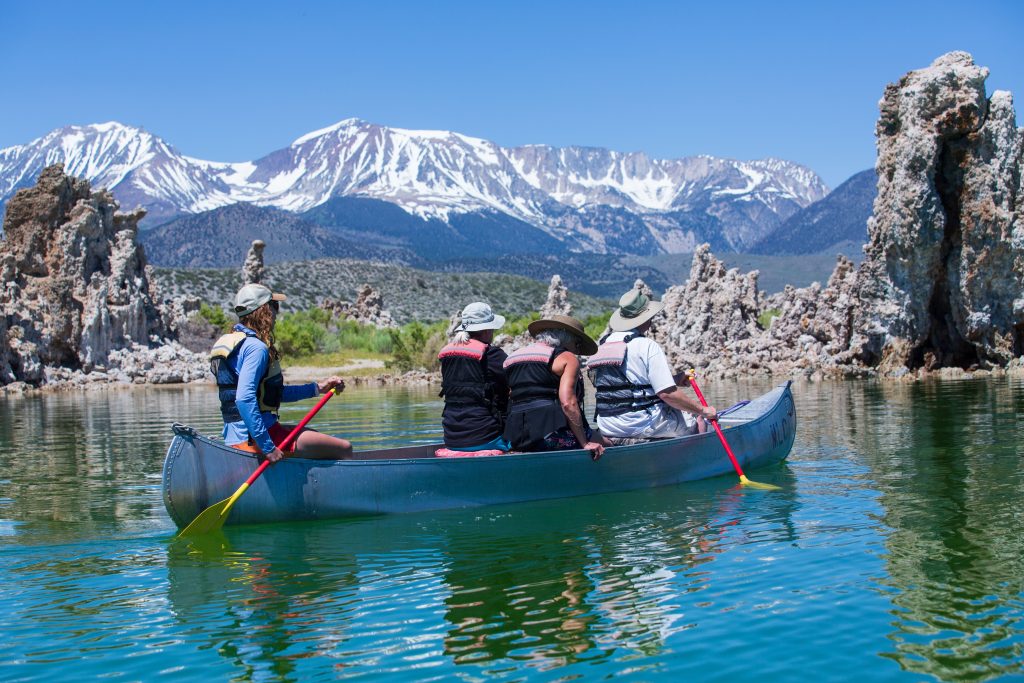
Witness something magical with Mono Lake’s volcanic activity in action and its interesting geologic history that began over one million years ago. This volcanically active ancient lake has had its most recent series of eruptions occurring within the past 350 years. These eruptions partially formed the massive Paoha Island in the centre of Mono Lake’s hypersaline waters, and today, the island remains one of western North America’s most crucial migrating bird habitats.
There is no better way to explore the natural beauty of Mono Lake and Paoha Island than by a kayak tour. Guided tours of Mono Lake are led by guides who also work for the US Geological Survey and hence, are able to share this incredible knowledge of the area with visitors. Spotting native birds and wildlife gets you closer to the local flora and fauna. Mono Lake, with its unique formations, offers some unreal photo opportunities.
Long Valley Caldera
The mountain town of Mammoth Lakes is a geological paradise, set within the scenic Sierra Nevada Mountains and is surrounded by an incredibly diverse collection of volcanoes found along the rim of the ancient Long Valley Caldera. When this super volcano erupted 750,000 years ago, it greatly altered the surrounding landscape and sent volcanic ash as far away as Kansas. Since then, smaller volcanic events have created many of the landforms we know today, including the pumice-covered slopes of Mono Craters.
Picture credit: Mammoth Lakes Tourism