

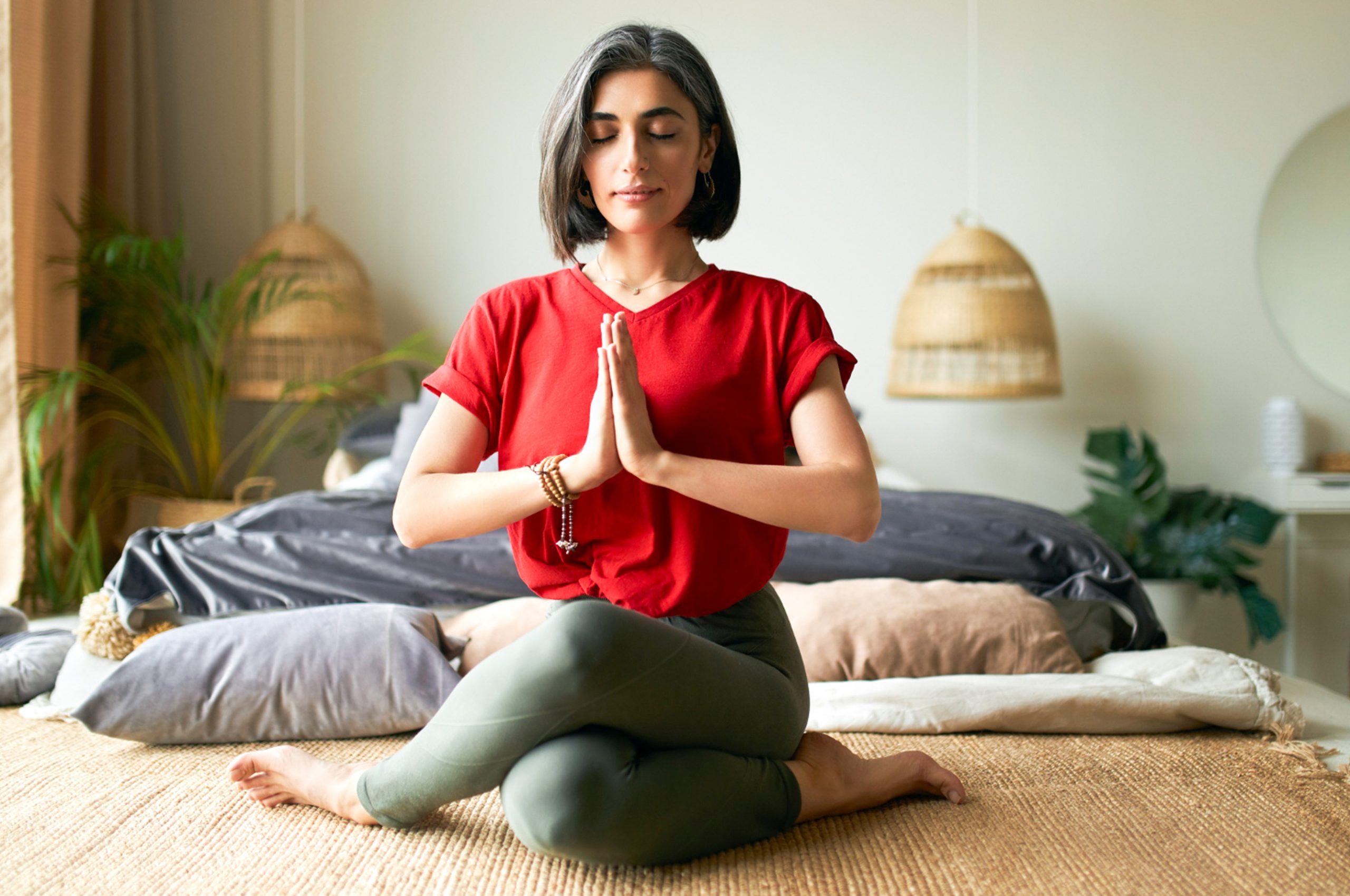
Wellness is beyond the outward self. It begins from where we learn to feel, to notice, and to respond with care. This new year, let the collective resolution be to adopt wellness wholly! Ever since the early 2000s, physical fitness and health have been the primary attributes of wellness. Counting steps, following calorie-deficit diets, gym culture, and the like have all been lionized practices that bring one close to wellbeing. While all these disciplines are tried and true, physical fitness has only been a fragment of what wellness truly is.
The body-mind connection
“When we assimilate proper nutrition, recreation and good conduct, thought and actions into our lives, balance is maintained and holistic wellness is preserved,” says Nritya Jagannathan, the director of Krishnamacharya Yoga Mandiram.
One of the most profound shifts in wellness is the acceptance that our mental state and our emotions are not separate from our physical health. Emotional stress, anxiety, and unresolved psychological tension directly trigger biological stress responses, including elevated cortisol, disrupted sleep, inflammation, and suppressed immune function, all of which raise the risk of chronic illness. And thus, we must understand that emotional resilience, stress management, sleep quality, and social support are integral to overall well-being, and aren’t just fancy or optional add-ons.
Dr. Narendra K Shetty. Chief Wellness Officer, Kshemavana says, “We recognise that wellness is no longer defined solely by physical health or the absence of disease. Contemporary scientific research and lived experience increasingly show that true wellbeing transcends the physical to encompass mental resilience, emotional balance, cognitive clarity, lifestyle harmony, and sensory regulation. Across disciplines from clinical psychology to environmental design, the conversation has shifted: wellbeing is holistic, multisensory, and deeply integrated with everyday life. There is increasing recognition that mental flourishing, emotional regulation, meaning, resilience, and sensory experiences are central determinants of quality of life, longevity, social connectedness and overall health. It’s about Wellbeing beyond the body, Lifestyle as Medicine, with lifestyle modification, including behavioural routines, social engagement, cognitive practices and enhancing mental wellbeing, Mindfulness and Stress Regulation, Sensory Soothing as a Pathway to Balance, Holistic Ecology of Wellness.”
Dr. Shetty adds, “At Kshemavana, we embrace this evidence-based, whole-person understanding of wellness. Our philosophy integrates naturopathy, yogic science, mindful living, sensory engagement, and lifestyle guidance to cultivate balance of mind, body, heart, and spirit. We believe wellness emerges not just through physical healing, but through restoring harmony across mental, emotional, and lifestyle domains — fostering resilience, presence, and joy in everyday life. Wellness today means cultivating calm amidst noise, meaning amidst stress, and connection amidst distraction. True wellbeing is lived in the rhythms of mindful breath, restorative rest, sensory awareness, emotional balance, and intentional living — a paradigm where life itself becomes the practice of health.”
Here’s how you can incorporate complete wellness into your lives:
Mindfulness and Meditation:
Mindfulness is the simple practice of shifting our awareness to the present moment, instead of getting carried away in thoughts of what’s to come or what has already been. Although it is difficult to constantly keep bringing our awareness to the present moment, practicing mindfulness even for about 10 minutes during the day improves our mood and brings more mental clarity. Along with mindfulness or as part of it, one can also meditate. Meditation can be anything that holds your focus for a period of time. It does not necessarily have to be a specific act, most commonly perceived as the right way to do it.
Shri Kamlesh D. Patel, Guide of Heartfulness and President of Shri Ram Chandra Mission, lovingly referred to as Daaji, states, “Science shows many benefits of meditation, but it also has a deeper purpose. By turning inward, consciousness expands. Meditation comes from the Latin meditatio, linked to thinking and contemplation, and focuses on observing thoughts, reflecting on experience, and deliberate inquiry. Dhyana is dhi + yana: divine wisdom and the vehicle that carries us toward it. In Heartfulness, supported by Pranahuti (yogic Transmission), consciousness rises beyond mind, intellect, and ego, aligning with our highest inner essence. The aim is inner transformation, as the heart awakens into a stable, living connection with the Divine Source.”
Emotion Naming, Acceptance, and Regulation:
Ashrita Keshav, a child psychologist, says, “One must learn to identify, name, and most importantly accept what they are feeling. For instance, if someone is feeling angry, they must accept it and allow themselves to feel that way uninhibitedly. This practice helps us find the actual cause that triggered this feeling instead of focusing on the stimulus that led to the outburst of that emotion.” This allows us to handle our emotions with much more composure.
Nature thriving:
We all need a daily dose of nature. When someone actively uses all their senses to dwell in nature- mentally noting the things they see, hear, smell, or can touch- it helps calm or soothe the nervous system and also promotes awareness in the present moment. It also brings about the realisation of how many little joys the world around has in store for us. Reflection comes to the human mind much more fluidly in natural environments.
Dr. Cijith Sreedhar, Chief Medical Officer, Prakriti Shakti, Clinic of Natural Medicine by CGH Earth states, “Wellness today is undergoing a quiet but profound shift. For years, the conversation revolved around physical fitness—numbers on a scale, lab reports, and symptom control. What we are witnessing now is a deeper awakening: people are beginning to recognise that true wellbeing is sensory, emotional, mental, and environmental—not just physical. At CGH Wellness, we see this every day. Guests often arrive seeking rest for the body, but what they truly need is restoration of the whole self. The nervous system, the gut, the mind, and even one’s surroundings are in constant dialogue. When the gut is inflamed, clarity suffers. When the mind is overwhelmed, the body carries that burden. You are not a collection of separate parts assembled together—you are a complete, intelligent system.”
Dr. Cijith adds, “This is where holism becomes essential. A holistic approach does not chase symptoms in isolation; it listens to the body as a unified whole. It recognises that healing happens when physical care is aligned with emotional balance, mental calm, and a supportive environment. That’s why modern wellness is naturally gravitating toward sensory-soothing spaces, mindful routines, nature-based therapies, and lifestyle rhythms that calm the nervous system rather than overstimulate it. ”
“Holism is not an alternative trend—it is a return to wholeness. It asks a simple but powerful question: What does this person need to restore harmony, not merely suppress discomfort? When health is approached through this lens, healing becomes deeper, more sustainable, and truly personal. Understanding stress at its core and recognising how deeply it affects both the mind and body is the first step toward true healing. When we learn to shift out of survival mode and into a state of restoration, we open the door to better health, greater clarity, and a more fulfilling life. This is exactly what we do in Naturopathy and Yoga healing centres—we simply activate the body’s natural rest-and-heal mechanism, allowing it to restore itself,” says Dr. Cijith.
Rest, not by chance:
Proper rest for most of us has become a luxury. But it’s a biological and psychological necessity. We recognize ourselves more than we do anyone else. So, an act of kindness to the self can add a great deal of joy to our lives. We must try to deliberately rest. Taking a few minutes or about half an hour every day to relax our body, mind, and soul must be compulsory. And rest doesn’t have to be inactivity; it can also be a rejuvenating activity. Small self-care routines, stretching, cleaning, journalling, and brisk walking are all examples of activities that provide a break and also help regulate all areas of wellness.
Professor Vigraanth Bapu, Clinical psychologist and HOD, Department of Psychology, REVA University, suggests another crucial step towards wellness. “Today’s generation especially must focus on social media regulation. Most people are so impaired when it comes to consciously reducing digital time because they are unaware of how much time goes into aimlessly flicking a finger. When we stop ourselves before fully immersing into it, and consciously time ourselves ‘while away’, we can better process it and slowly remove ourselves from the toxic overuse of social media.” Professor Vigraanth also implores readers to adopt sleep hygiene practices. He says “To help our bodies regulate we could create a dark and cool environment; to help our minds relax we can put aside our phones, pick a book up either to read or to journal, or we could meditate; to add to emotional regulation we could incorporate the practice of giving gratitude- five things we are thankful for today or anything else that helps us feel calm and satisfied. Sleep is a very important factor to wellness and must be treated with as much care as we can devote to it.”
Social influences on wellness
Humans are social beings. We crave connection, meaningful relationships, and most importantly, understanding from our loved ones and peers. Building a space with connection, meaning, and understanding, thus, helps cure loneliness and reduce nervous triggers or the feeling of being emotionally stranded. We must freely work on surrounding ourselves with only what makes us feel safe and cherished, and distance ourselves from things that no longer serve a purpose in our lives. This would help us thrive in our spaces instead of struggling in them, creating a safety net for when we need help, whether or not we can ask. With that, curating calm, purposeful living spaces is extremely important to mindfully associate each place with its functionality and how that reflects on us. When we have physically and also energetically clean spaces, we rejuvenate in them.
Child psychologist Ashrita Keshav says, “Most people are overwhelmed or frustrated when we speak about wellness or its practices, as it seems taxing when perceived as a whole. People barely find time for it and believe it’s impossible to achieve or incorporate into their lives. When we break down these activities into small chunks and give them to people, suggesting small starts, it helps.”
In redefining wellness, we must treat inner experience as a core determinant of health, acknowledging that mental, emotional, and social foundations are inseparable from physical wellbeing. As science continues to validate these deep links between mind, emotion, spirit, and body, this New Year is an invitation to explore not just to be fit, but to be well, fully, and deeply.