

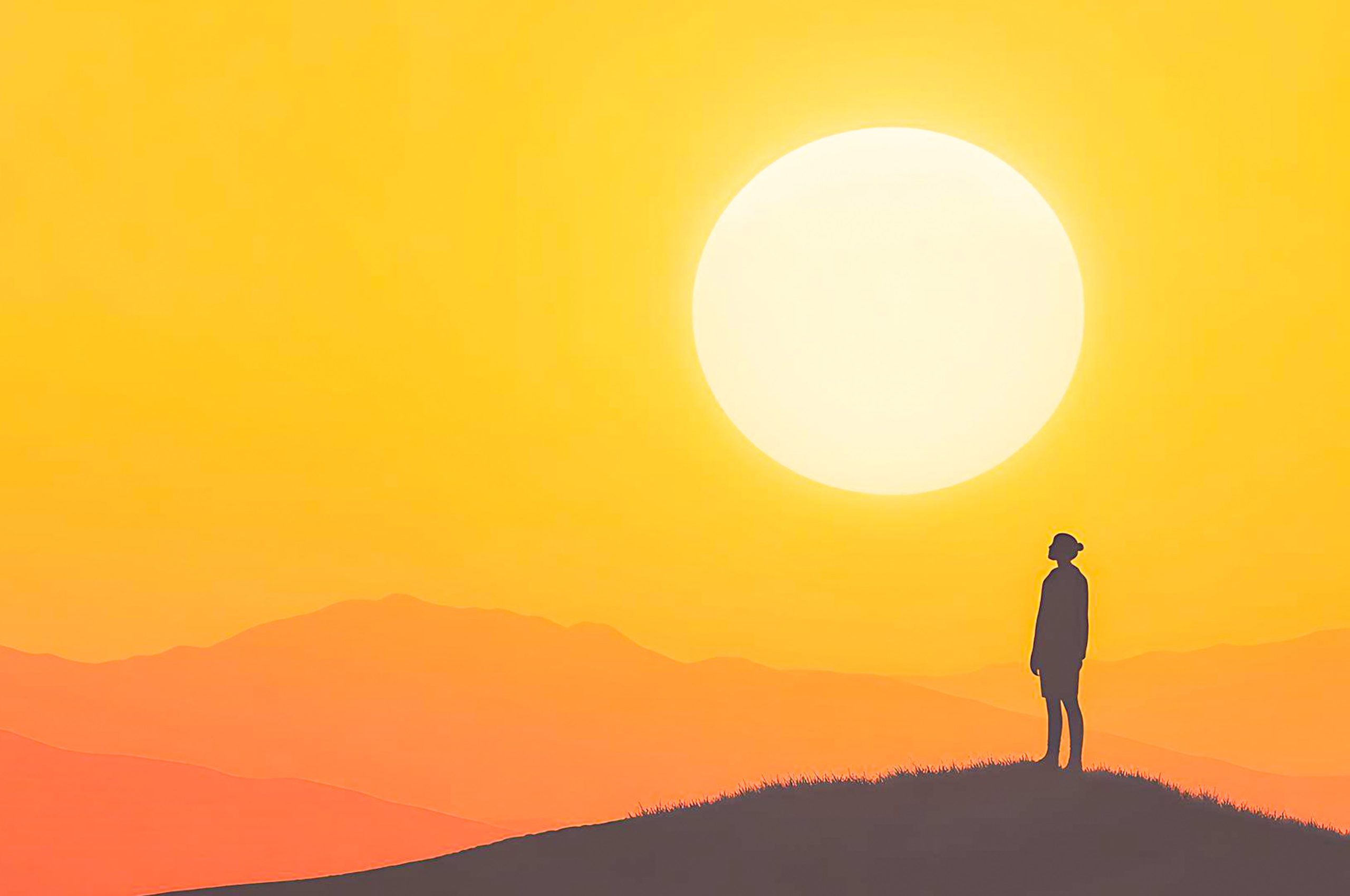
There was a time, not so very long ago, when human beings knew the secret art of doing nothing at all. Not the polished nothing sold in wellness packages, not the mindful nothing timed by apps. Just pure, unhurried nothing, the kind that arrived unannounced on scorching Madras afternoons when ceiling fans creaked overhead like tired old birds, and the world outside moved no faster than a wandering cow on a dusty road lined with coconut palms. The air smelled of ripe mangoes, drying clothes, and distant sea salt. Lizards froze on whitewashed walls. Time itself seemed to stretch and yawn.
Boredom then was never an enemy. It was a quiet companion, a season of the mind as natural as the monsoon. It lived in railway waiting rooms where clocks ticked louder than hearts, in sudden power cuts that turned houses into caves of whispers, in endless bus journeys along bumpy coastal roads, in the peeling corridors of government offices where files gathered dust like forgotten dreams. It hid in the long silences between inland letters, in the slow ache of waiting for someone who might never come.
And from that fertile emptiness bloomed the most extraordinary things: poems that tasted of tamarind and rain, melodies hummed on old harmoniums, scientific wonders born from staring at fireflies, deep thoughts that arrived like unexpected guests, and loves that grew stronger in the waiting. The mind, left alone, wandered into hidden gardens no map could show.
The Train from Egmore
Let me take you back to the summer of 1987. A boy, no older than 12, sits by the window of the Rockfort Express pulling out of Madras Egmore station. His mother has packed lemon rice wrapped in yesterday’s newspaper, the yellow grains still warm, scented with curry leaves and mustard seeds. A steel water bottle rolls gently with every curve of the tracks. The compartment smells of coconut oil, sweat, and the faint sweetness of wilting jasmine garlands.
There is nothing to do. No glowing screens, no endless feeds, no voices shouting from tiny speakers. Only the clack-clack-clack of wheels on iron rails and the hot wind rushing in, carrying the perfume of wet earth from distant fields. The boy watches.
Telegraph poles flash past like the steady pulse of an ancient heart. Women in vivid saris beat clothes against black rocks beside village ponds, sending silver sprays into the sunlight. White egrets rise in slow, graceful clouds from emerald paddy fields, their wings flashing like secret messages from the sky. Children wave wildly from nameless stations—tiny hands sketching invisible stories in the warm air. A lone buffalo stands knee-deep in mud, blinking slowly at the passing world.
Hours melt away. And then, something magical stirs inside the boy’s head. The mind, unchained, begins to dream awake. That tall stranger in the white shirt across the aisle? A spy carrying coded messages from the north. The older man reading a tattered newspaper? A retired freedom fighter who once walked beside Mahatma Gandhi, his pockets still full of unspoken courage. A distant green hill, crowned with mist, becomes the hidden fortress of ancient kings, where a magical sword sleeps until the right hand awakens it.
Stories bloom unbidden. Entire worlds unfold from a single passing glance. Boredom had quietly opened a door into another realm—a realm where ordinary things shimmered with possibility. The boy stepped through it without even knowing he had left the train.
Today, on that very same route snaking towards Villupuram or Trichy or beyond, the carriages are filled with a different silence. Heads bowed. Thumbs scrolling. Glowing rectangles hold every eye captive while real landscapes—those same emerald fields, those same white egrets, those same waving children—slide past unseen. Sunsets bleed crimson and gold across the sky, unwatched. Villages with their temple spires and grazing goats vanish into a peripheral blur. The train still moves, but the passengers have stopped travelling. They are elsewhere, sedated by digital dreams.
The Terror of Silence
If you want to know a person truly, watch what they do when silence arrives. Our ancestors welcomed it like an old friend. Modern souls attack it the instant it appears.
At traffic signals near Gemini Circle or Luz Corner in Chennai, the moment the light turns red, fingers dart for phones as if stillness might devour them. In crowded elevators, strangers stare desperately into screens rather than meet each other’s eyes. Even at funerals, amid the scent of camphor and marigolds, hands reach for WhatsApp, chasing connection in the one place where deeper connection waits in quiet.
I remember power cuts in Mylapore during the nineties. The whole neighbourhood would spill onto terraces under a sky thick with stars. Grandmothers told stories of ghosts that lived in the great banyan near the Kapaleeshwarar temple—spirits who borrowed voices to sing forgotten songs. Uncles strummed veenas, the notes floating over compound walls like fireflies. Children lay on cool mosaic floors, tracing patterns in ceiling damp stains that became maps of lost kingdoms: empires ruled by lizard knights and armies of determined ants carrying grains twice their size across the courtyard. Those evenings felt endless and sacred. Silence was not empty. It was full—full of memory, imagination, and the soft breathing of the city itself.
Now silence is rare. It is hunted down by reels, podcasts, and notifications that ping like impatient spirits. Even the koel’s morning call in the rain trees is drowned by earbuds. The human mind is continuously occupied. Every spare second has become valuable real estate, auctioned to the highest bidder for attention.
The Vanishing Kingdoms of Childhood
The children have suffered the most.
Summer holidays once stretched like golden rivers without end. Boys and girls in Besant Nagar or Adyar spent entire afternoons watching ants march across compound walls, inventing epic battles between rival colonies. A fallen coconut branch became a mighty sword. An old cardboard box from the neighbourhood kirana store was transformed into a spaceship hurtling towards Mars. Rainwater rushing along the roadside gutters became vast oceans alive with sea monsters and brave submarine captains.
No adult labelled it “screen-free play” or “cognitive development.” It was simply being a child—wild, free, and endlessly inventive.
I think of little Meera, a girl I knew in the early nineties, who lived near Marina Beach. Every evening she would sit on the sand as the sky turned orange and pink, naming each incoming wave: “The Whisperer,” “The Laughing One,” “The Old Sailor Who Never Goes Home.” From those quiet hours came crayon drawings that filled notebooks and, years later, stories that still live in people’s hearts. Boredom had been her greatest teacher, patient and generous.
Today, the contrast aches. In Chennai restaurants, toddlers barely old enough to walk swipe at glowing tablets before they can form full sentences. At airports—Chennai, Mumbai, or the gleaming halls of Singapore and Dubai—entire families sit with children glued to screens while real wonders pass by: planes taking off like silver birds, strangers carrying stories in their eyes, the soft hum of departure lounges alive with possibility. Family dinners glow blue instead of warm yellow from oil lamps. Children no longer create worlds. They scroll through worlds chosen for them by machines that know their desires better than they know themselves.
A boy in 1992 looked at the moon rising over the Adyar River and spun tales of silver palaces and moonlit adventures. A boy in 2026 watches algorithm-fed videos of strangers unwrapping toys. One built universes. The other merely visits them.
The Sacred Ache of Waiting
Waiting once had beauty. It had weight. It had meaning.
Lovers waited weeks for letters that arrived smelling of distant ink and hope. Students stood trembling before the notice boards at Presidency College, hearts hammering as results were posted. Families gathered around black rotary telephones, willing them to ring with news from uncles in faraway Singapore or sisters studying in London. The long pauses between messages made the words, when they came, feel like treasures.
That friction—those slow, aching spaces—bred depth. Thoughts had room to grow. Emotions ripened like mangoes left on the tree.
Great minds understood this. Scientists played music when stuck. Philosophers walked for miles through forests until clarity arrived like dawn. Sages sat motionless beneath trees or on sacred hills until the universe whispered its secrets. No buzzing device ever delivered enlightenment.
Today, waiting has been almost erased. Food arrives in minutes. Entertainment streams instantly. Messages fly back and forth without pause. Loneliness is interrupted before it can teach anything. Yet in removing every delay, we have also removed the soil where wisdom once took root.
Airports of the Algorithmic Age
Step into any airport today—whether the bustling new terminal in Chennai, the marble palaces of Dubai, the vast corridors of Frankfurt, or the quiet efficiency of Hanoi—and you will see the same strange dance. Thousands of people sitting side by side in perfect algorithmic silence. Every face lit by its own private rectangle. Every mind orbits in its own digital galaxy. No one looks up. No one wonders about the quiet woman with sad eyes heading home, or the young man clutching a worn backpack full of dreams, or the old couple holding hands after fifty years apart.
Entire novels that once sprouted in railway compartments and waiting rooms have stopped being born. The stranger’s story goes untold. The shared humanity thins and fades.
Centuries ago, a wise voice warned that many of humanity’s troubles stem from our inability to sit quietly alone in a room. Today, that inability has become global. We fill every quiet corner with noise, terrified of what we might meet if we stopped.
When Idleness Became Sin
In the old Madras I remember, idleness was never waste. Readers could lose themselves for hours inside Moore Market’s bookstalls before the fire claimed it, emerging with armfuls of forgotten worlds and dusty treasures. Older men debated politics passionately near the tea stalls on Marina Beach without ever considering recording it for strangers. Serendipity wandered freely through the aisles and along the seafront.
Discovery felt alive because it was accidental. You entered looking for one thing and left carrying three you never knew you needed.
Now every moment must be optimised. Every hobby must become income. Every silence must be filled with content. Even ancient practices of stillness have been turned into performance—tracked by apps that count breaths and award points. We have become permanent works-in-progress, forever updating ourselves like restless software.
Yet history keeps proving otherwise. Newton sat under a tree, bored and open, when gravity revealed itself. Stories that would enchant millions were born during delayed journeys and quiet afternoons. Visions arrived in the deep quiet of Madras nights to mathematicians staring at the stars. Boredom was never the enemy. It was the spark.
The Quiet Exhaustion
For all our conveniences, a strange exhaustion haunts us. The human nervous system was never built for constant stimulation. It thrived on rhythm: silence and sound, effort and rest, connection and solitude. Now the off-switch has vanished.
Mornings begin with floods of notifications—anger, advertisements, anxiety, artificial laughter—before the first ray of sunlight touches the eyes. The mind never settles. Experiences wash over us like waves, but never sink deep enough to become wisdom. They remain mere accumulation.
Yet every so often, if you step away, the old magic returns. Early one morning on the trails inside IIT Madras, before the city fully woke, I ran beneath ancient rain trees whose branches formed green cathedrals overhead. Deer moved like silent shadows between patches of light—a koel called somewhere in the distance. My breath moved slowly and steadily through my nose. Each footfall met the earth softly.
For a few precious minutes, the world felt whole again—ancient, breathing, alive in a way no screen could capture.
Small Rebellions
Hope still lives in small, quiet rebellions.
A young woman in a Besant Nagar café, slowly turning real paper pages, lost in a story no algorithm suggested. An older adult in Nageswara Rao Park sits motionless on a bench, feeding crows that know him by name. A child at Marina Beach is building an elaborate sandcastle with turrets and moats, refusing to take even one photograph. A runner on the campus trails wearing no earphones, letting thoughts roam free like monkeys through the canopy.
These are acts of courage—tiny recoveries of attention. In an age of endless noise, the ability to protect inner stillness may become the rarest luxury. Attention itself may turn into the deepest form of spirituality.
The Door Still Waits
One recent dawn, beneath those same great rain trees in IIT Madras, I paused near a patch of filtered sunlight. A young spotted deer stood motionless, only a few steps away. Its dark eyes met mine with ancient calm. No urgency. No notifications. Only the soft wind moving through leaves, carrying the scent of wet earth and wild jasmine. For one shining moment, the world felt exactly as it must have felt long before humanity learned to scroll—vast, mysterious, and full of unseen doors.
Boredom, that beautiful, fertile, almost forgotten friend, still waits patiently. It waits in the quiet between heartbeats, in the pause before sleep, in the empty stretch of an afternoon when the power goes out, and the ceiling fan slows to a stop. It waits with stories, with songs, with insights, with the chance to finally meet ourselves.
All we need is the courage to sit still long enough, to put the glowing rectangle down, and to turn the handle on that hidden door.
Because on the other side, the world is still waiting—alive, shimmering, and ready to surprise us once again.