

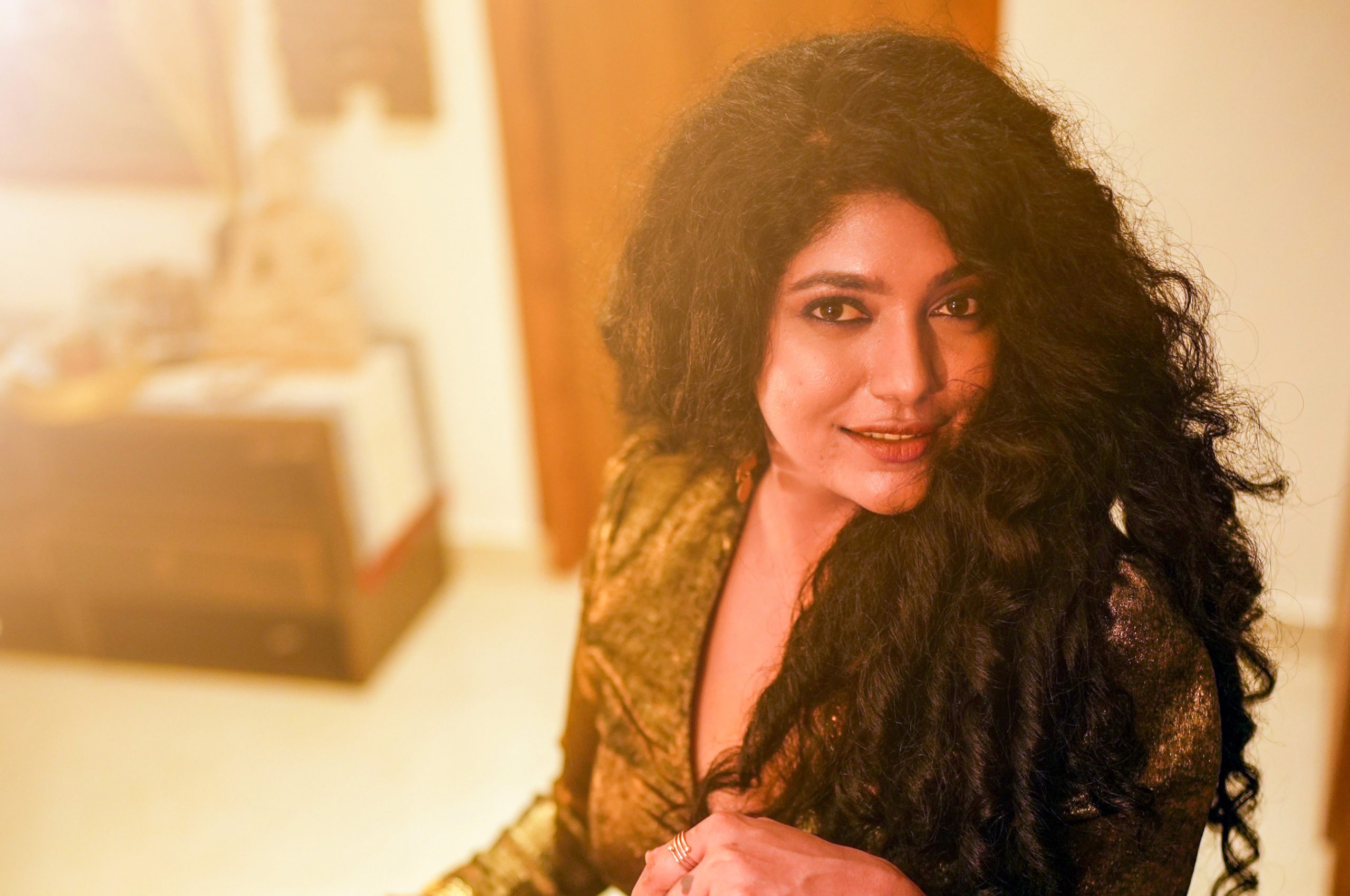
After spending years behind the camera, actress Samyukta Hornad is treading a new ‘wild’ path. She’s turning director with her new film Crossing Paths, which is a documentary film about the human-animal conflict and the search for coexistence. The actor shared a sneak peek of the film on World Elephant Day in August and is excited about her first directorial that is set to release soon. Samyukta spent many months working hard, shooting in different forests in Karnataka to convey the message of human-animal conflict and worked with cinematographer Pratheek Shetty on the film. While having a chat with Provoke, the actress revealed more about her film and undying her love for animals…
How was the idea of Crossing Paths born? What lit a spark in you that made you gravitate towards this project?
Even before I became an actor, I’ve always had this love for animals. My love for animals is so much that my mum almost gets angry when I tell her that the most important relationship I’ve had is the one I’ve had with my dog, Gunda. Whether it was as a child or in college or in the film industry, I’ve always felt alone, and I felt that I didn’t belong and I felt like I wasn’t able to connect. When I was a kid, my dad had banned TV, so what was normal for a lot of kids was never the case with me. So, I grew up a little isolated, and that had a lot to do with how I was brought up as well. I had a lot of conversations with animals and trees, so there was a natural connection with nature. Even though I was acting, there was a whole other track where I was busy with my foundation or I was busy with veterinary work, etc. People used to be surprised when all the animals would come towards me, while we were on the movie set. On the set of Oggarane, Prakash Raj sir would introduce me as the proud owner of this dog. On Sudeep sir’s set there was a cow that needed rescuing, so I got busy with that. Then soon I started my foundation in the memory of my dog, Gunda. After I lost Gunda, I started adopting random animals, but I could never get myself to adopt a dog again. I’ve adopted an elephant. I’ve adopted owls, bears, etc. In order to get over the pain of losing Gunda, I got into this, and then it became an addiction and obsession. My other escape has been art, painting, pottery, or things like running, etc. I wanted to put the two things that I love together. When you get into the forests, you realize how insignificant you are. People have become a part of the rat race so much that we are competing every minute on platforms like Instagram. Everything is about numbers, likes, and shares. This race has made us lonelier than ever.
What is the subject of the film, and what did you want to convey?
It’s about the human-animal conflict, and it’s a full-length documentary. It’s got tigers, leopards, elephants, and the frontline workers who are part of the film. It’s a CSR initiative, so there are different people producing it. It shows the different things that the government is doing to reduce the human-animal conflict. At a time of climate change, environmental destruction and increasing violence around us, Crossing Paths hopes to bring attention to a quieter but deeply urgent conflict and to the possibility of coexistence.
How did you choose this particular subject?
The Bannerghatta National Park is about half an hour from where I stay. And there was this one time where twelve elephants had walked onto the highway. So I was called then, and I saw that incident. I saw that there was a lot of stress for the officers, for the farmers, for the animals, and everyone who was involved there. When I went to Hassan and Bandipur, I realised how stressful it is for the farmers. They are outside at night and they are waiting. Although the government is taking measures to reduce the human-animal conflict, things are still stressful. It’s a very important discussion to have because forests are shrinking, trees are getting lesser, and cities are getting bigger. And there are so many leopards that are coming out of the forest. They’re coming out to eat the dogs. Now that the forests are shrinking, animals are coming out of the forests. In Hassan, the forest area is only 11%, and elephants are coming out of the forests. I saw that nobody was covering this topic, so I decided to work on it. That’s when I decided to work with Pratheek Shetty, who’s the cinematographer for projects like Gandhada Gudi and Charlie 777.
You worked closely with the forest department and officials. Tell us more about it.
Yes, I did. The key people associated with the project are
* Eshwar B. Khandre — Minister for Forest, Ecology and Environment, Government of Karnataka
* Pushkar Kumar — PCCF
* Manoj Rajan — Project Head, Project Elephant
* Saurabh Kumar — Deputy Conservator of Forests, Hassan
* Avinash Krishnan — A Rocha India, national director
* Aravind Gowda.
The film is produced by Tekion in association with the Karnataka Forest Department and A Rocha India and is a Sampige Films Production.
Which are the locations where you shot the film?
I’ve shot the film in Bannerghatta and Hassan because I’m focusing on human-animal conflict. We had to shoot the villagers and the forests. We’ve shot in Bandipur as well. I’ve been working on this for months, and when you’re shooting with animals, you need a lot of patience.
Did your experience as an actor make you sensitive to the whole filming in any way?
As an artiste, you need to observe more, and you need to see different points of view. I’ve always been interested in artistic things, and that really helped a lot. I’ve been doing theater since the age of 6. My experience as an artiste made me more sensitive while talking to villagers and interacting with people while doing the film.
Did you discover something when shooting that surprised you?
When interacting with officials while shooting the film, I realized that they were only men, and I was the only woman there. But in the wild and the forests, when it comes to the animals, they respect women a lot more, and women are the matriarchs there. The most masculine man that you will find there is actually very feminine. That was very interesting for me to discover. Women in the cities fight a lot more for their rights when compared to the wildlife. The power game that happens here, I don’t think it exists in the wild.
Did you have any documentaries or films that inspired you?
I watch a lot of documentaries, and even as a kid, I was allowed to watch only National Geographic. My favourite film was My Octopus Teacher. I hope someday I can make something that beautiful and sensitive in my life. A film or documentary can move people, and that’s why it’s crucial to talk about important stories. I also really like this animated short film called Snow Bear.
Do you think Kannada audiences are becoming more open to nonfiction storytelling?
We had Nilgiris which was released a while ago. We’ve also had Gandhadha Gudi and Wild Karnataka. During the pandemic, people were exposed to a lot of world cinema and documentaries that were interesting. Even on Instagram, people are consuming short reels about what’s happening. Borders and boundaries are getting blurred, and content is available across the world, over different countries. Also, the big films in different languages are not working out, and people going to theaters have hit an all-time low. People are looking for real content and real stories. What’s happening with the Malayalam industry is slowly happening with other fields too. The movie goers are looking forward to movies which they can resonate with, which is what art is, because it is a reflection of the society around them.
Would you be interested in directing a fictional story in the future?
Of course, but I have a feeling that it will have a lot to do with animals, even if it is fictional. I have a lot of stories to tell.
How supportive was your family with regards to your filmmaking?
My parents were always very supportive, and so was my brother. I’ve always been a bit of a rebel. They’re not crazy about the foundation, as I keep getting bitten by cats and dogs. In the forest, when I’m shooting, there’s no network. They get worried about me, but at the end of the day, when they see that I’m happy, they are happy.
What’s happening on the acting front?
I finished shooting for this film about Kempegowda and what his plans for lakes were. Again, it’s a film regarding the environment. But with the condition the industry is in, I think the release is getting pushed. Producers are scared to release their films. Production has dropped by around 70% sadly.