

Cinema was born as both an art and an attraction. The earliest films by the Lumière brothers were not narratives but observations. Workers leaving a factory, a train arriving at a station and the like were filmed and presented. Even these moments became commercial spectacles, made for audiences that were readily paying. It was only during the early 20th century, as cinema matured, that narrative clarity, star systems, and genres became integral. Commercial cinema began to thrive because it recognised cinema as a mass medium. Stories had to be accessible, emotionally direct, and repeatable across cultures.
This commercial outlook also faced a counterpoint over the years. As early as the 1920s, filmmakers in Europe and the Soviet Union, like Sergei Eisenstein and Dziga Vertov, began exploring cinema as an instrument for expression rather than as a product. Montages, abstract storytelling, and political intent led to the metamorphosis of the purpose of cinema. The idea that films existed only to entertain started to lack. The tension between cinema as an industry and cinema as art began to prevail. The post–World War II era marked a crucial turning point. Filmmakers like Vittorio De Sica, Jean-Luc Godard, and Ingmar Bergman treated cinema as a philosophical and emotional inquiry. Here, the idea of the “auteur” (The director transcending into an author due to their personalisation of the film) emerged.
Art cinema, more often than not, grounded itself as a direct opposition to commercial cinema in terms of its non-linear narratives, ambiguous endings, and morally complex characters. It resisted easy consumption. Despite that, it is important to know that art cinema never lacked an income. Film festivals, state funding, and niche theatrical circuits became their source for sustenance. Art cinema did not reject revenue entirely; it just bargained with it differently, prioritising expression over enormity.
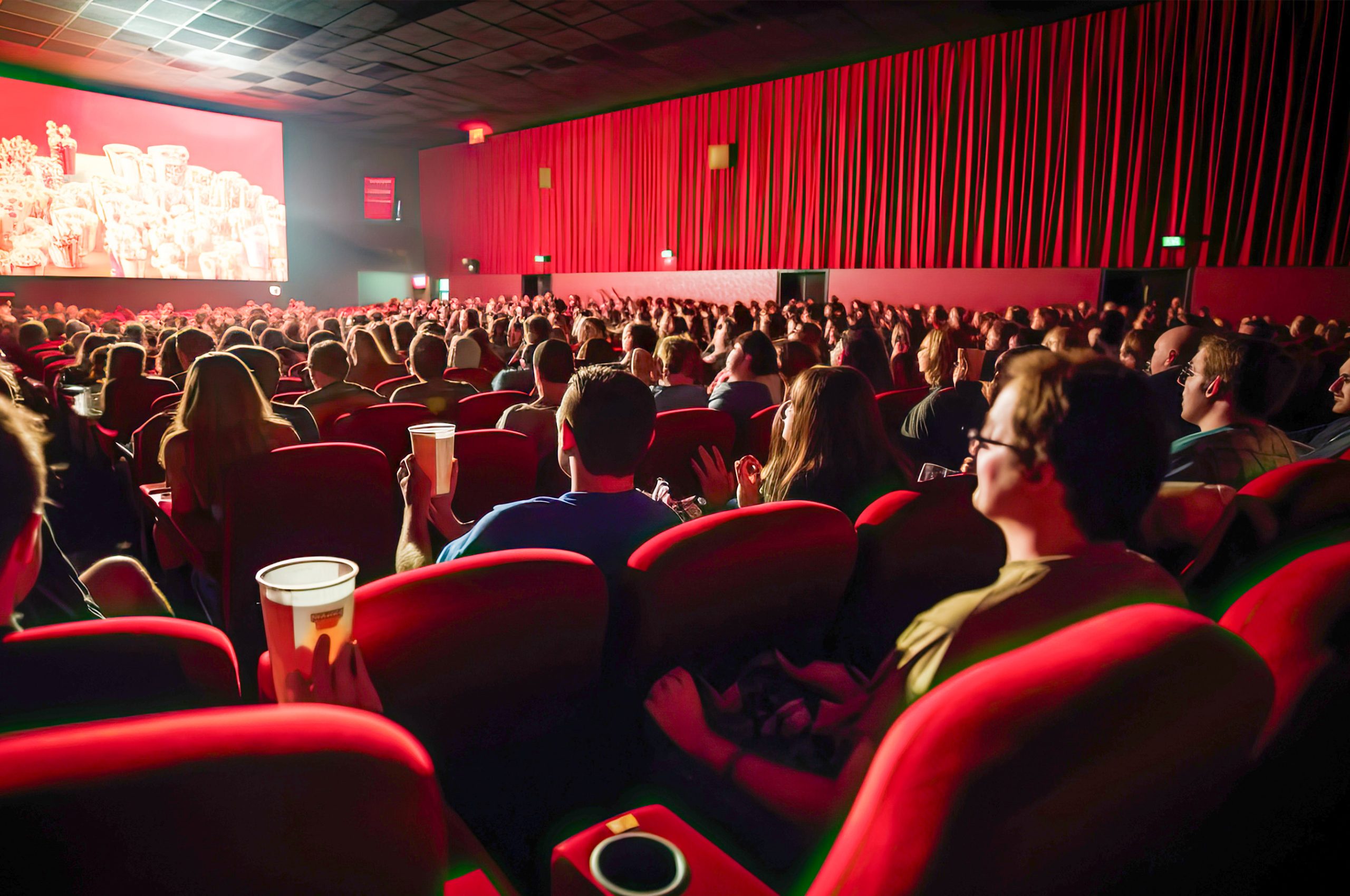
Yet although this parallel stream grew, cinema continued to remain deeply tied to the theatrical experience. The darkened hall, the silence, the collective gasps or laughter shaped not only how films were watched, but also how they were made. For decades, theatres remained the dominant site of cinematic meaning.
As cinema industrialised further, particularly in India, theatrical exhibition began catering differently to different audience centres. Commercial cinema largely addressed B and C centre audiences, where cinema became an affordable refuge from real life and a huge source of entertainment. From the creator’s end, this meant working within recognisable frameworks– stars, music, spectacle, and morality. Box office numbers became the clearest measure of success, often determining a film’s fate within its opening weekend.
Dr Manjunatha Munishamaiah, Faculty of Journalism and Mass Communication at REVA University, points out that this relationship between cinema and the masses was never accidental. He says, “Early administrators quickly recognised cinema’s potential as a persuasive medium, capable of shaping imagination and propagating ideological interests. Cinema was not merely reflecting society; it was participating in its construction.” Early audiences, he notes, encountered cinema with a certain innocence. “They did not always distinguish between actor and character, between representation and reality. What appeared on screen felt immediate and truthful. This innocence, however, allowed stories to take root deeply. Audiences resonated with what they saw, enabling filmmakers to craft narratives that felt personal even when they were collective in intent. Cinema, for the audience, became catharsis.”
Later came the DVD era. Fitting right in between theatrical dominance and digital streaming, DVDs altered the relationship between cinema and its audience. Films were no longer fleeting events; they could be revisited, paused, studied, and shared. Films that failed theatrically, often because they did not conform to commercial or societal expectations, found second lives as cult classics. For creators, DVDs offered longevity. Value, or rather standard, was no longer measured solely by box office returns but by the endurance and engagement of a film over time.
The rise of documentary cinema further expanded cinema’s expressive range. They allowed filmmakers to document lived realities with immediacy, giving voice to histories and communities often excluded from mainstream narratives. However, as Dr Manjunatha observes, documentaries in India continue to rank among the least consumed forms of media. Here again, OTT platforms have played a transformative role. Streaming services have allowed documentaries to bypass traditional barriers, bringing genuine works into mainstream awareness. Films such as The Elephant Whisperers exemplify how documentaries, once confined to niche audiences, can now reach households across different audience groups. This shift reflects a growing appetite for authenticity and real-world engagement.
OTT platforms mark the most recent and perhaps the most dynamic phase in cinema’s evolution. They offer exceptional variety and accessibility, becoming a window to world cinema. For audiences, geography and cost are no longer primary barriers. For creators, particularly independent and documentary filmmakers, OTTs reduce reliance on box office performance and allow greater narrative experimentation.
This accessibility however, comes with its own set of anxieties. Regional creators now operate within an uncertain ecosystem, unsure whether culturally rooted stories can survive alongside global franchises. While the struggle to adapt has produced exceptional content, it has also created pressure to imitate dominant cinematic models. The danger lies not in the disappearance of regional cinema but in its redundancy, where archetypes are made and repeated over and over again.
Cinema today exists in overlap rather than opposition. Theatres continue to offer collective immersion and scale, while OTT platforms offer reach, variety, and convenience. Each serves different audiences and different creative impulses. The evolution of cinema is not a linear journey from commerce to art, or from theatres to streaming. It is a continuous negotiation shaped by audience awareness, creator intent, and cultural context.
Cinema has always responded to who controls it and who consumes it. As long as filmmakers continue to engage with this tension between earning and expression, between mass appeal and personal vision, the medium will remain alive. Across screens, spaces, and formats, cinema continues not toward an end, but toward constant becoming.