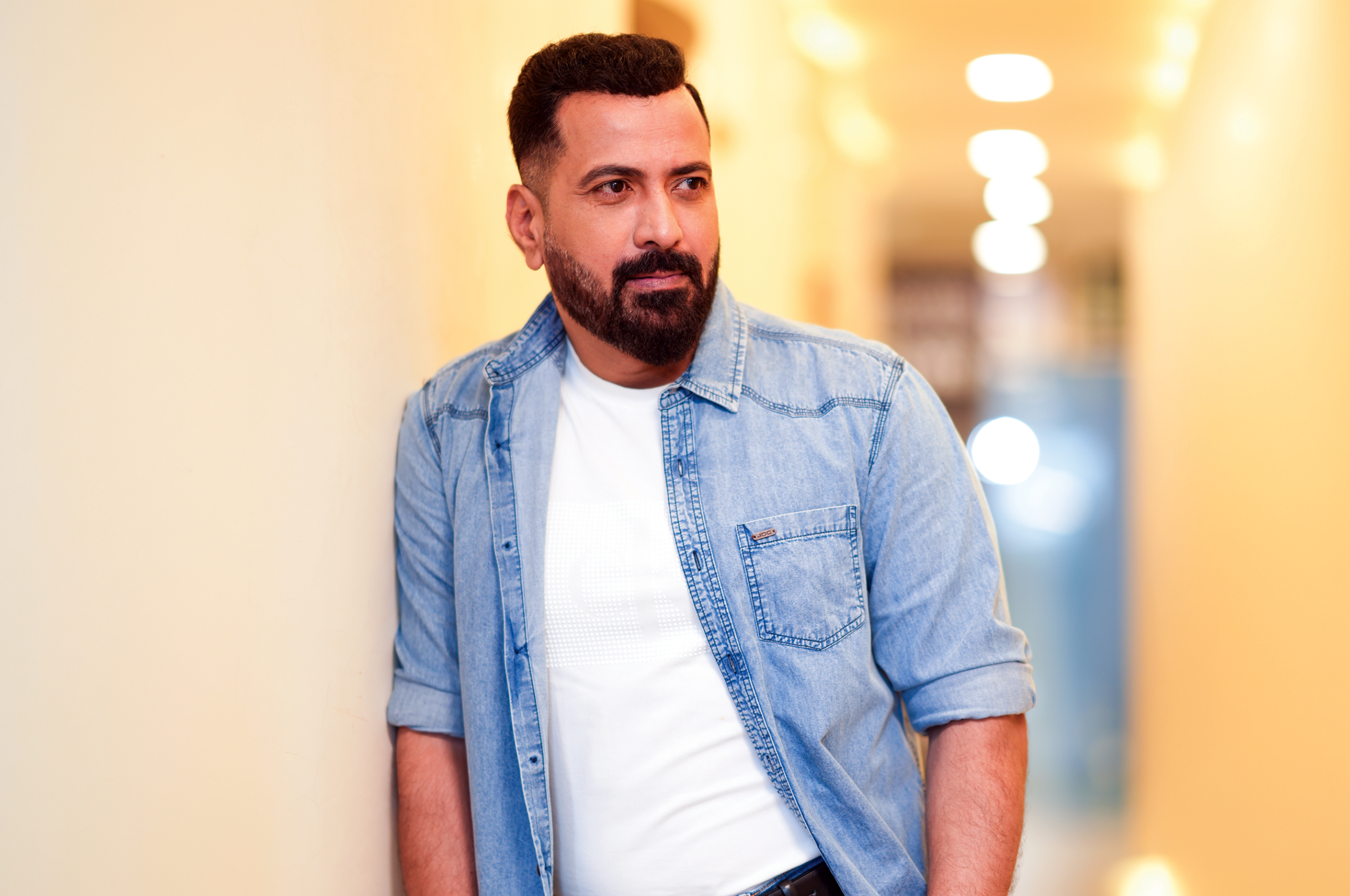
Jithan Ramesh reflects on wrong choices, setbacks and getting it right this time
Two decades after Jithan’s success, the film’s charming protagonist, ‘Jithan’ Ramesh speaks about his career without dressing it up. Perhaps, he didn’t vanish this time, like he did in the 2005 thriller. Talking about his rocky career, he made no attempt to frame it as bad luck or missed timing.
“I didn’t make the right choices,” says Jithan.
It’s a rare kind of admission in an industry that often moves on every Friday. After the early success of Jithan, he took on projects as it continued to come his way, trusting momentum to carry him forward. It didn’t.
It didn’t crash overnight, it just slowly went off track, and it took a while to notice. Now, two decades in, the approach is different. More cautious. Not a comeback, not yet but something closer to a reset.
After the early success of Jithan, Ramesh shed light on what went wrong in the journey. In the conversation, he speaks about the less-discussed side of his journey, betrayal. He recalls how certain directors approached him with scripts, convincing him that the roles would suit him, only for him to later realise the intent was different. “I was betrayed several times,” he says, adding that many of those projects came his way because he was seen as a readily available producer as much as an actor.
But it wasn’t difficult all the while. He also built friendships along the way. One such instance led to an opportunity alongside Silambarasan in Osthe. “I had invited Simbhu sir for the preview of Pillaiyar Theru Kadaisi Veedu. He enjoyed my mannerisms of his father, T. Rajendar, in the film,” he recalls. The interaction eventually translated into a role in Osthe, with the team reworking the part to give him more presence.
Meanwhile, his younger brother Jiiva was on a very different run, delivering successes one after the other, while Ramesh was still trying to find his footing. For a period, their careers were moving in completely opposite directions, one gaining ground, the other searching for it.
But the industry doesn’t stay the same for long. Jiiva’s run slowed down over the last few years, showing how quickly things can change. Now, with 2026 starting on a positive note through TTT, he seems to have found his rhythm again.
Around the same time, Ramesh too was beginning to look at his career differently, more careful, more selective, and more aware of what works for him. Jithan Ramesh was learning to stay patient with his own journey. The setbacks had been real, but so was his belief in pushing through them.
“I always had the belief in myself. Whatever happened after Jithan was my fault. I didn’t make the right choices. I blindly signed offers that came my way after Jithan’s success,” he says. “After that, I made sure I would only sign a film if the story and the technicians involved were convincing.”
That shift in approach eventually led him to an unexpected decision during the lockdown. He chose to enter Bigg Boss Tamil as a way back in.
“I went to Bigg Boss and made sure that I want to come back into the industry,” he says.
The move paid off in ways he had anticipated. The show gave him what he calls a “great reach,” introducing him to a newer audience that hadn’t followed his earlier work. He carried that momentum into BB Jodigal, where he finished as the runner-up, treating it as another chance to stay visible and prove his commitment.
More importantly, the visibility began to translate into film opportunities. Projects like Japan, Route No. 17, and Farhana came his way, marking a gradual return to the space he had been working towards. Among them, Farhana stood out.
He speaks highly of its director, Nelson Venkatesan, describing him as a perfectionist. “Even though the protagonist was Aishwarya Rajesh, Nelson made sure I had enough weightage,” he says, crediting the filmmaker for bringing out his best and helping him prove that he can still perform.
If anything, the phase after Bigg Boss gave him something he didn’t have before, recognition among a new generation, and a clearer path back into the industry.
Now that he has found a clearer path, Ramesh is also more certain about what he doesn’t want to do. When asked if he sees himself writing or directing someday, he doesn’t hesitate.
“As of now, I don’t have anything in mind because I’m already into production. I can only look at things as a producer. If a director comes to me with a script, I can judge the production cost. I’ve grown into a decent, experienced producer.”
It’s a different kind of confidence, one shaped by experience rather than ambition alone.
As an actor, though, there are still boxes he wants to tick. One of them is a long-standing interest in doing a military-based film, something along the lines of Amaran. It’s the kind of role he hasn’t explored yet, but one he clearly sees himself in.
For now, the focus remains on what lies ahead. He has already signed three projects, including Hidden Camera, directed by debutant Arun Raj, along with two other untitled films. There is no rush in how he speaks about them, no attempt to oversell what’s coming next. Because if the last two decades have taught him anything, it is this: momentum can be built, lost, and rebuilt again. And this time, he seems intent on holding on to it a little longer.