

Fireworks fade. Calendars turn. Phones light up with wishes copied and pasted across screens. For a few days, everything feels ceremonial – hopeful, even. And then, almost apologetically, life resumes. Traffic thickens. Deadlines return. The same questions sit across the breakfast table, waiting patiently, as they always do.
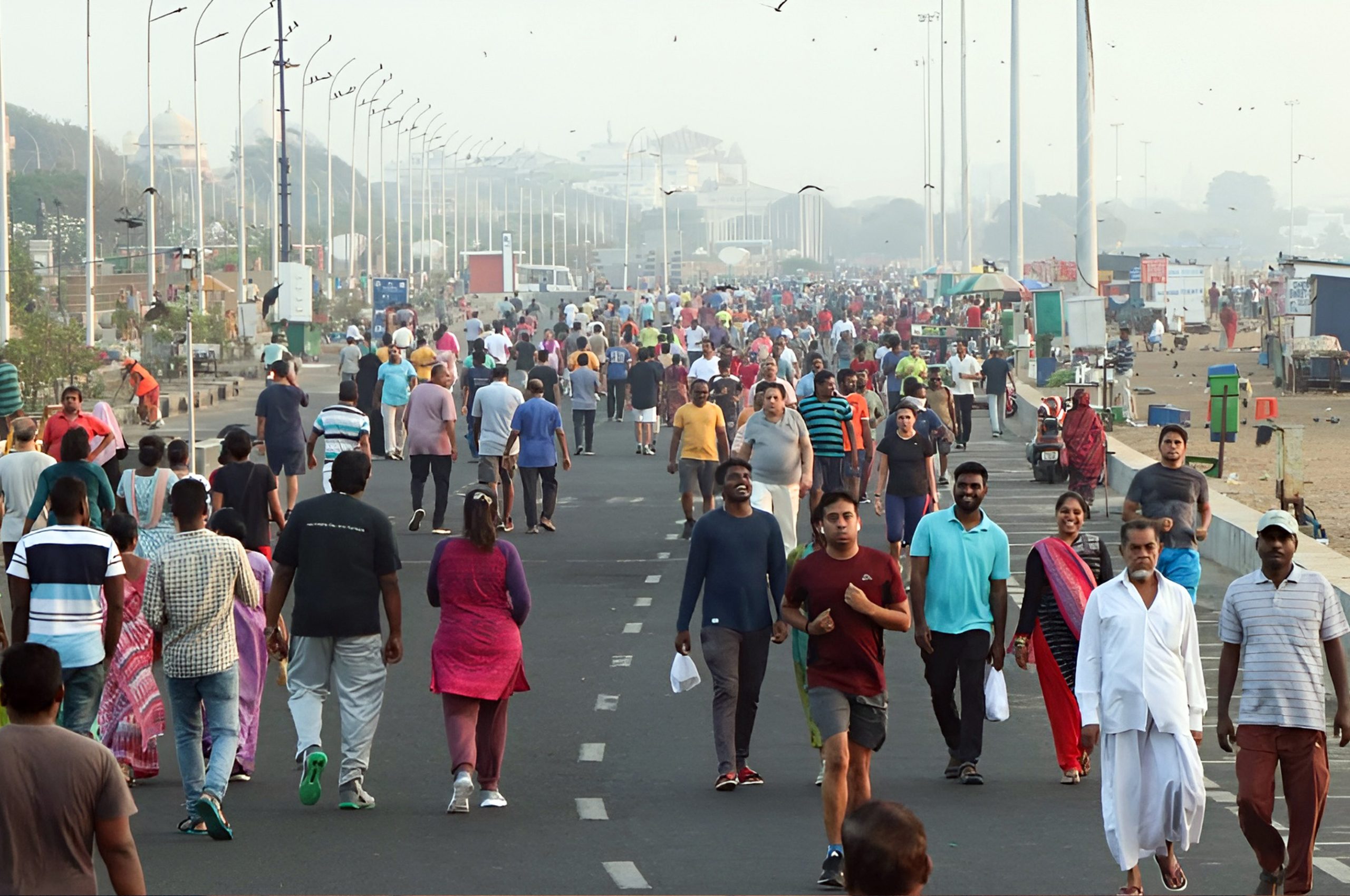
On the first Monday of January, Chennai wakes early. It always has.
The sea does not care about resolutions. The crows argue on the electric wires as if nothing has changed. A man in a white veshti waters the plants outside his gate, careful not to waste water. Somewhere in Mylapore, narrow streets still damp from the previous night’s cleaning, the first filter coffee of the year is poured—dark, fragrant, unhurried—precisely as it was on the last morning of December.
January is often sold to us as a beginning. A reset. A chance to become someone better, faster, leaner, smarter. We are encouraged to add new habits, new goals, new skills, new technologies, and new ambitions. The language of the season is one of accumulation.
But perhaps this year does not ask us to add anything at all. Perhaps this year asks us to let go.
Not dramatically. Not loudly. But gently. Intentionally. With the quiet wisdom that comes from having lived long enough to know that accumulation is not the same as abundance.
This is a quiet inventory of what we may no longer need.
For years, speed was equated with success.
Faster responses. Faster growth. Faster travel. Faster decisions. Faster lives. We learnt to walk quickly, eat quickly, think quickly—and sleep lightly. Slowness became something to apologise for. Delays felt like failures. Waiting felt like weakness.
Subramaniam, who lives near Besant Nagar, does not hurry in the mornings. He is seventy-two and walks to the beach every day, rain or shine. He sits on the same concrete bench facing the same stretch of sea. Joggers pass him—some earnest, some competitive—watches blinking, earphones sealed. They measure distance, pace, and heart rate.
Subramaniam watches the waves arrive and leave.
That is all.
Speed has a cost. It steals texture from time. It flattens days into transactions. It leaves no space for thought to deepen or emotion to settle. When everything moves quickly, nothing is fully felt.
There is a forgotten luxury in moving slowly—unhurried walks, long meals, conversations that wander without purpose. In a world obsessed with acceleration, slowness is not laziness. It is resistance.
Technology promised connection. Somewhere along the way, it left me exhausted.
Our phones wake us before people do. Screens occupy the spaces once held by eye contact. We are perpetually updated, yet strangely uninformed about each other’s inner lives.
Lakshmi, who sells jasmine flowers outside the Kapaleeshwarar temple, does not own a smartphone. She knows the rhythms of the day by smell and sound. She knows when the bells will ring, when the morning rush will peak, when the older women will arrive slowly, stopping to talk. She knows whose husband is unwell, whose daughter is getting married, and who needs an extra handful of flowers without asking.
This is not a rejection of technology. It has its place. But we no longer need more of it than our lives can meaningfully absorb.
We do not need to document every moment. We do not need to respond to everything instantly. We do not need algorithms deciding what deserves our attention.
What we need is discernment. A conscious choice to place the phone face down during a meal.
To walk sometimes without headphones. To listen without glancing away.
The most important conversations are not searchable, shareable, or stored in the cloud.
We have also confused being busy with being useful.
Calendars packed to the edges. To-do lists that never shorten. Lives are measured in outputs rather than outcomes. Somewhere along the way, rest became something to be earned instead of something essential.
Murugan, an auto driver near Triplicane, naps between rides. He leans back, closes his eyes, and lets the city move around him. Buses sigh past. Vendors call out. Life continues. Murugan does not call it rest. He calls it waiting.
This year, perhaps we can stop glorifying exhaustion.
We no longer need to monetise every skill. We no longer need to optimise every hobby. We no longer need to feel guilty about afternoons that drift—like the slow hours on Cathedral Road, where shops are being renewed, pavements widened, old buildings learning to live with new ones.
There is value in idleness. In lazing around. In staring out of the windows. In allowing the mind to wander without direction. Many of the world’s best ideas were born in moments that looked unproductive from the outside.
Approval, too, has become a subtle addiction.
It begins early—good grades, good behaviour, kind words from elders—and later mutates into performance reviews, promotions, likes, applause. Slowly, almost imperceptibly, we begin to outsource our self-worth.
This year, we may no longer need to explain ourselves so much. We may no longer need to prove every choice. There is a quiet confidence in doing the right thing even when no one is watching—and in choosing paths that may not be applauded immediately.
Anger has become ambient.
News cycles thrive on it. Social media amplifies it. Outrage arrives pre-packaged, demanding reaction. But outrage is exhausting. It narrows thinking. It replaces curiosity with certainty.
Caring deeply does not require being constantly inflamed. Sometimes the most responsible response is to step back, breathe, and choose engagement wisely.
There was a time when being busy felt like being important.
Multiple invitations. Endless commitments. A fear of missing out quietly rules our calendars.
This year, perhaps we can choose presence over participation.
We no longer need to attend everything. We no longer need to say yes reflexively. We no longer need to stretch ourselves thin in the name of relevance.
A smaller life is not a lesser one. Depth often requires boundaries.
Joy has been treated like a reward at the end of achievement.
After the promotion. After the children grow up. After retirement.
But life has a habit of not settling.
Joy lives in minor things—in the taste of morning coffee, in a shared laugh, in a quiet run at dawn along the ECR, where the sea flashes emerald blue between houses, and the road curves gently as if it has nowhere urgent to go.
Joy does not announce itself. It waits.
We have also grown remarkably good at ignoring the natural world that sustains us.
Sunrises happen unnoticed. Birds call without listeners. Seasons shift quietly, even as we scroll past them.
This year, perhaps we can return our gaze outward.
To the sea at dawn.
To flowers growing through cracks in the pavement.
To the way light changes across the same street at different hours.
Nature does not demand productivity.
It teaches presence.
Independence has been over-celebrated.
We are taught to be self-sufficient, resilient, and strong. Asking for help is framed as weakness. But humans are not designed to be solitary units.
This year, we may no longer need to carry everything alone.
We can lean on each other again. We can rebuild brotherhood, sisterhood, togetherness—not as slogans, but as daily practices.
Sharing a meal.
Checking in on a friend.
Sitting with someone in silence.
These are not small acts.
They are the foundations of a humane society.
The pressure to reinvent ourselves every year is relentless.
New versions. New identities. New labels.
But growth does not always mean becoming someone different. Sometimes it means becoming more fully who we already are.
This year, perhaps we no longer need to chase transformation.
We can focus instead on alignment – between values and actions, between inner lives and outer choices.
And when we strip away what we no longer need, what remains is surprisingly simple.
Time.
Attention.
Health.
Relationships.
Meaning.
The new year does not demand that we become extraordinary. It invites us to become attentive.
To live with a little more kindness. A little more patience. A little more care – for ourselves, for each other, and for the fragile world we inhabit.
Perhaps the most radical resolution this year is not to do more, but to live better.
And perhaps that, quietly and gently, is more than enough.