

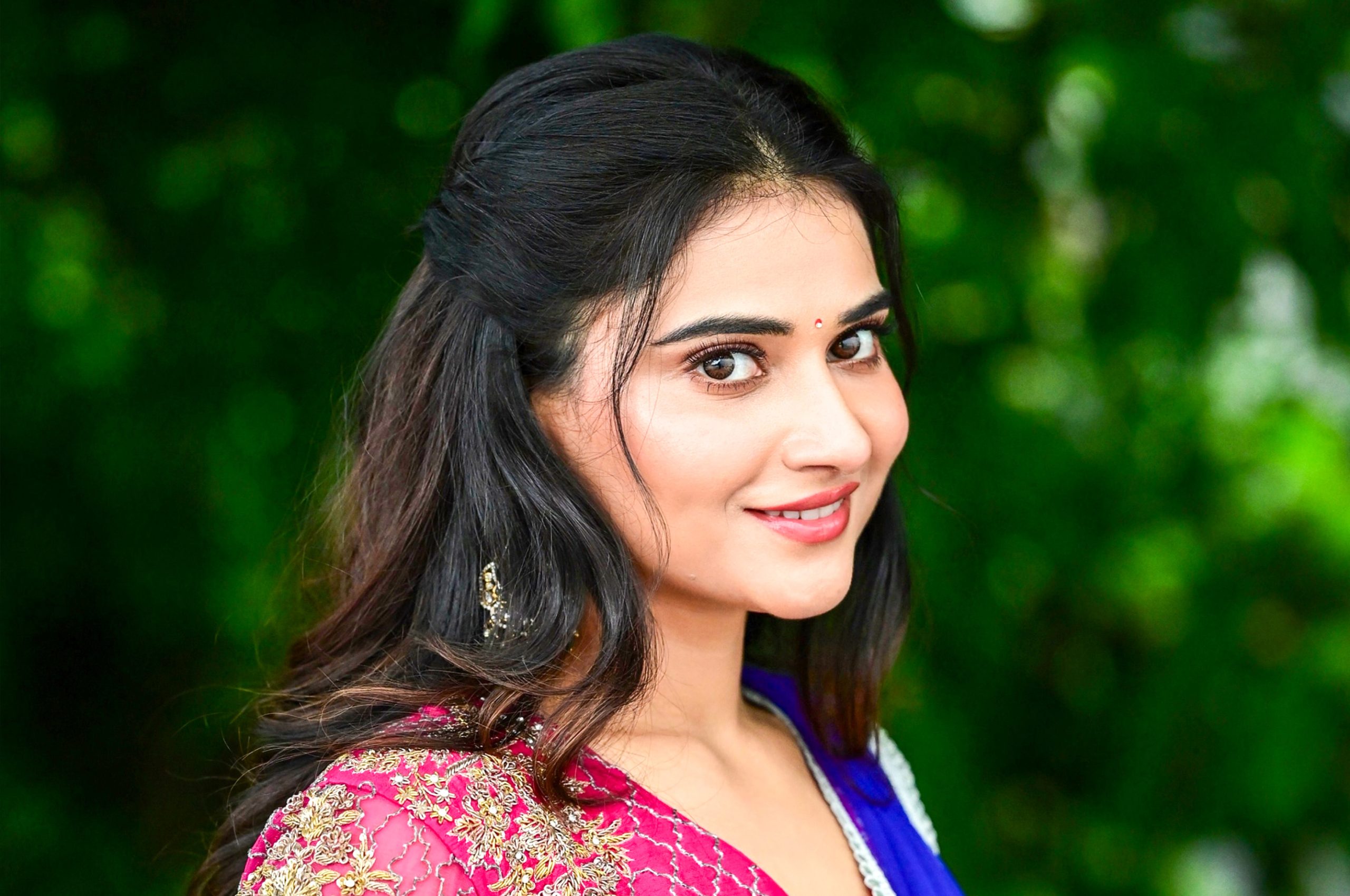
Prisha R. Singh is finding her rhythm, one role at a time. From her early screen appearance in Gulabo Sitabo to her Telugu film journey with Spy and Buddy, the actor has steadily explored varied characters and new creative spaces. Her latest outing, Ramba Oorvasi Menaka, sees her step into a playful fantasy world as Oorvasi. Grounded, curious, and keen to keep challenging herself, Prisha is less interested in fitting into a fixed mould and more focused on discovering what each new story has to offer.
Looking back at where you started and where you are today, how do you view the trajectory of your career graph so far?
I feel I have evolved tremendously, not just as an actor but as an individual. Looking back, there was so much unlearning to do before I could truly understand myself and my craft. Every setback, every small win, and every new opportunity has brought its own lesson. Genuinely, there is no better teacher than time. My journey has been all about learning, growing, and settling into a quiet confidence about who I am today. I have immense gratitude for where I began, but I am even more thrilled about where I am headed.
Transitioning across different cinematic spaces and regional industries brings distinct working styles. How has navigating diverse storytelling environments broadened your versatility as an actor?
Honestly, as an actor, I do not believe in the label “regional.” At the end of the day, it is purely about the story you tell and the character you inhabit. Cinema genuinely transcends language. That said, coming from a different part of the country and picking up a completely unfamiliar language certainly has its challenges. You have to understand the culture, absorb the subtle nuances, and ensure the performance feels entirely authentic. But that is the real thrill of the craft: stepping out of your comfort zone, immersing yourself in an unfamiliar world, and truly performing. Every new industry has expanded my horizons and taught me something fresh.
In your recent work, particularly in dynamic projects like Buddy and Spy, what drew you to those stories, and what new creative muscles did they allow you to flex?
What drew me to both films was how purposeful the roles were. I have always gravitated towards characters that genuinely drive the narrative forward. In Buddy, playing an air hostess gave me a fascinating peek into a profession I had only ever seen as a passenger. During preparation, I started paying close attention to their body language, how calmly they communicate, and how seamlessly they handle tricky situations. It made me realise their job goes so much deeper than simply serving meals. With Spy, stepping onto such a massive canvas and experiencing large-scale filmmaking was an entirely different ballgame. It was a fantastic learning curve and wonderful exposure to a much bigger cinematic universe.
Your project, Ramba Oorvasi Menaka, has generated significant curiosity. How did you prepare for the character, and what made you say yes to the script?
When I first heard the narration for Ramba Oorvasi Menaka, I was hooked simply as an audience member. I was already enjoying the story when my director, Chandra Mohan garu, turned to me and said, “I want you to play Menaka.” I was instantly thrilled. There were so many entertaining and quirky layers to her, especially the whole “Menaka Saranam” mala angle. Playing a celestial being sounded fascinating, though stepping into her shoes had its own challenges. While I knew the broad mythological lore, I wanted to understand her character deeply, so I picked up Kavita Kane’s book on Menaka. Our script, of course, has its own unique take, and it has been quite a while since our industry saw something like this. It felt wonderfully fresh yet carried a sweet touch of nostalgia, which made it impossible to pass up.
When you assess your growth from your earliest days in front of the camera to your current set of releases, what is the biggest technical or emotional change in how you approach a scene?
Without a doubt, my confidence! In the beginning, I used to be terribly nervous, and let’s be honest, the camera always picks up on that. But with experience, rehearsals, and a fair share of workshops, that hesitation faded away. Earlier, I used to overthink every little move before a take. Today, I rely far more on instinct. I trust my preparation, I trust the character, and truthfully, the camera feels like my closest friend on set now.
The choices an actor makes early on often define their career path. Are you conscious of building a specific brand of roles, or do you prefer staying spontaneous and letting instinct guide your script selections?
It is a balance of both. I am mindful about picking scripts that challenge me and help construct a sustainable, meaningful career. At the same time, when an instinctive gut feeling hits me about a story, I go with it. Not coming from a background where a massive launch was handed to me means being very intentional about every opportunity that comes my way. I am still carving out my space, so while I keep my larger artistic goals in mind, I always leave plenty of room for intuition.
How do you prepare for the physical and emotional demands of contemporary, high-energy productions while keeping your performance nuanced and grounded?
It all comes down to harmony. As an actor, your mind and body are your instruments, so physical fitness and mental balance must go hand in hand. For demanding shoots, I rely on disciplined training and stamina, but I give equal weight to the emotional headspace of the character. Physicality should never overshadow the performance itself. Even in the middle of a chaotic or high-octane sequence, I try to remain anchored to the core emotion so the performance stays honest, nuanced, and grounded.
With the entertainment landscape evolving rapidly through theatrical and digital formats, how has your definition of a successful film or memorable character shifted over time?
There has been a visible shift. Today, success operates on two clear levels: the traditional box-office numbers, and the depth with which a story lingers with people. The OTT space has democratised cinema so beautifully; films that may have had a modest theatrical run often find immense love and longevity online. So, success has become quite subjective. Having said that, as a pure cinephile, the timeless classics will always remain untouchable. Certain performances stay etched in your memory for decades. For me, if a character lives on in someone’s mind long after the credits roll, that is the true hallmark of success.
Amid tight shooting schedules, industry momentum, and rising public attention, what daily practices or personal anchors help you stay centred and protect your mental well-being?
My family and close friends keep me completely grounded. The moment a shoot wraps, I head home and slip straight back into ordinary life: running household chores, tidying up, and just enjoying simple downtime with loved ones. I make it a point never to bring work baggage home. Once I pack up, I switch off completely. Acting is my passion and my profession, but it is not my entire universe, and keeping that boundary clear keeps me sane.
As your career graph enters its next exciting phase, what kind of cinema, genres, or complex narratives are you eager to explore next, and where do you envision yourself five years from now?
I am genuinely excited about what lies ahead. I am very keen to avoid being boxed into one specific mould. People often tell me, “You have that sweet girl-next-door vibe,” and while that is lovely to hear, as an actor I want to shatter expectations and take on roles that push my boundaries. As for where I see myself five years down the line, I have stopped trying to script the future. I would rather immerse myself in the process and enjoy the ride. One thing is certain: I know I will be right where I am destined to be.