

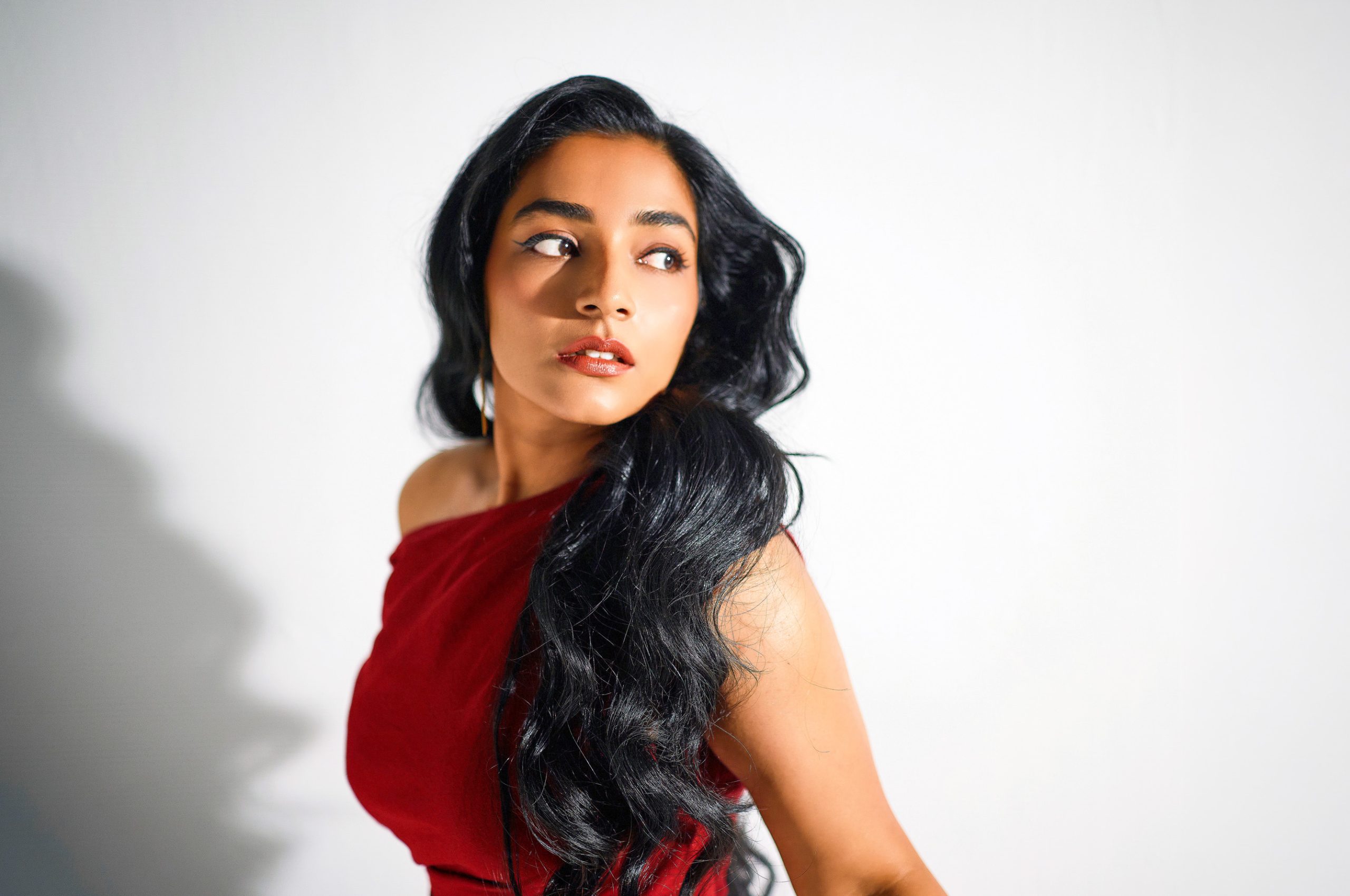
From studying journalism to being a VJ on television, winning the Kerala State Award for her debut performance, and now taking on performance-oriented roles, actress Rajisha Vijayan has come a long way. The skilled actress, known for films like Anuraga Karikkin Vellam, June, Karnan and Jai Bhim is now gearing up for her role in Sardar 2 alongside Karthi. In a freewheeling chat with us, the artiste opens up about her journey towards becoming an actor, her craft and preparation for roles, the characters available to women in South Indian cinema, and more.
Tell us about your role in Sardar 2.
I can’t divulge much about it, but it was a character that I loved playing in the first part of the movie series. I was surprised to get a phone call saying that I would be cast in Part 2 because my character had already died in Part 1. Sardar 2 is being made on a bigger scale, and there is a lot of action in it. There are also a lot of international elements. From director Mithran sir to the lead actor, Karthi sir, it’s a team that I really love working with. I am very excited to watch the film, as I haven’t seen it myself yet.
A sequel comes with a lot of expectations. So, was there any pressure on you while performing?
No, I had no pressure because I absolutely loved working with Karthi sir in Part 1, and I was ecstatic about working with him again. As for the director, he is a very sensible filmmaker who knows his craft very well, so it was all about surrendering to his vision. When a director calls you back to work with him, it is a kind of validation that makes you feel good.
I’m completely a director’s actor, and I like to understand the director and know what’s going on in their mind. Mithran sir is a joy to work with and has a huge vision board. He makes larger-than-life characters. My character in the film has always contributed to the emotional side of the story.
How was your experience of working with Karthi?
He’s one of my favourite co-actors. I have seen the kind of effort Karthi sir puts into each of his characters. It’s the same with Suriya sir as well. They sit on the set and work towards making the film better, and they want their co-stars to perform well too.
They’re very generous with you. They perform with you and talk to you, and it feels like a very collaborative effort. It doesn’t feel like a superstar coming onto the set, delivering his lines and leaving. It’s more about how grounded he is and how much effort he is ready to put into each of his scenes. It’s about how comfortable he makes you feel and the fact that you can also give your inputs when working with him.
I’ve been able to have beautiful conversations about cinema with him, considering he is a cinema buff who knows so much about international cinema as well. He is such a humble human being too.
From being a TV anchor to becoming an actor, how has the journey been for you?
I was a medicine student initially, and then I went into journalism and took up VJing. It was just one-and-a-half years of my life, but I loved doing it. However, I knew that once I got into films, I needed to completely focus on them, so I stopped VJing.
Because I got to work in the industry, I got to know how the industry works, and it brought a lot of professionalism into me. It helped me not have any fear of the camera when I was shooting for films and also helped me with things like facing the media.
But it hasn’t really contributed to my acting because when you’re a VJ, you’re being yourself, whereas when you’re acting, you’re being someone completely different who exists only in the heads of the director and the actor.
How did the switch happen from journalism to acting? Was acting always on your mind?
Acting was on my mind ever since I was a child, but I never thought it was a workable dream, especially for someone who looks a certain way, because you have been fed narratives that only actresses who look a certain way are cast as heroines.
Also, my parents are very academically focused and even I was very particular about my marks. My dad was in the Army, and he was a doctor. I wanted to join the Army and become an Army doctor.
It was an impulsive decision for me to study journalism and film studies, but even then, I did not have the confidence to try acting and just go for it. Back then, there was no social media, and people were spotted through VJing and television. Big actresses like Nayanthara, Nazriya and Parvathy were also VJs before they turned to acting, and I was also spotted that way. That’s how I got into Malayalam films and then into Tamil.
You’ve consistently chosen performance-oriented roles. Has this been a conscious choice?
Yes, because I’ve always believed in quality over quantity. I’ve never wanted to do a certain number of films per year or just make money and gather fame and then leave the profession. I wanted this to be a lifelong career. I’m here to stay, so I wanted the foundation to be strong.
I’m here to build my career brick by brick, and each of the characters should speak to me and make me feel like doing it. I will then give it my 110% and make it happen.
The amount of screen time I’ve had in a film, or whether I’m romantically paired with the hero, has never bothered me. I’ve always thought about how much my character can contribute to the script and how much my role will matter to it. That’s probably why I’ve done only so many films in so many years. I’m always on the lookout for characters that are different from what I’ve done previously.
When it comes to roles for women in cinema, how is the scenario currently in Malayalam, Tamil and Telugu, the three industries that you have worked in?
To be very honest, characters with depth and well-written roles for women have reduced. Although they are being written, it’s not sufficient. When you compare industries, Malayalam is doing a little bit better, but even in Malayalam, these kinds of roles have reduced.
I feel even the commercially driven characters, like the bubbly girl, are missing right now. We tend to follow trends, and if one film works, we tend to follow that path and keep making similar films.
There are very few characters that I watch and can relate to, or characters that look like me on screen, or whose journey is something that I can understand. Change is the only constant, so I hope things will change.
Looking back at the past, the trend always keeps going up and down, and it’s also about what the audience wants. I was really happy to see Samantha’s film Maa Inti Bangaram cross Rs 100 crore. It is nice to see such a film pull crowds into theatres. Even Radhika Ma’am’s film Thaai Kizhavi worked well this year. There are good roles being written, but I would like to see more such roles.
How is the work culture different in Malayalam, Tamil and Telugu cinema?
Other than budget differences, I’ve not really noticed any big differences. The larger the state in terms of geographical area, the more returns you will get because you will have more screens. Kerala is a smaller state by land area, so in turn, we will have much less revenue and smaller budgets. People here have understood how to navigate the budget constraints and still make films happen.
But in the other industries, when the budget increases, it is more relaxing to work. You’re not rushing at a huge speed to finish a shoot because you have the budget on your mind constantly. In all industries, the mechanics and workings of the industry are the same. While acting depends on the genre, work culture is budget-dependent.
So, there is no major difference between these industries, and people are respectful towards each other.
As for your craft and preparation, how do you prepare for emotionally demanding roles?
I am not somebody who will come to the spot and work. I love doing my homework. I create playlists, write letters to my characters and do journaling. I like asking questions to the director and the writers and understanding the crux of the character. It’s their vision, and I am just the tool to enact it. The director will be caught up with a lot of things, so I feel it’s my duty to pursue what the character is about and ask the director about it. I also like to think about what my character has done before, even if it is not shown in the film. It brings more authenticity to the character. And if the role requires any physical transformation, then I work on that too.
Do you have any dream roles or genres that you want to explore?
I want to work with everyone, and I want to do all kinds of films. I want to do commercial masala films and action-packed films. Right now, I feel like I’m being bracketed in the rural kind of roles, but I’d also like to portray women of today and someone who looks like me.
I also want to do bubbly characters, singing and dancing, and I hope that will come my way. I want to work with everyone because each director and each technician offers something different.
Each person is like a new book that you get to read or a new chapter that you get to hear. I want to do it all.
Do you have any other upcoming projects apart from Sardar 2?
Right now, I’m going to begin shooting for my portions in my new film Thagappan with Jiiva. My recent release was Bachelor Party 2 in Malayalam.
Rapid Fire
All-time favourite film:
Charulata by Satyajit Ray. It was the movie that made me want to pursue acting.
All-time favourite South Indian actor:
I absolutely love Urvashi Ma’am’s work and also Shobana Ma’am’s work. I love people who can pull off humour because I think that’s the toughest genre to pull off.
Favourite travel destination:
Germany, which is a very underrated tourist country.
Favourite destination in India:
It has to be Kashmir.
Favourite food:
I like parotta, and my favourite cuisine is Indian.
Acting to you is:
My life.