

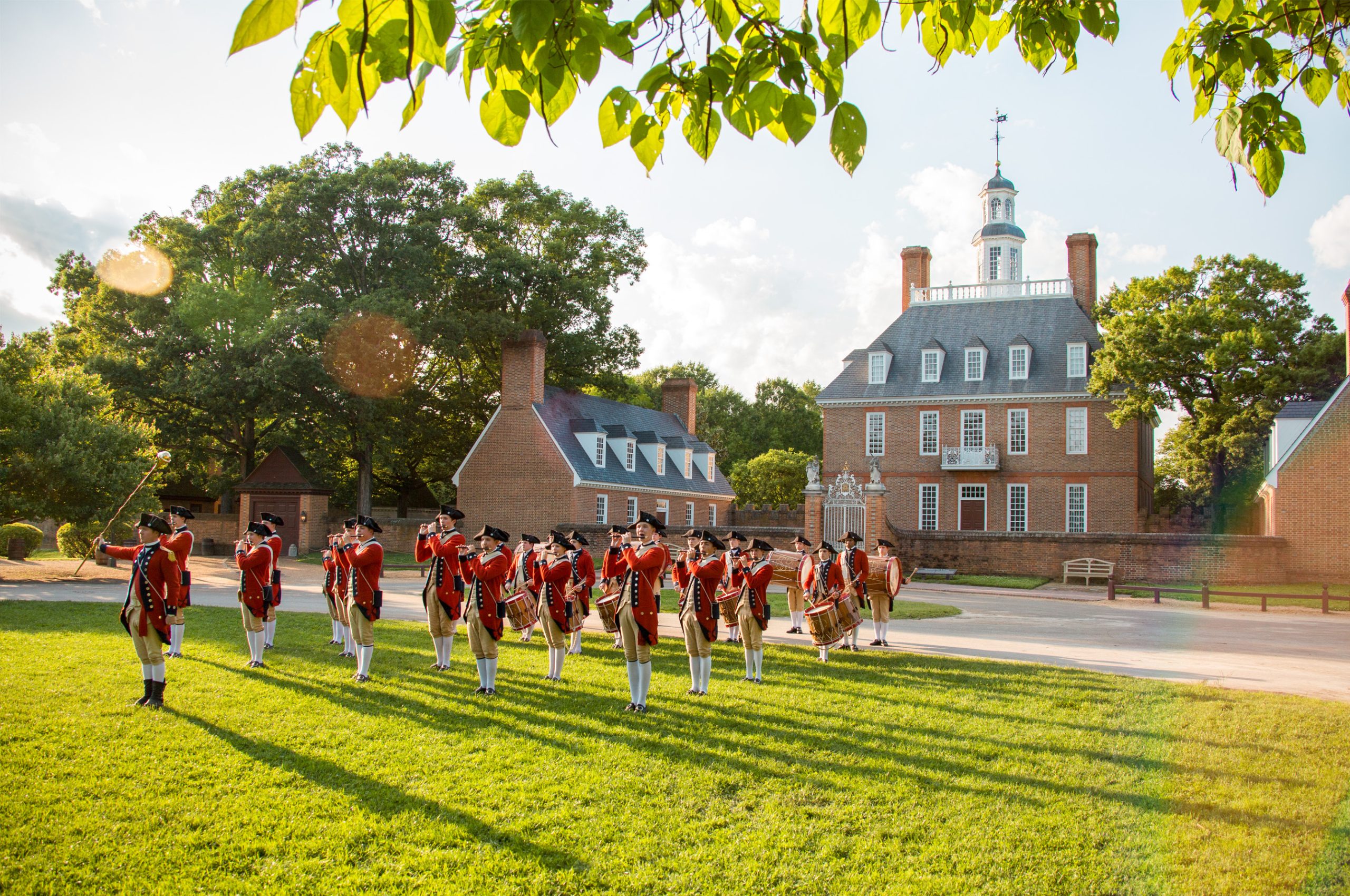
In Williamsburg, history isn’t behind glass panels. It breathes and moves. Every street corner feels alive with the pulse of revolution, every doorway a portal to colonial America. The clang of a blacksmith’s hammer, the rustle of skirts sweeping the dust, the cadence of voices slowed by another age. As you take a stroll on these historic streets, you might just bump into George Washington, Thomas Jefferson or Marquis de Lafayette. Williamsburg stages a living history lesson all around you. I felt like I was walking not just through streets, but through centuries. I was time travelling back to the days of colonial America, where every street, every nook and cranny echoed stories from another time. But history here isn’t just quaint, it’s intense. I had flown 14,000 kms from the south of India all the way to Virginia to celebrate 250 years of American independence in the place where it all started. Standing there, I could almost feel being caught between two sides during one of America’s most defining chapters. Williamsburg was the Colonial Capital from 1699 to 1776. After a fire broke down in Jamestown, the capital was moved to a location between the James and York rivers, and Williamsburg was renamed in honour of King William III.
America’s 250th Anniversary
There’s no better time than now to visit the Historic Triangle, as America celebrates its 250th anniversary. It’s where independence was won and the nation’s journey began. Williamsburg is celebrated for preserving and recreating the 18th-century colonial capital, where Founding Fathers George Washington and Thomas Jefferson helped shape the American Revolution. It’s here where the streets were walked by Jefferson, Washington and many other patriots, where the ideas of liberty and self-governance took root and changed the course of history.
Throughout 2026; a series of special events will mark this historic semiquincentennial milestone celebrations marking some of the most exclusive festivities. Walk down Duke of Gloucester Street and walk past the historic sites and buildings as Colonial-costumed townspeople and tradespeople demonstrate their crafts. At Jamestowne we learnt about early settlers, with panoramic views of the James River. At Yorktown we heard the story of the nation’s birth and also visited the American Revolution Museum.
Spring brings a burst of colour to the gardens, when they’re in full bloom, making it an ideal time to explore the iconic living history attraction. The flowers at the Williamsburg Botanical Garden were in full bloom. Bird lovers can try birding at York River State Park, fitness freaks can pedal the scenic Virginia Capital Trail, take a hike along Island Loop Drive on historic Jamestown Island or take to the treetops at Go Ape Zipline & Adventure Park.
Walking Tour of Colonial Williamsburg
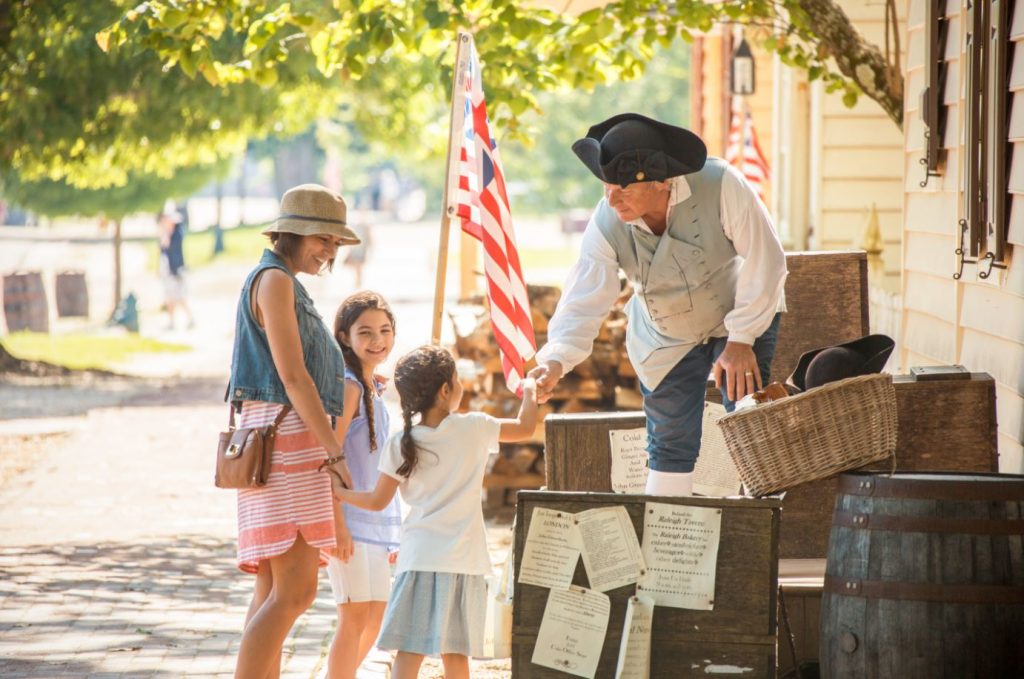
When I visited this town recently, I felt like being transported to that colonial era in an instant. The people themselves seemed part of the living tableau: women in gowns with crisp white frills at the sleeves and collars, skirts sweeping gracefully as they walked; men in waistcoats and breeches, tricorn hats angled just so. Their voices carried in a cadence that felt older, slower, deliberate. A blacksmith and a silversmith’s hammer rang out nearby, each strike sharp and metallic, while some women were spotted sewing frills at a tailor store. There’s also a carpenter’s yard and an apothecary representing some of the historical trades that were prevalent in those days. The interpreters dressed in their characters shared stories about life during the transformative time and seemed so real and vivid, that I had to pinch myself, just to be sure I hadn’t slipped into a dream.
Yes, it wasn’t a museum. It was a rhythm of life that seemed to breathe and exist all around. Every detail, from the lace cuffs to the clatter of carriages, made me feel as though we had slipped into the 18th century and the modern world had quietly stepped aside. It was interesting to listen to the nuggets of history from the very people who have been inhabiting the area since many years. As I was strolling on the streets of Colonial Williamsburg, walking through a 301-acre living-history museum, the largest in the world, depicting 18th-century American life, it felt like the century had rewound itself. The air was warm, carrying the faint scent of wood smoke and baking bread.
As we strolled along, a striking figure on horseback swept past. Was it Lafayette himself, or at least the man portraying the French commander who once led Continental troops to victory at Yorktown? And soon a carriage rattled past, its wheels groaning against the cobblestones, the horses’ hooves striking a steady rhythm that echoed down the lane. The driver, perched high in his seat, rode past the centuries old houses on either side, houses that stood with their clapboard walls painted in soft creams and muted reds. White picket fences enclosed tidy gardens, and porches with rocking chairs seemed to invite us to pause. Inside, we took a sneak peek at candlelit rooms with pewter plates on sturdy wooden tables, handwoven rugs underfoot, and the faint creak of floorboards that have held centuries of footsteps. The costumed interpreters shared the lives of the diverse 18th-century Williamsburg population and their experiences as American Revolution unfolds and a new nation is born. History is brought to life on the charming streets of the colonial capital, as I explore the gardens, trade shops, and historic sites, experiencing a setting of unrivalled beauty and historic charm.
Our tour guide, Trish Thomas took us back in time to a divided nation. A century after the American colonies won their independence, Williamsburg once again found itself at the heart of conflict. As the Confederate Army advanced toward Richmond during the Civil War, the city was swept into the chaos of battle. Trenches scarred the landscape, and Williamsburg stood on the front lines, caught between opposing forces in what would become one of the nation’s most defining and devastating struggles: the war between the States.
She tells us, how this town was a cultural and political hub on the verge of revolution in the 18th century. We also visit the stately Governor’s Palace, home to seven British royal governors and countless dignitaries including George Washington. We walked further and explored the former Capitol and Courthouse.

Steamer Wagon National Park Battlefield Riding Tour
We also tried the Steamer Wagon National Park Battlefield Riding Tour. I trotted on board Yorktown & Co’s Replica Stanley Steamer Wagon and rode in style through Colonial National Historical Park Battlefields. I called it shotgun and grabbed a seat right next to our guide who also drove the red wagon. The guided tour on the Yorktown Battlefield included memorable historical moments reliving America’s struggle for independence. He showed us the Redoubts 9 & 10, as I could almost envision and feel the perseverance of America’s independent spirit. Seeing the location of Redoubt 10 where Alexander Hamilton led a victorious attack in the dark of night was such a revelation. The ride continued through the National Park to the Moore House, where surrender terms were negotiated between Lord Cornwallis and General Washington, and onward to the hallowed grounds of Surrender Field, where the British laid down arms. Acknowledging my Indian roots, the guide also noted the connection to the same Lord Cornwallis who was defeated here in 1781 and later went on to India in 1786. This scenic ride then took us through the National Park past the site of the field hospital and French cemetery. This 1-hour tour finished back where it began at Little York Confectionery in the heart of Historic Yorktown.
A short stroll down Main Street is Mobjack Coffee Roasters and Petite Cafe that is lovingly cultivated by owners, Celeste and Jo Gucanac, who pride themselves on providing exceptional quality coffee and sandwiches. They believe you shouldn’t drink coffee just to drink it…you should drink coffee to love it.
Colin G. and Nancy N. Campbell Archaeology Centre
I was also privileged to attend the grand opening of Colin G. and Nancy N. Campbell Archaeology Centre, on my last day in this beautiful town of Williamsburg. Williamsburg is part of the “Historic Triangle” along with Jamestown and Yorktown, situated on the Virginia Peninsula between the James and York rivers, and is famous as a major centre of colonial history. I was honoured to meet Nancy N. Campbell herself at the inaugural launch event of this centre. This new facility gives an unprecedented look into the archaeological process that supports the foundation’s research and storytelling. The centre is designed as a fully functional laboratory with transparent walls to observe active conservation, analysis, and cataloguing of artifacts. We could observe the archaeological team right in front of us as they conducted x-rays, clean, analyse, and catalogue artifacts. The centre also allowed us to lay our hands on archives, participate in hands-on activities and educational exhibits.
American Revolution Museum at Yorktown
The American Revolution Museum at Yorktown tells the story of the nation’s founding, from the twilight of the colonial period to the dawn of the Constitution and beyond. Exciting indoor galleries feature period artifacts, immersive environments and films, including “The Siege of Yorktown,” with a 180-degree surround screen and dramatic special effects. It was very insightful. In the outdoor areas, we visited a re-created Continental Army encampment to learn about the life of a soldier. We even learned how to manoeuvre a tank, feeling the thunderous boom of its cannon echo across the training ground, an experience that blurred the line between reenactment and reality. We explored a revolution-era farm, based on a real-life 18th-century family, to help with chores in the house, kitchen, tobacco barn, gardens and crops.
Colonial Flavours
We had worked up quite an appetite with our walking tour. It was time to visit the historic Kings Arms Tavern, again an 18th-century Colonial reproduction. The servers came dressed in their colonial costumes as we devoured some hearty American specialties for an early dinner. Their must try was the rich creamy buttery peanut soup. The salads and salmon here were also lip-smacking delicious.
Earlier this day, we had kickstarted our day with a stickful of pancakes doused in syrup topped with whipped cream and berries. Williamsburg sure knows how to help you begin the day right. Being the Pancake Capital of the World, it’s easy to find a pancake house in every corner, particularly along the Richmond Road. Our pancake breakfast stop was the Colonial Pancake House.
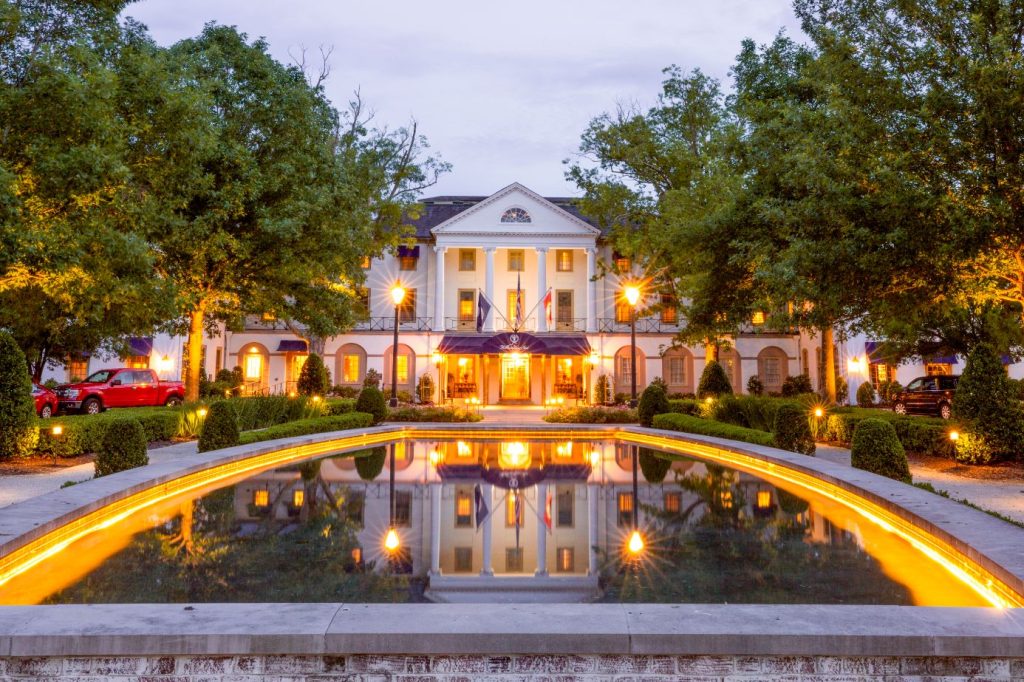
The next day we drove to the serene banks of the York River for a hearty meal at the Riverwalk Restaurant with a picturesque, breathtaking views and a diverse menu of fresh seafood, pasta, succulent steaks and salads. My stay was made comfortable by Courtyard Williamsburg Busch Gardens Area.
With so much preserved and recreated history in Williamsburg, I came back enriched, not just with facts and dates, but with a deeper sense of how the past breathes into the present. Walking its streets felt like reliving history, where every hammer strike, every costume, every story whispered stories of resilience and revolution. And as I left, I carried with me more than memories of a journey; I carried echoes of a time that shaped a nation, and a reminder that history is never just behind us, it’s alive, waiting to be shared with many generations to come.