

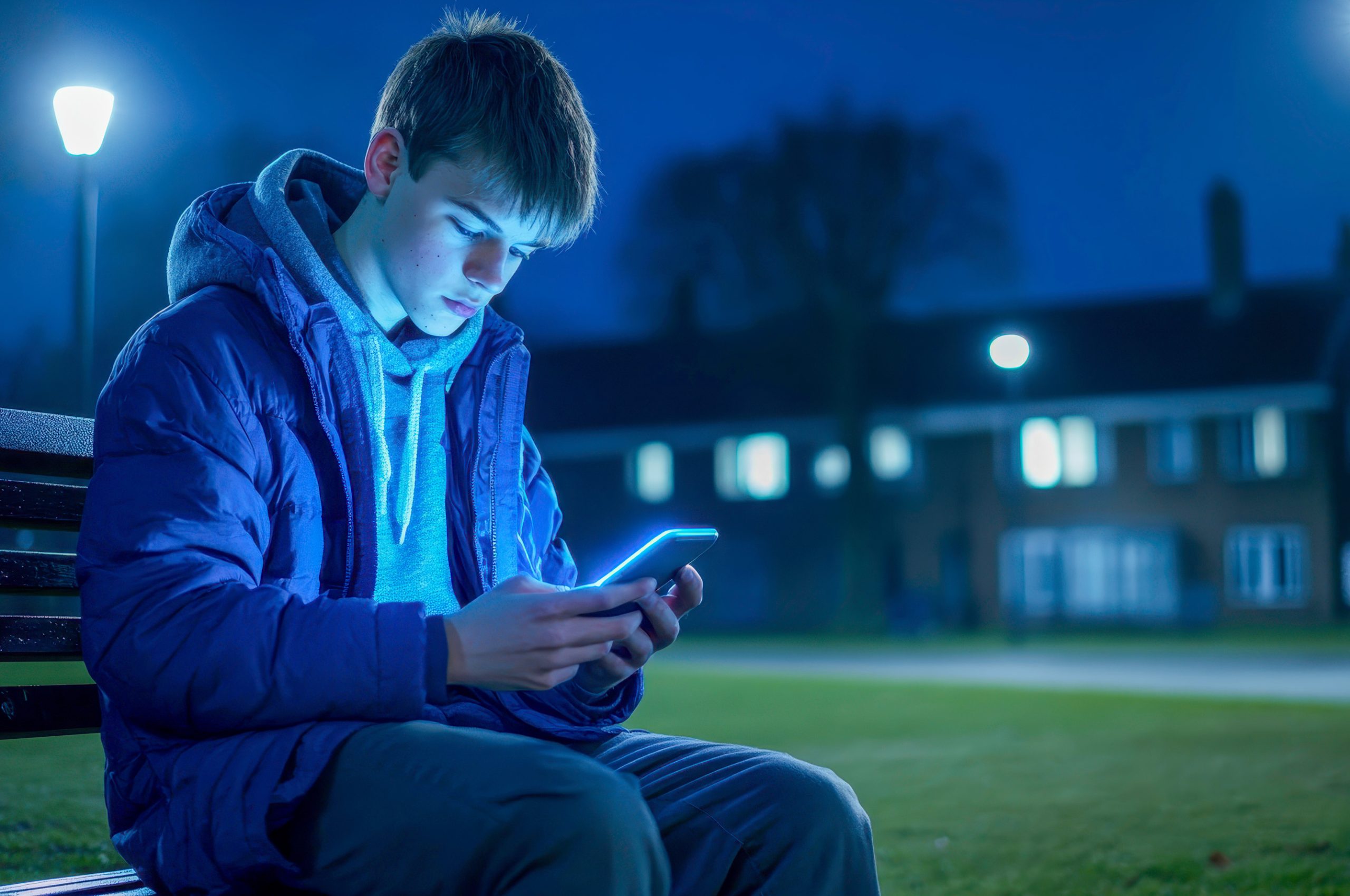
Parenting adolescents has always been challenging, but parenting adolescents today feels like entering a world for which many parents were never emotionally prepared. The rules seem to change overnight. Conversations that once happened within homes, schools, and neighborhoods now unfold through disappearing messages, gaming chats, online communities, private accounts, and digital spaces that many adults struggle to understand.
A mother waits awake past midnight while repeatedly checking her phone. Her son’s location shows active online status, but his room is empty. She tells herself not to panic. Another parent sits outside her daughter’s bedroom wondering whether to knock and ask questions or pretend not to notice the sudden silence, the locked screen, the emotional withdrawal. Somewhere else, a father debates whether checking his teenager’s phone is an act of protection or a breach of trust that may permanently damage communication.
Parenting adolescents today no longer feels like simply raising children. It feels like negotiating with an entire culture that entered our homes before we had the tools to understand it ourselves.
Earlier generations worried about where children were physically. Today, even when adolescents are sitting right beside us at the dining table, we often do not know the emotional worlds they inhabit. Their friendships, fears, validation, rejection, curiosity, loneliness, experimentation, and identity formation often unfold online in spaces parents may never fully access.
This is not an article about blaming adolescents. Nor is it an article about blaming parents. In many ways, both generations are overwhelmed. Teenagers are growing up in an environment of constant stimulation, comparison, visibility, pressure, and exposure. Parents are trying to keep up with a rapidly changing world while carrying the impossible responsibility of protecting children from dangers they themselves never encountered at that age.
One of the biggest mistakes we make as a society is oversimplifying the problem. We either romanticize teenage freedom or criticize modern parenting. But the reality is far more layered. The challenge is real. The confusion is real. The helplessness many parents feel is real.
Around the world, similar stories repeat themselves in different forms. In many countries, schools are struggling with rising anxiety among adolescents, digital bullying, self-harm linked to online comparison, increasing vaping culture, substance experimentation at younger ages, and emotional isolation despite constant online connection. In some homes, parents discover that their child has an entirely different online identity. In others, they realize their teenager has been emotionally dependent on strangers met through gaming platforms or social media communities.
There are parents who discover through a random photograph that their teenager attended a late-night party involving alcohol. There are adolescents exposed to pornography years before parents even imagine having conversations about intimacy. There are teenagers who appear socially connected online while silently struggling with depression and loneliness.
What makes this particularly difficult is that adolescents themselves are often not emotionally equipped to process the intensity of what they consume daily. The adolescent brain is still developing. Identity, belonging, attraction, peer validation, emotional regulation, impulsivity, and risk taking are all heightened during this stage of life. Now place this natural developmental phase inside a world driven by algorithms, instant gratification, comparison culture, and constant accessibility. The result is emotional overload not only for teenagers but for entire families.
Many parents quietly confess something they feel ashamed to admit. They are scared. Not only scared of the world outside, but scared of losing emotional access to their children. There is a fear that one wrong reaction may shut the door completely. Many parents today walk on an emotional tightrope between wanting to protect and not wanting to push their adolescents away.
The problem is that traditional parenting models often do not fully work in this landscape. Excessive control can lead to secrecy. Excessive freedom can lead to emotional drift. Constant monitoring can create distrust. Complete detachment can create isolation. Parents are trying to find balance while the ground itself keeps shifting.
One of the most difficult truths parents must face is that there are some things they cannot fully control no matter how loving or involved they are. Parents cannot monitor every interaction. They cannot completely eliminate peer influence. They cannot prevent every exposure, every risky decision, every emotional wound, or every mistake. They cannot remove curiosity from adolescence. They cannot guarantee that their teenager will always tell the truth.
This helplessness can feel unbearable because parenting often carries an invisible expectation of responsibility for every outcome. When adolescents struggle, many parents immediately question themselves. Was I too strict? Too lenient? Too trusting? Too unavailable? Did I miss signs? Did I fail?
But modern parenting cannot be measured through perfect outcomes because the environment itself is unpredictable. Even deeply connected families experience conflict, secrecy, rebellion, and emotional distance at times.
One of the most emotionally exhausting areas for parents today is the digital world. Technology itself is not the enemy. In fact, adolescents today build friendships, creativity, learning, support systems, and even emotional communities online. The problem is that the digital world moves faster than emotional maturity. Teenagers often have access to information, experiences, and emotional intensity long before they have developed the capacity to process them.
Parents frequently ask where boundaries should be drawn. Yet boundaries today cannot function the same way they once did. Earlier, a locked door or fixed curfew could create safety. Today, danger, pressure, manipulation, or exposure can enter through a screen at any hour.
At the same time, adolescents also need privacy, autonomy, and trust. This creates one of the greatest tensions of modern parenting. How much monitoring is protection and when does it become intrusion? How much freedom encourages growth and when does it become emotional absence? There are no universal answers because every adolescent, every family, and every context is different.
What seems to help most is not rigid control but emotional connection strong enough to survive difficult conversations. Adolescents who feel emotionally safe are more likely to speak honestly, even when they fear judgment. This does not mean they will tell parents everything. Most teenagers still seek independence and private emotional space. But emotional safety increases the possibility of communication.
Unfortunately, many teenagers today are not afraid of consequences as much as they are afraid of disappointing or emotionally upsetting their parents. Some adolescents hide mistakes not because they lack values, but because they fear panic, anger, shame, or emotional collapse at home. Parents themselves are often carrying high anxiety, and teenagers absorb that emotional atmosphere deeply.
Another reality many families are struggling with is the changing nature of friendships. Earlier, friendships were mostly visible. Parents knew classmates, neighbors, school groups, and social circles. Today, friendships often exist partially online. Teenagers may emotionally depend on people parents have never met. Influence no longer comes only from immediate surroundings. Trends, challenges, beauty standards, ideologies, relationship expectations, and risky behaviors spread globally within hours.
Parents often feel powerless watching their adolescent change under influences they cannot identify or fully understand. A once communicative child becomes withdrawn. A confident teenager suddenly becomes obsessed with appearance. A child who once enjoyed family time now prefers isolation with headphones, screens, or online communities.
Not every change is dangerous. Adolescence naturally involves identity exploration and emotional distance from parents. But it becomes difficult because parents today are trying to differentiate between normal developmental shifts and genuine warning signs.
Substance use creates another layer of fear. Vaping, alcohol experimentation, recreational drugs, and exposure through peer groups are realities many parents silently worry about. Fear based parenting, however, often drives these conversations underground. Adolescents may stop sharing not because they do not need guidance, but because they fear punishment or emotional overreaction.
What many teenagers actually need is not endless lectures but emotionally regulated adults who can tolerate difficult conversations. This does not mean parents should become permissive or passive. Boundaries matter deeply. But boundaries without emotional connection often become power struggles.
The psychologist Carl Rogers once said, “When someone really hears you without passing judgment on you, without trying to take responsibility for you, without trying to mold you, it feels damn good.” Adolescents may resist rules, but they still deeply long to feel emotionally understood.
There is also another side to this conversation that deserves compassion. Parents themselves are exhausted. Many are navigating demanding careers, emotional burnout, changing social structures, financial pressures, loneliness, marital strain, and their own unresolved emotional histories while simultaneously trying to raise emotionally healthy adolescents. Parenting today happens in an atmosphere of constant comparison where every decision feels judged.
Some parents respond with excessive strictness because fear overwhelms them. Others avoid confrontation entirely because they are terrified of losing connection. Many fluctuate between the two. There is no perfect formula because modern parenting often feels like learning while already in motion.
Perhaps one of the hardest truths about parenting adolescents is accepting that love alone cannot eliminate struggle. A teenager may still make choices parents disagree with. They may still lie. They may still seek validation in unhealthy places. They may still choose friendships parents dislike. They may still withdraw emotionally for periods of time. And none of this automatically means parenting has failed.
Sometimes the role of parenting adolescents today is less about controlling outcomes and more about remaining emotionally available through uncertainty. Remaining present enough that even after conflict, disappointment, rebellion, or mistakes, the adolescent still knows there is a safe emotional space to return to.
This generation of parents is navigating territory that did not exist in the same way before. There is grief in that realization. Grief that childhood feels shorter. Grief that innocence feels more fragile. Grief that the outside world enters homes so easily. But there is also possibility. Adolescents today are often emotionally aware, socially conscious, expressive, and open to conversations previous generations avoided entirely.
Maybe the goal is not to raise perfectly protected adolescents because that may no longer be realistic. Maybe the goal is to raise young people who can gradually learn discernment, emotional resilience, self-awareness, and the courage to return to safe relationships when life becomes overwhelming.
Parenting adolescents today is messy, emotional, frightening, beautiful, and deeply humbling. Most parents are not looking for perfection. They are simply trying to stay connected in a world moving faster than anyone expected. And perhaps that connection, imperfect yet honest, is still one of the most powerful forms of safety we can offer.