

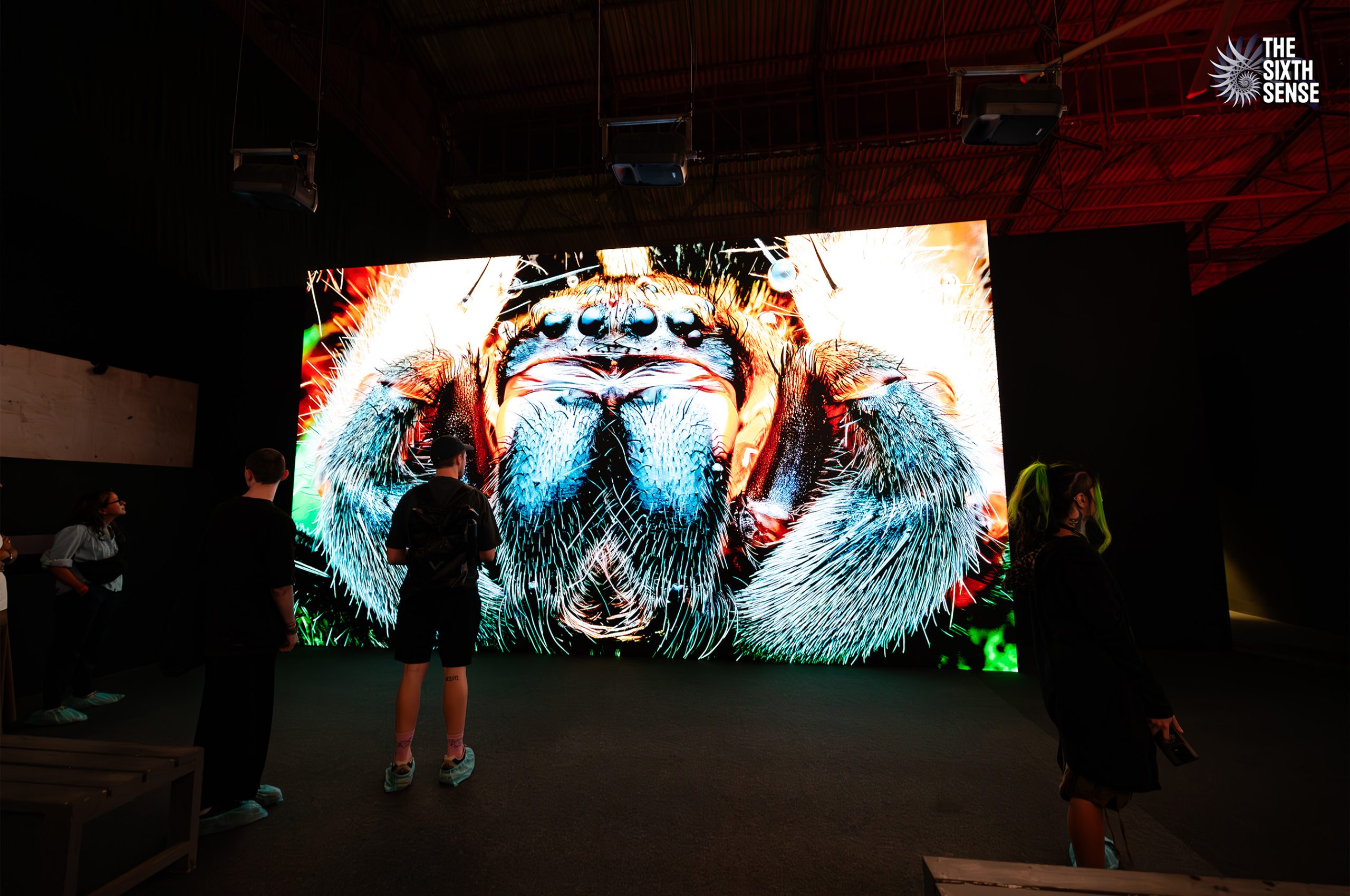
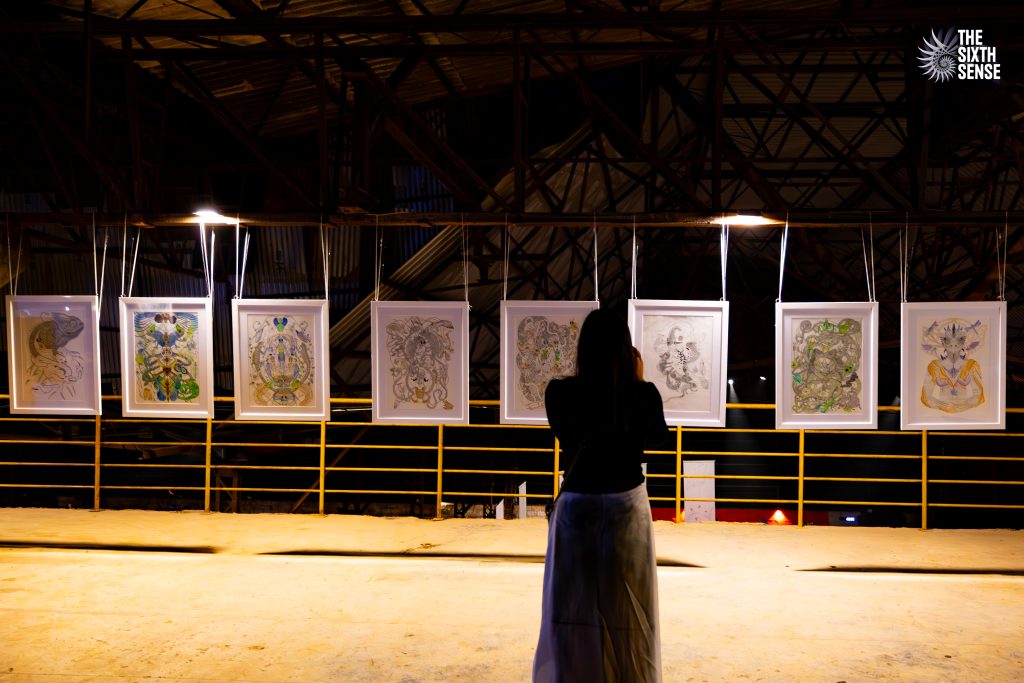
The Sixth Sense hosted an exclusive Curtain Raiser at the iconic 60-year-old glass factory at Alembic City, offering a first glimpse into India’s first large-scale immersive Artech festival. Set within the raw industrial architecture of the historic space, the evening brought together artists, collaborators, partners, and media for an introduction to a new experiential format — where art, technology, sustainability, research, and performance converge into one connected journey.
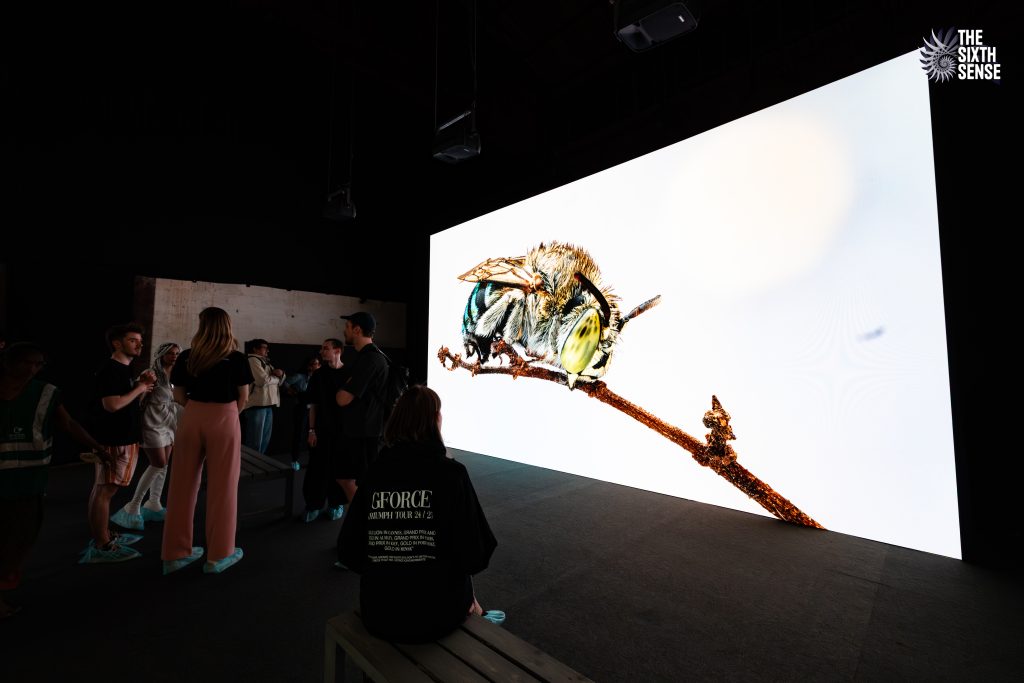
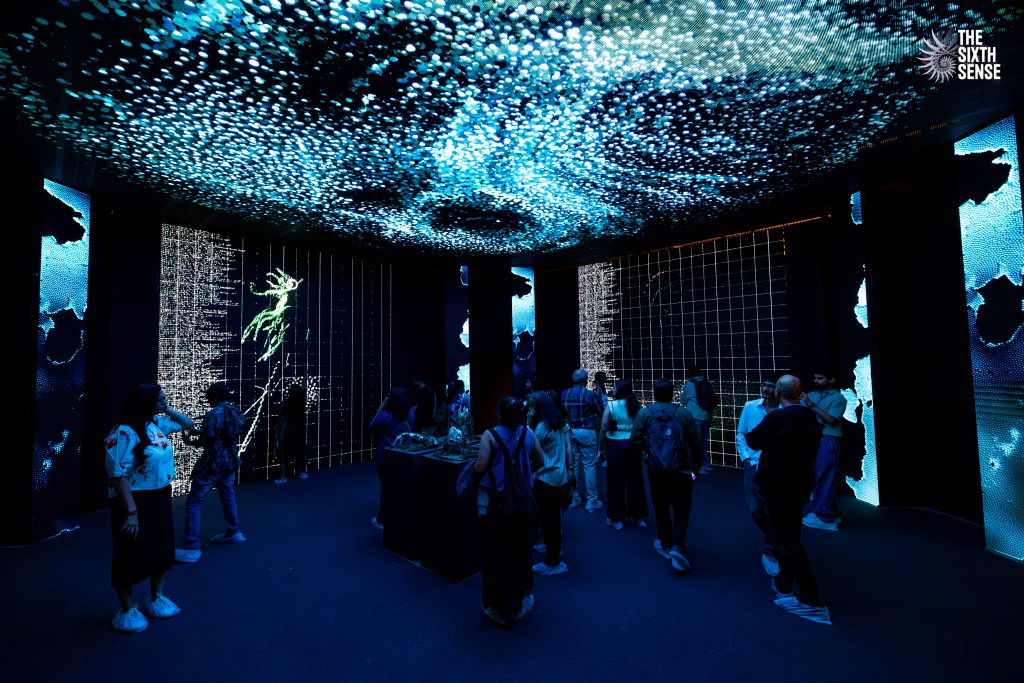
Guests experienced a walkthrough of the festival’s expansive landscape, featuring 15+ immersive art and technology installations, 20+ waste-to-art works, interactive environments, immersive soundscapes, large-scale projections, and a 360-degree dome experience. Designed as a living, breathing museum with no fixed route, the format invites audiences to explore at their own pace — allowing nature-led storytelling to unfold through light, sound, space, and movement.
A key highlight of the evening was the unveiling of The Banyan Tree, a large-scale installation by Production Designer and New Media Artist Stephen Bontley. Emerging within the industrial structure, the work uses light, sound, and technology to explore themes of connection, resilience, and continuity — echoing the symbolism of the banyan tree in India. The evening concluded with a live electronic performance by Jakarta-based Batavia Collective, whose evolving soundscape responded to the space and audience in real time. It was an experience of a lifetime with eight subject matters exploring distinct expressions of nature’s intelligence through immersive new media, art, and technology.
- The Sixth Sense is being positioned as India’s first multidisciplinary immersive festival. What was the original spark behind the idea, and why did it feel important to create this now?
The idea for The Sixth Sense came from nature itself. There is so much about nature that we still do not fully understand, which even science is still exploring. And often, when we do not understand something, we do not truly value it.
I wanted to create a space where people could take a deeper dive into these natural phenomena, not through explanations alone, but through experience. Art and technology became the mediums to enhance how these ideas are felt, seen, and sensed.
At a time when our lives are becoming increasingly digital, this felt more important than ever. This is our attempt to bring nature closer to people in this digital era, and to encourage a deeper sense of care for it. We also responded to how audiences engage today. There is a clear shift toward experiential spending and immersive cultural experiences, especially among younger audiences who value meaningful, hands on, and engaging moments.
The Sixth Sense is a space that invites curiosity, emotional connection, and personal discovery, encouraging people to slow down and reconnect with nature by truly feeling it.
- The name suggests perception beyond the five senses. What does “The Sixth Sense” mean to you in the context of this festival?
This is an interesting one. The sixth sense is often understood as intuition beyond the five senses, and for us, in the context of the festival, it represents nature’s intelligence. Nature is always above us. It holds an intelligence that unfolds quietly through connections we often overlook.
The Sixth Sense is our attempt to explore and express this intelligence through multidisciplinary formats, including immersive sound, space, light, movement, and interactive experiences. This journey is curated across eight subject matters, each revealing a unique expression of nature’s intelligence.
This intelligence lives in networks beneath the soil, in signals carried by wind and water, in patterns shared across species, and in the balance that allows life to adapt and thrive. Through these lenses, the festival invites audiences to slow down, listen, and experience how the natural world senses, communicates, and responds.
- Sustainability has been core to Echoes of Earth. How does that philosophy extend into The Sixth Sense, especially with large-scale digital installations?
With roots in Echoes of Earth, sustainability remains a core pillar of The Sixth Sense. From both an experience and operations point of view, the festival continues to follow the same principles, community education, accessibility, and conservation-led thinking. Even as the festival explores digital and immersive formats, it approaches immersion through the lens of nature’s intelligence, creating experiences that educate, engage, and deepen awareness of the natural world.
Operationally, the festival will continue to uphold Echoes of Earth’s sustainability practices. This includes a zero-plastic, zero-waste policy, free RO water, keeping the festival accessible and inclusive for all, and using steel tumblers instead of disposable cups. Repurposed and recycled artworks from earlier editions will continue to be showcased, including over 20 waste-to-art installations, along with photo and tactile exhibits, ensuring that physical assets remain within a circular loop of reuse. In parallel, digital works from this edition will be archived and adapted for future showcases, extending their life and impact.
In this way, The Sixth Sense follows a “sustainable immersive” approach, where technology supports the idea, resources are reused thoughtfully, energy use is carefully managed, and environmental impact is balanced with long-term educational and experiential value.
- Many of the works blend art, technology, and environmental themes. Why was it important for these three elements to coexist in one space?
For me, this came from the understanding that nature has always been around us and always connected to us. It is not separate from how we live, create, or evolve. Art has long been a way for humans to express this relationship, and today, technology has become a natural extension of that expression.
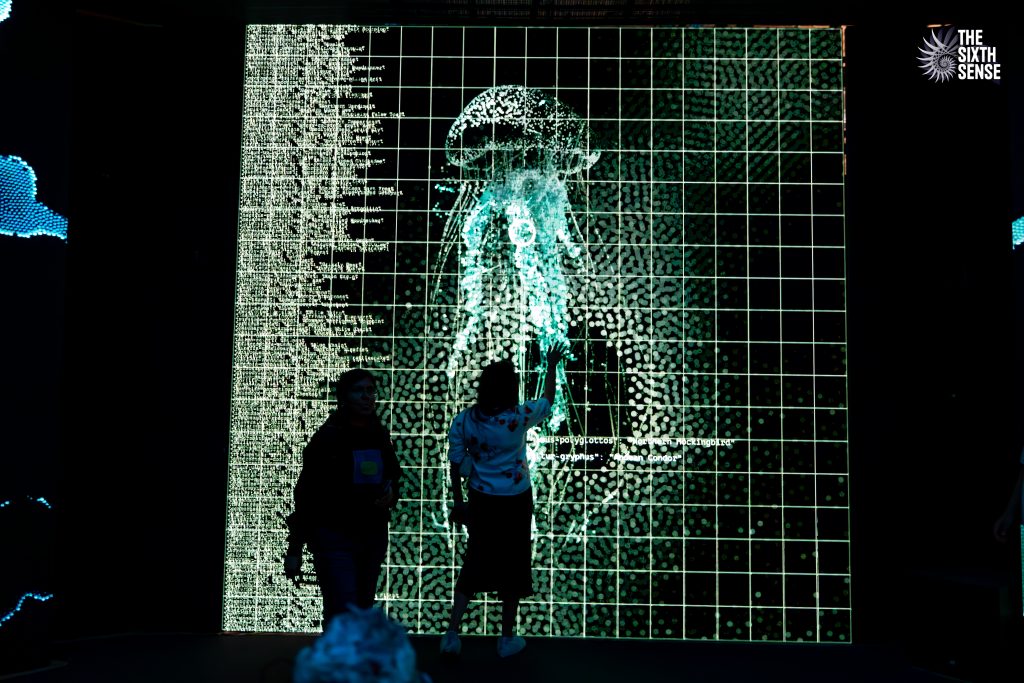
Bringing art, technology, and environmental themes into one space felt natural. Technology, when used thoughtfully, can empower conservation by helping us tell stories in new ways and reach newer audiences. Digital art, in particular, allows us to visualise ideas that are otherwise invisible and start conversations that feel current and accessible.
- How did you balance showcasing global artists while keeping the festival grounded in an Indian cultural context?
For me, it was important that the festival felt both global in its approach and deeply rooted in India. India offers an incredible cultural and ecological diversity, and we wanted that context to be reflected in how stories were told, even when the formats were digital and contemporary.
We worked closely with both Indian and international artists who were open to engaging with local narratives. It is an exciting time where global artists are not just participating, but actively collaborating to tell our stories in the most immersive ways possible.
A strong example of this is The Banyan Tree by Stephen Bontly, created specifically for Bengaluru’s Alembic City glass factory. Using light, sound, and technology, the work explores humanity’s relationship with nature through the Banyan Tree, one of the most iconic and culturally significant trees in India.
Another example is Signals by Riccardo Torresi, Asako Fujimoto, and Maxime Lethelier, which transforms real bat calls from India into an immersive experience. The work is grounded in research by Mongabay India, the Nature Conservation Foundation, and Bat Conservation International, bringing Indian ecological data into a global artistic language.
- The music lineup ranges from experimental electronic sets to cross-cultural collaborations like Niladri Kumar and Vieux Farka Touré. What connects these seemingly different performances?
Bringing eclectic global music and cross-cultural collaborations has always been important to us. It has never been about genres alone, but about creating moments that surprise, move, and stay with people long after the performance ends.
Whether it is Indian classical, cross-cultural collaborations, or electronic music, each act is designed to draw audiences into an immersive experience that activates emotion, memory, and curiosity.
The rare collaboration between Niladri Kumar, a fifth-generation sitar virtuoso and inventor of the electric Zitar, and Vieux Farka Touré, often called “The Hendrix of the Sahara,” will be a powerful moment of discovery. Experiencing this collaboration under the Banyan Tree installation by Stephen Bontly will wow audiences in an unexpected and deeply moving way.
At the same time, artists like electronic composer and multidisciplinary artist Max Cooper will take audiences on a cinematic sensory journey. His performances blend intricate electronic compositions with immersive visuals, surrounding the audience in sound and imagery, and completely transforming how music is experienced.
- How is this festival different from existing music or art festivals in India, both in intent and in experience?
The Sixth Sense is perhaps the only family friendly festival in the world bringing nature led storytelling into a large-scale immersive format, where children and adults explore intelligent and meaningful subject matters about the natural world in a playful and fully sensory way.
At scale, the festival features 15 plus immersive art and technology showcases by global and local artists, 20 plus waste to art installations, and 15 plus hands on workshops and interactive experiences. The format itself is different. During the day, from 10 am to 7 pm, the festival functions like a living, walk through museum. Audiences move through multiple zones, each offering immersive experiences that explore nature through art, technology, and interaction. Every art exhibit and installation tells a story that is rooted in science, supported by data and facts, while remaining accessible and engaging.
As the day transitions into the evening, the experience naturally culminates in live music performances. This seamless flow from museum style exploration to immersive music is what sets The Sixth Sense apart. It creates a full day journey where learning, creativity, and storytelling come together in a way that feels thoughtful, inclusive, and truly immersive.
Udit
- Alembic City is a 60-year-old glass factory with deep industrial heritage. Why was this space the right home for The Sixth Sense?
Modern cities often lack innovative spaces with a distinct character—places where you can immerse yourself in your surroundings away from the noise, traffic, and clutter. The Alembic Art District is designed to inspire by leveraging the historic charm of these buildings and reimagining the way we experience urban space.
The Sixth Sense makes the most of this industrial identity. It echoes a sense of nostalgia, taking cues from the existing industrial architecture to enhance the space rather than deleting or overwriting it.
The result is a seamless, immersive experience that offers alternative perspectives and visual discovery within an environment from another time. By blending the tactile feel of old stone with the glow of new media, Sixth Sense creates a multi-sensory bridge between Bengaluru’s industrial past and its creative future. This event engages the soul and fosters a truly human experience by encouraging people to be in awe and fully present.
Stefan Kraus
- The collaboration with The NODE Institute brings TouchDesigner sessions to India for the first time. Why were skill-sharing and education an important pillar of the festival?
TouchDesigner and visual programming have existed for a long time in a small niche of enthusiasts. Sharing knowledge rather than competing is what has enabled the recent success of new media art. Knowledge sharing is the future of education: technologies evolve so rapidly that fixed curricula are often outdated before they are even written down. Learning how to learn—and supporting one another in the pursuit of knowledge—creates momentum, if not a movement, in which everyone who contributes and shares grows together, instead of chasing a slightly bigger—or humongous—piece of the pie.
People often think that art is about the result. In the age of AI, we see more clearly than ever that this is not true. It is the process that holds the real value, and learning through experimentation and exchange is a crucial part of making that process both fruitful and satisfying. The result is merely a means to finance the process. A festival like The Sixth Sense serves two purposes: it entertains an audience with novelty while telling a larger story about sustainability and beauty, and it acts as a catalyst for a community that comes together to experience, connect, and learn.
- How do you hope this festival contributes to shaping the future of immersive art and experiences in India?
I feel that this festival has the potential to inspire a wide range of creatives to explore new forms of communication and community. We have been quite successful in building a community in Berlin: what began as a meeting of five people in a bar has grown into events with several hundred participants. This process was sparked by the TouchDesigner event in 2018, when many people who had previously known each other only online met in real life for the first time. From there, things continued to grow, and international networks were woven—networks that ultimately led to us being here today.
We hope to bring this spark to India and inspire the local community to recognise one another, join forces, and become an even stronger part of a global community of creators dedicated to exploring new technologies through art and critique rather than warfare and commerce. A vibrant art scene is a true driver of innovation, and a successful experience industry emerges from a desire to create art—seeing business as a means to achieve greater artistic freedom, not the other way around.