

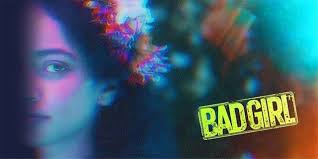
A coming-of-age drama about a not-so-grounded female protagonist, played by Anjali Sivaraman. That’s the A-story. But the B-story cuts deeper — it’s about the generational patriarchy that Tamil cinema has glorified for decades through a male gaze. Bad Girl dares to flip that lens.

The film entered with noise. A flashy two-minute teaser loaded with sharp one-liners. Critics jumped on it, calling it a threat to culture and the youth. Defenders pushed back, blaming the backlash on community biases. But producer Vetrimaaran clarified: this isn’t about any community. It’s about a generation unsettled by images that question their ideals. He added something sharper — outrage is cyclical. Today’s rebels will likely resist tomorrow’s.
Still, the makers insisted: Don’t judge by its cover. Once the censor board cleared it, the storm calmed and promotions kicked off. Grassroots Films, Anurag Kashyap’s name on the banner, a lineup of festival awards, and most importantly — a brand-new female gaze. That was enough reason for me to book my seat on opening day.
Within minutes, I knew I was in for a treat. This was Varsha Bharath’s world — the arrival of a new voice. What? Did she just make her protagonist say she liked his veins? That’s the kind of unexplored, unsaid female perspective woven through the film.
The audience, though, seemed restless in the first 40 minutes. Maybe because the editing didn’t follow the mainstream flow they’re conditioned to. Or maybe it was the discomfort of watching a teen girl speak openly about her sexuality on screen. But then came Varsha’s swing — a cutting, generational jab at patriarchy. Silence filled the hall. From there, everyone was locked in, knowing they were up for something serious.
Of course, the witty one-liners kept the mood alive. The granny’s funeral sequence? That should be etched in history.
Watching Varsha, I couldn’t help but draw parallels with her mentor, Vetrimaaran. His films are realistic because he lets imperfection breathe — out-of-focus shots, extras staring into the camera, even clumsy dubbing. It all adds grit. Naturally, I expected Varsha to borrow those quirks. But she didn’t. She went the other way — detailed, deliberate, and precise. A breath of fresh air.
The editing takes a moment to adjust to — rapid, almost restless — but it actively drives the narrative. The film doesn’t reveal a rigid three-act structure. Instead, the edit camouflages it, keeping you engaged without handing you the map.
And then the ending. Not filmy, not an action spectacle. Simple. Heart-piercing. Originally, the film had a different ending, but it was changed for theatrical release. The politics of the original didn’t sit well with the team. I can’t help but wonder what Varsha had written. Given the magic she pulled off throughout, that ending is a mystery I’d love to uncover.
Now that I witnessed Varsha’s first roar, I’m looking forward to seeing what she has in store for us.