

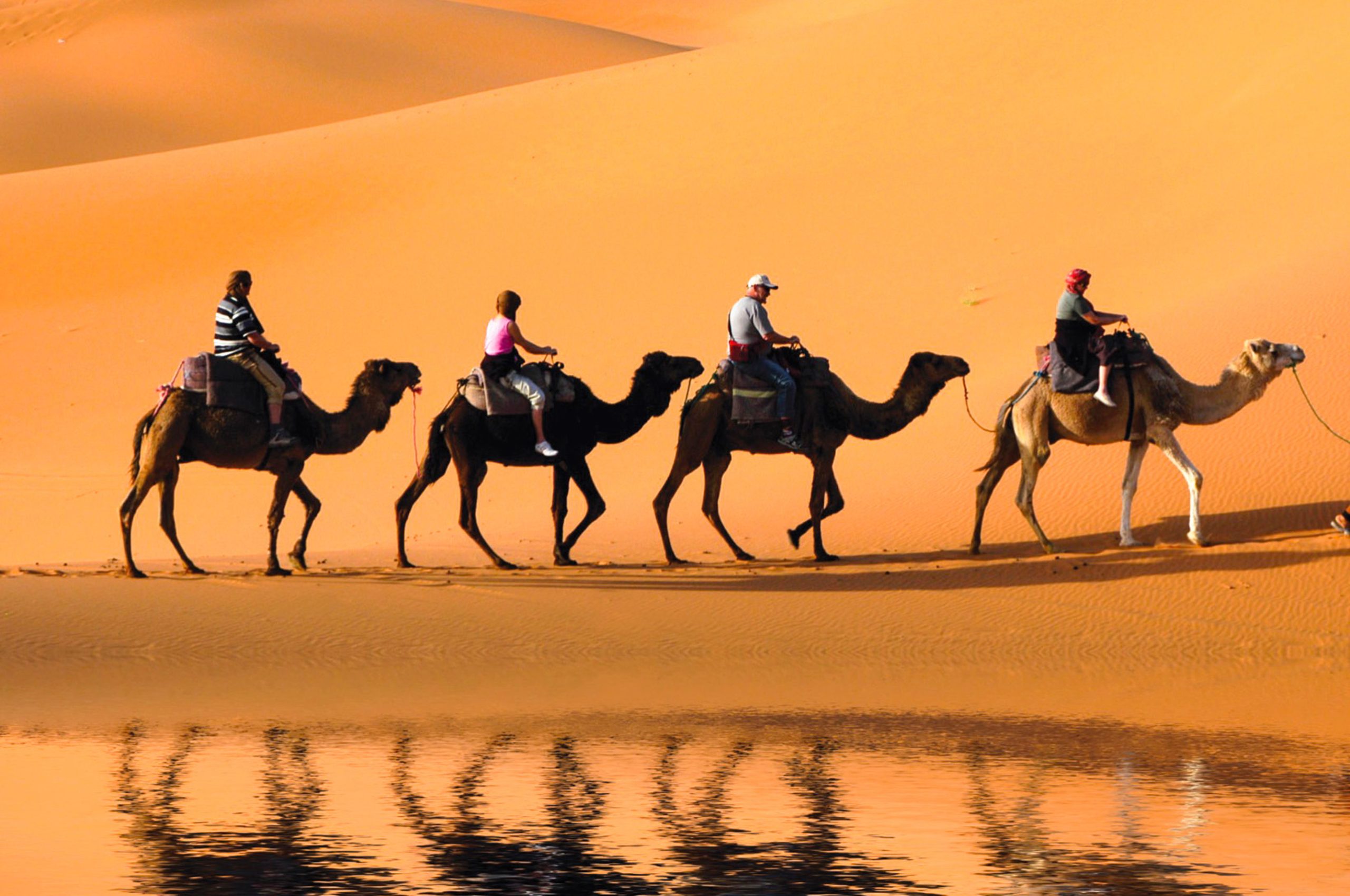
The moment we landed at the Casablanca International Airport on Emirates Airlines from Chennai, via Dubai, we were instantly transported to a land far away – a hidden jewel tucked away from time. Morocco whisked us into a reverie, like stepping through a portal into a distant, spellbound world, cradled in mystery and mosaic light. It felt as though we’d wandered into a tale spun far beyond the edges of the map. Spice-laced streets and blue-hued bliss, Morocco was like a mirage turned into marvel.
Casablanca
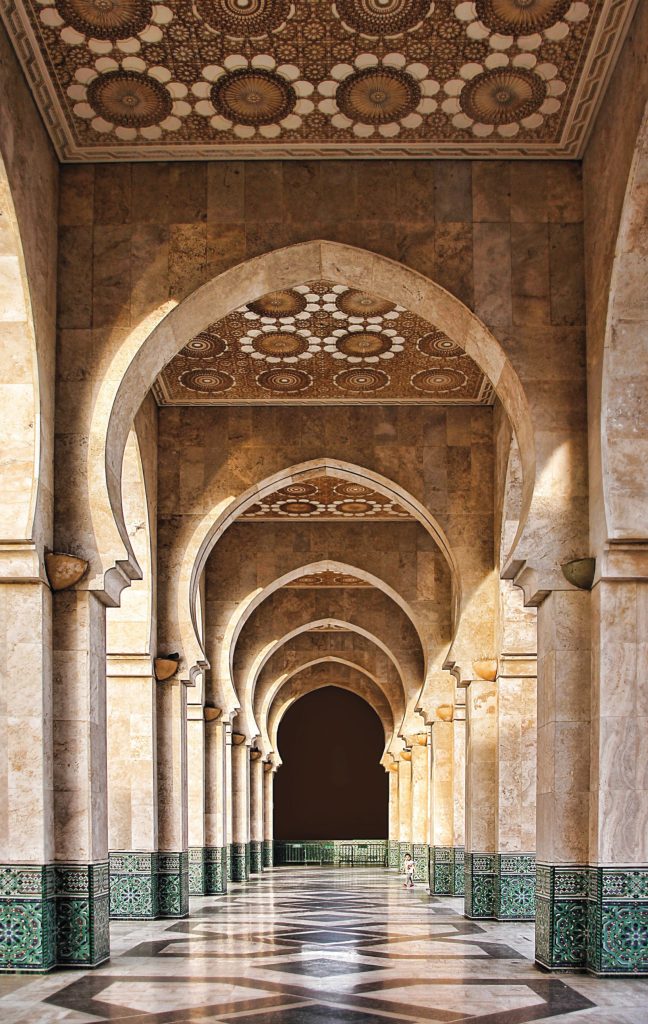
Upon our arrival in this historic town, we didn’t waste any time and made our way straight to the iconic Hassan II Mosque, followed by a hearty lunch and a panoramic city tour of Casablanca. Walking around the Corniche and Habous Quarter was like going back in time. If you have time at hand, do check out the Rick’s Cafe that was inspired by the real-life Rick’s Cafe in Casablanca movie. Although the actual shoot location was at Rick’s Café in America, this one in Casablanca will make you feel like you’re part of the same film set. Our first dinner that evening was at an authentic Indian restaurant called Clay Oven. We checked into our cozy rooms post dinner at Marriott Casablanca; a business hotel located in the heart of the town.
Rabat
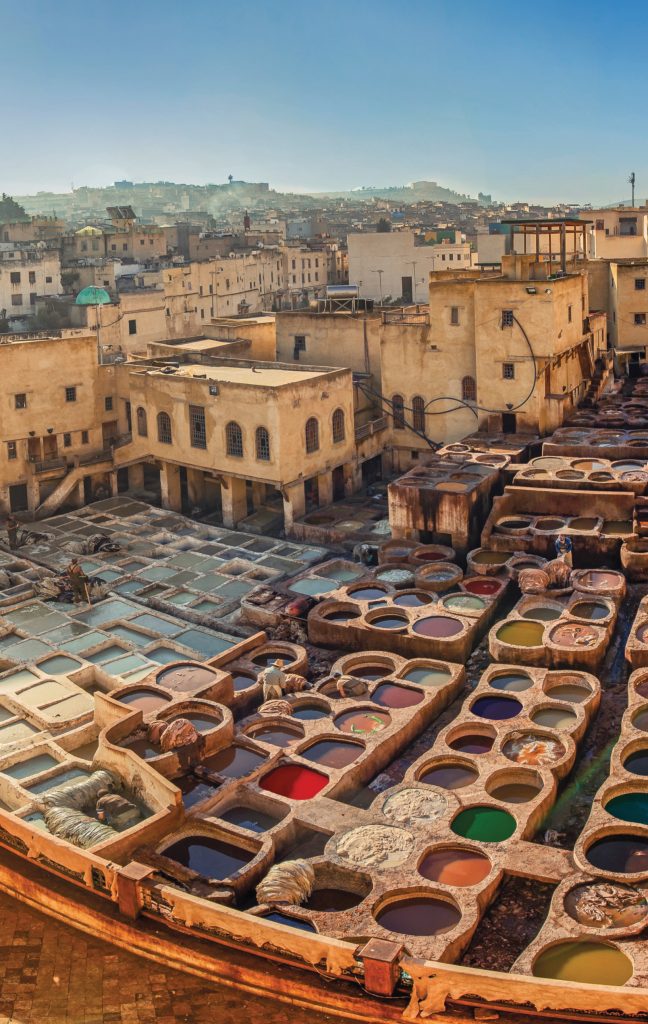
After a much-needed slumber, we woke up all fresh and excited to head to Rabat, the next morning. We arrived in Morocco’s elegant capital after about an hour-long drive. We started with a city tour of Rabat, visiting the Oudayas Kasbah, Medina, Chellah Ruins and the Mausoleum of Mohammed V. Rabat had an old-world charm to it that was extremely enticing. We were famished after the walking tour as we sat down for our lunch at Riad Dar Chrifa. The traditional Moroccan meal of Chicken and Lamb Tagine and freshly cut juicy fruits amidst the beauty of the Riad, was an experience by itself.
Tangier
With our pre-booked train tickets in hand, we boarded the Al Boraq high-speed train to Tangier. The commute was very comfortable, and the bullet train ride was very thrilling. After reaching Tangier, we were picked up for a city tour starting with Cap Spartel, Hercules Caves, Medina and Grand Socco. The evening was magical as we went to the vantage point at La Kasbah de Tanger and caught the most gorgeous panoramic view of the ocean. Our tour guide took us up to the highest point for a panoramic view of the Strait of Gibraltar and the coastlines of both Europe and Africa. We couldn’t stop ourselves from clicking pictures, but soon it was time to head back to our hotel.
Our overnight stay was arranged at Fairmont Palais Tazi, Tangier, one of the most luxurious hotels we had stayed at in Morocco. My plush suite overlooked the entire city of Tangier from top. Sipping on my Moroccan tea as the sun sank beneath the horizon, I found myself wishing time would stand still. But we had to follow a timeline and get ready – it was dinner hour, and we were all excited for another unforgettable evening at Barcelo Tanger, facing the sea and near the port that served us a delicious five-course meal.
Tétouan and Chefchaouen
Tangier to Tétouan was less than two hours drive. We rushed our walking tour of the charming town of Tétouan as we were all eager to skip to the good part. And then we drove again from Tétouan to Chefchaouen for another two and half hours. We checked into the Dar Ba Sidi, a quaint boutique Hotel, which was all blue. We also managed to catch a few laps in the pool with gorgeous views of the mountains before our lavish buffet dinner spread.
Chefchaouen, also known as the Blue Pearl, has a rich history dating back to 1471 when it was founded by Moulay Ali Ben Moussa Ben Rached El Alami, a descendant of Prophet Muhammad. Initially, it was a small kasbah built to defend against Portuguese invasions in northern Morocco. The city’s strategic location made it a refuge for Muslim and Jewish communities fleeing the Reconquista of Spain. This blue town left us spellbound. Every alley, every azure wall begged to be captured. We kept turning back for one last shot and just couldn’t stop clicking all the 50 shades of blue. The city’s blues were endless, and each photo felt like an attempt to freeze time in a place we didn’t want to leave.
Fès
We took a scenic drive to Fès, known to be Morocco’s spiritual and cultural heart. Our dinner that night was at Riad Al Amine, one of the most stunning Riads we had visited in Morocco. The lamb tagine here was without exaggeration, the finest we’ve ever tasted and one of Fez’s many delights. Our overnight stay was at the Sahrai Hotel in Fès, that boasted of an ambiance filled with engaging contemporary Moroccan art to a vibrant rooftop bar that we made the most of, post our dinner that night. We checked out the next morning for a guided tour of Fès Medina, a UNESCO World Heritage site, the next morning after our breakfast.
Marrakech
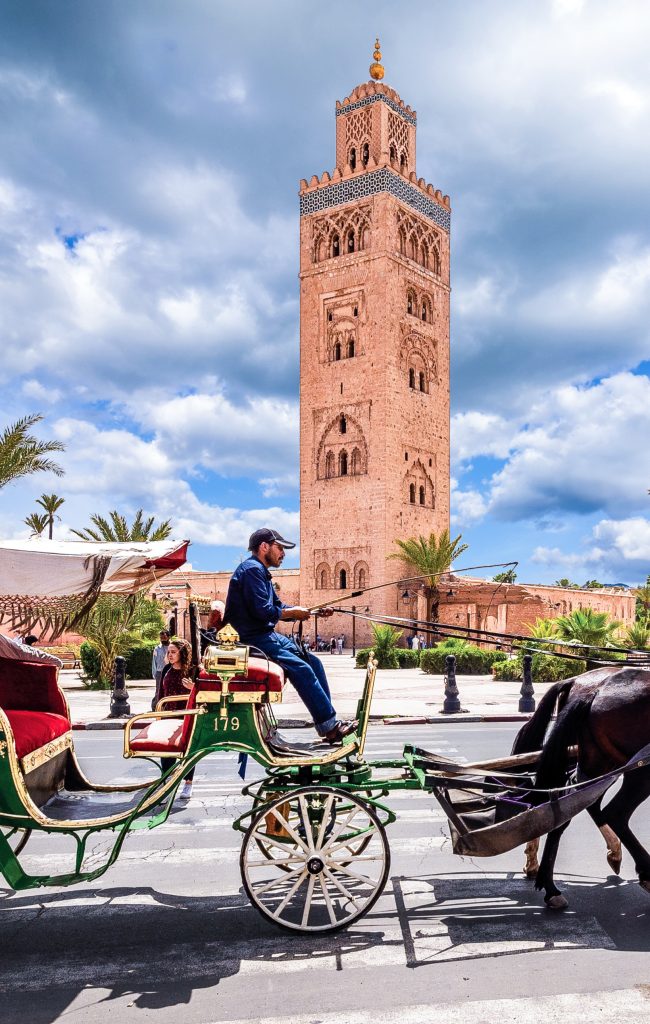
The best was saved for the last and we were looking forward to exploring Marrakech, our last city on our Moroccan sojourn. We caught up on some siesta and also played some dumb charades on our six hours long drive from Fès to Marrakech. The Red City boasts of a lot of secret gems – Jamaa El-Fna Square, Secret Garden, El Badii Palace, El Koutoubia, The Menara, Water Museum, Bab El Khamis Souk, Marrakech Palm Grove and Toubkal National Park.
We tiptoed the next morning through the cobalt serenity of Jardin Majorelle and into the haute archives of the YSL Museum, where every sketch spelt legacy. The Oberoi Marrakech hosted us for a lavish lunch, wrapped in marigold light and spice-laden breezes. It was Indian cuisine served with palace-like grace. Our evening hummed with conversation of intent as we bonded over a networking high tea with the tourism heads of various destinations from Morocco. We were in for a dinner treat over the scent of orange blossoms at Naoura Barrière.
But the heartbeat grew louder as we walk through history’s footsteps – palatial arches, calligraphic stone, and the bustling theatre of Jamaa El Fna Square. There was laughter in the Medina as it was buzzing with haggled threads of silver and leather, and quiet reprieves in hammams and hidden boutiques. As the sun set we drew curtains at the Jad Mahal, all sequins and spectacle, where we were served dinner over a spectacular performance with dancers pirouetting between flame and music. We also celebrated our host Himanshu Patil, founder, Kesari Tours and President OTOAI’s birthday with cake cutting amidst all the revelry. And then, Marrakech offered a final verse in its nocturnal symphony with velvet lounges, rooftop whispers, and stargazing through incense smoke.
Come dawn, the road unfurled to Casablanca for our flight back home to India. And just like that, our chapter ended, but the story will forever be etched in our memories for a lifetime, scented with saffron and mint tea.
Early History
Morocco’s history is a rich tapestry of cultures, empires, and dynasties that spans thousands of years. With over 8000 historical monuments, including nine UNESCO heritage sites, spanning six dynasties over 1200 years, Morocco boasts of a diverse culture with 30 plus medinas and vibrant handicrafts. Every step is filled with unique elements that you’ll find nowhere else in the world – from vibrant Riads to stay in, to Moroccan hammams and sipping on Moroccan mint tea over Andalusian music, and tasting some delectable cuisine cooked in traditional tagines.
Prehistoric Era: Archaeological evidence shows human habitation in Morocco dates back to at least 400,000 years ago, with early settlements found in Jebel Irhoud.
Ancient Civilizations: The Phoenicians colonised the Moroccan coast between the 8th and 6th centuries BCE, followed by the Carthaginians and Romans.
Berber Kingdoms: Mauretania and other ancient Berber kingdoms flourished in the region.
Morocco became part of the Muslim world after the Muslim conquest of the Maghreb in the early 8th century CE. The Moroccan state was established by the Idrisid dynasty in the 9th century, with Fes as its spiritual capital.
Almoravid and Almohad Dynasties: These dynasties dominated the Maghreb and Muslim Spain, leaving a lasting legacy in Moroccan culture and architecture.
Dynasties and Colonialism
Saadi Dynasty: This dynasty ruled Morocco from 1549 to 1659, expanding the country’s southern territories and establishing Marrakech as its capital.
Alaouite Dynasty: The current ruling dynasty, which has been in power since 1667.
French Protectorate: Morocco fell under French control from 1912 to 1956, with resistance movements like the Rif War fighting for independence.
Mouden Abdeslam our tour guide in Chefchaoen walked us around the dreamy blue town sharing nuggets of its rich history and culture. This is what he shared about the key events in Chefchaouen’s history…
Founding and Early Years: Chefchaouen was established as a fortress to fight Portuguese invasions, and its population grew quickly with refugees from Spain, including Andalusi Muslims, Moriscos, and Spanish and Portuguese Jews.

Andalusian Influence: The city’s architecture and culture were heavily influenced by the Andalusians, who brought with them their own unique style, similar to the traditional quarters of Granada.
Spanish Protectorate: In October 1920, General Dámaso Berenguer occupied the city for the Spanish protectorate in Morocco.
Rif War: Chefchaouen was part of the Republic of the Rif led by Abd el-Krim from 1924 to 1926 and was bombarded by American volunteer pilots, the Lafayette Escadrille, in 1925.
Cultural Significance: The Blue City: Chefchaouen is famous for its blue-washed buildings, which are believed to have been introduced by Jewish refugees as a symbol of the sky and heaven.
Architectural Style: The city’s architecture is a blend of Andalusian and Moroccan styles, with narrow streets and traditional houses. Chefchaouen’s rich cultural heritage is reflected in its traditions, customs, and historical landmarks, such as the Kasbah Museum and the Spanish Mosque.
Nature
Discover the natural wonders of Morocco, from the picturesque Atlantic coast to the tranquil Mediterranean creeks. Find serenity on endless pristine beaches and marvel at the majestic High Atlas Mountains. Experience exhilarating skiing adventures at the Michlifen Resort, where nature’s beauty knows no bounds.
Modern Morocco
Morocco gained independence in 1956 under King Mohammed V. Cultural Heritage: Morocco’s rich cultural heritage is a blend of Arab, Berber, and French influences, reflected in its architecture, cuisine, and traditions.
My trip was hosted by Moroccan National Tourism Office (MNTO), The Outbound Tour Operators Association of India (OTOAI) and curated by Satguru Travels.