

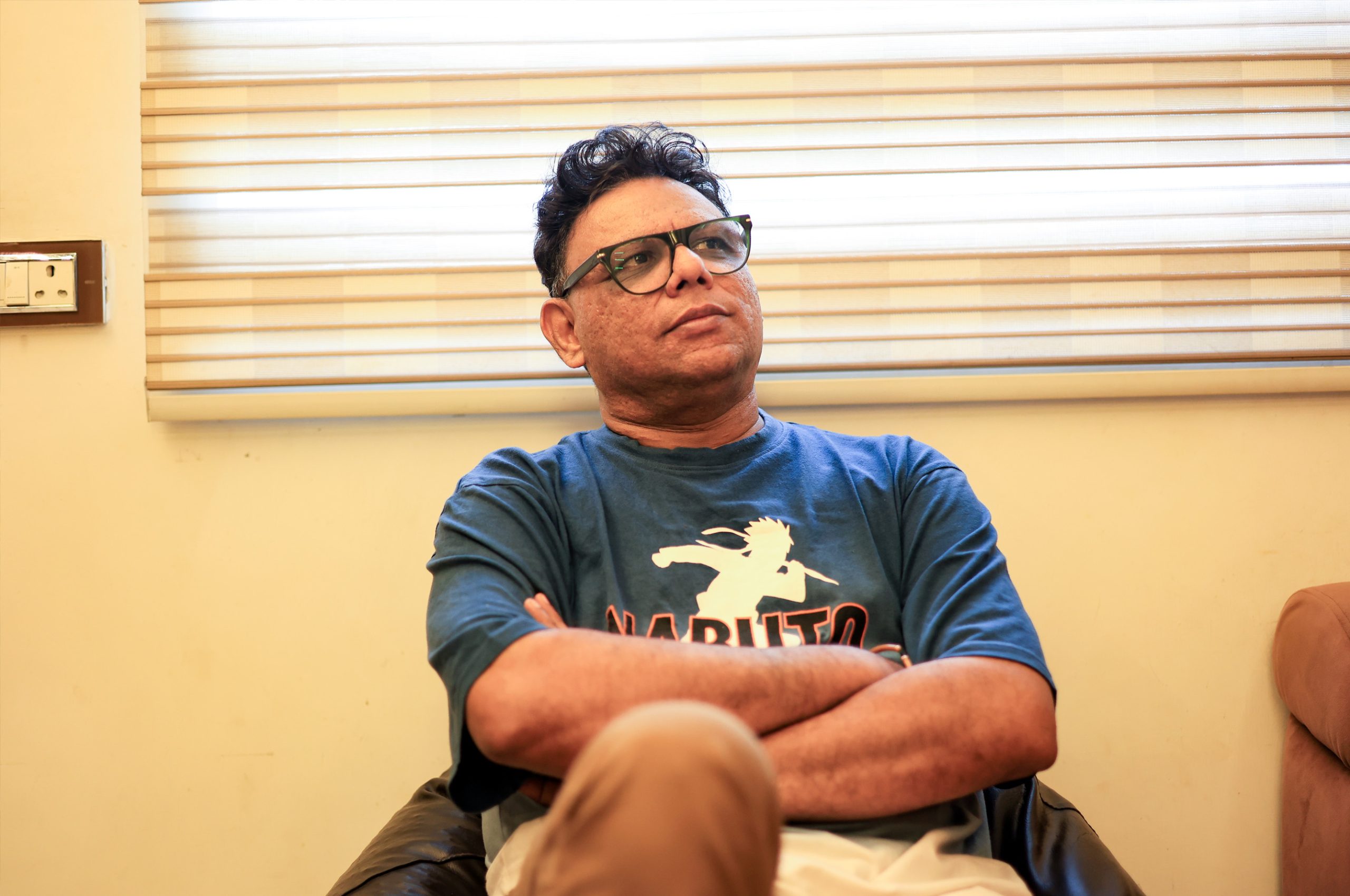
We’ve seen countless Ilaiyaraaja fans over the decades, but composer C. Sathya lives and breathes the maestro’s music. For him, Ilaiyaraaja isn’t just an inspiration — he’s in his blood. From playing the Isaignani’s timeless melodies on a harmonium in school, earning rousing applause, to crafting soul-stirring songs that have quietly enriched Tamil cinema over the past 15 years, Sathya’s musical journey has been one of steady passion and quiet triumph.
In an honest and heartfelt conversation, C. Sathya opened up about his long-standing journey through the industry — a path that wasn’t just personal but also deeply emotional, fulfilling his father’s dream of becoming a musician. Beyond reminiscing about melodies and mentors, Sathya also set the record straight on a popular industry myth involving fellow composer Anirudh Ravichander — addressing it with clarity and grace for those who got the story wrong.
Here’s a composer who lets his music speak, but this time, his words sing too.
It’s been over 15 years since you started composing for films, and you have also made your mark in television, especially with the title song of Saravanan Meenatchi. So, where did it all start? Was becoming a music director always on the cards?
It’s been 15 years since my first song was released, but actually, my journey began much earlier than that. I’ve been working in serials as a keyboard player since 2001. It was in 2004 that I received my first recognition as a music composer on Sun TV. So really, you could call it a 25-year journey in music.
To talk about where it all started—my father used to play the harmonium. He wasn’t a professional musician, but he had the passion. He wanted to become a musician, but due to family circumstances, he couldn’t pursue it. Because of that, he made sure I learned Carnatic singing from a very young age. Along with my two brothers, music was a part of our upbringing, thanks to him.
Back in school, every day my friends and I would talk about Ilayaraja’s songs. I used to sing while playing the harmonium. Whenever I played one of his songs on the harmonium, everyone appreciated it a lot. That gave me confidence. I realized, ‘People are appreciating me when I play the harmonium, and since I can’t sing high-pitched notes, maybe I should just focus on playing.’ Eventually, I started playing harmonium in a dance academy, and step by step, I grew into a keyboard player.
Many music directors have entered the scene since your debut. Some have tasted more success than you. How do you see that, and what do you do to stand out?
My state of mind is different. I never came into the industry thinking I want to become better than others, or even that I would become a music director. I’m actually leading a satisfying life. I don’t see anyone as a competitor. I’m in a place mentally where I genuinely enjoy seeing others’ work. That mindset keeps us healthy and helps me handle my projects with ease. Otherwise, guilt or comparison only blocks us from creating good music. So, whoever does music—I just appreciate them
I read in an interview that you brought in African trap music to Tamil cinema for the first time in Theethum Nandrum. Was it a conscious decision to bring new sound to the industry? Or does the film demand such a sound? And what do you think about reinventing oneself in this industry?
I’m not sure if I was the first to do it—it might have come across that way, but it could have been done before, too. Usually, we try to be experimental in every film. Everyone wants to be unique, right? I also try different things to be experimental, and directors expect that from us as well. Sometimes it works out really well, and sometimes it doesn’t—when it doesn’t, we just don’t go with it. Like that, one or two experiments might have worked.
In your latest work, Gangers, iconic comedy duo Vadivel and Sundar C reunited on the big screen. Did you feel the pressure? How is it working with Sundar C sir?
With Sundar C sir, I’m usually there in every alternate project of his. Gangers’ theatre response was really good—the family audience especially enjoyed the experience. It’s always fun working with him. Even though his approach is casual, he still manages to get the perfect output. And when he works with me, he explains everything so beautifully. He discusses things in such a relaxed way, it actually motivates me to do better. We share a very good understanding, so working with Sir is always a very happy experience for me.
What are the challenges in composing music for a comedy flick amid the cliche soundtrack cues? Can you share your experience from the film Gangers
In the first half, there’s action mixed with comedy. In the second half, it’s like a spinoff between Money Heist and comedy—it was actually very interesting. Sundar C sir gave me the reference, saying it should have the feel of Guy Ritchie films and the Ocean’s series. The music was in an old guitar pattern. We had actually prepared the theme much earlier, so they ended up editing the film based on the music. That was a very different experience for me. It was also easier because they gave it to me early, and I kept improving it alongside.
Actually, when the music plays, there are a lot of moments that need reactions. Sometimes there’s a musical changeover—if I don’t get that feel, I’ll edit the music and add effects. These kinds of things were new to me. Especially for Vadivel sir’s portions, we created a lot of original sound effects.
In an interview, you mentioned Ilayaraja as your lifeline. Can you tell us why? What influence has he left on your work? What do you call the greatest work in the film music space?
Apart from learning the basics of Carnatic singing, I didn’t really study anything else formally. Everything I know, I’ve learned through his music. I wouldn’t say I learned anything the proper way—whatever brought me to the point of composing music, it’s entirely because of his work. That’s the only music I truly lived with.
Yes, I’ve played music by every composer, but his music always stood apart. There’s just so much to learn from it. He’s done so much—especially in his early stages—that you don’t even need to study Mozart. His work alone is a vast world of knowledge.
If I had to pick a favourite, the first that comes to mind is ‘Oru Iniya Manathu’ from the film Johnny—specifically, the second BGM in the song. A solo violin supported by the movements of a bass guitar—it’s pure magic.
Anirudh Ravichander is redefining Tamil music—how does he blend global sounds with local flavor while keeping his compositions so explosively fresh and iconic?
Anirudh is mass. There’s honestly no one who doesn’t like him. Some people keep saying that his music is jarring—but it’s really not. What they’re hearing is the energy. Youngsters get it. Without that kind of energy, the song would just lose its pep.
That kind of mixing is intentional—it’s based on the genre. His songs are mixed in a way that maintains that high energy throughout. It’s not jarring at all. I just wish people would listen to it on good speakers—they’d hear the difference.