

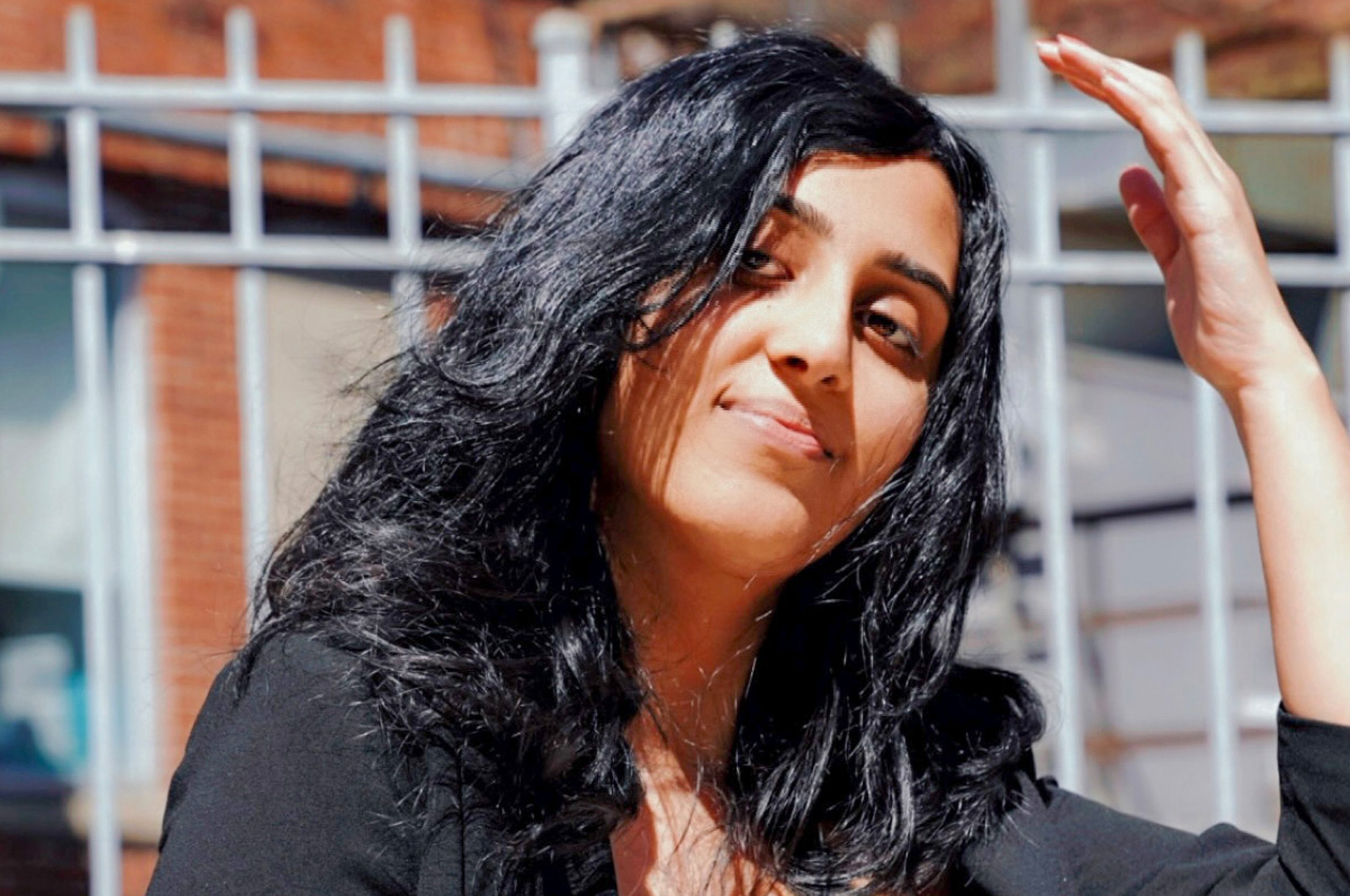
At just 22, Bengaluru musician Keziah Thomas has already made her mark on one of the world’s most prestigious cinematic stages. The young composer recently won two honours at the World Film Festival in Cannes – Best Composer of the Future and Best Soundtrack for her composition for the animated short film Milo, directed by Dillon Sharp, marking a significant milestone in her burgeoning musical journey. From Bengaluru to the international spotlight, Keziah is steadily carving out her own space in world music. In a candid conversation, she opens up about her journey, her creative process, the recognition at Cannes and what lies ahead.
Take us back to the moment you found out that your work had received recognition at Cannes. What was your immediate reaction?
I actually found out while I was sitting on the couch watching TV with my Dad. I got the email and initially thought it was just another notification, but when I opened it and realized that my work had received recognition at Cannes, I was completely shocked. I remember turning to my Dad and immediately telling him, and we were both so excited.
It was one of those moments where it took a little while for the news to actually sink in. I had put so much time and emotion into my work, so having it being recognized at a festival felt incredibly surreal. I was just really grateful and excited!
How did your family react after hearing about the win?
My family was incredibly excited and proud. They’ve seen how much time and effort I’ve put into all my work, so I think the recognition meant a lot to them too. It wasn’t just a win for me, it felt like a really special moment for all of us because they’ve supported me throughout this entire journey. Their reaction made the achievement feel even more meaningful.
How did Milo and the collaboration with Dillon Sharp happen?
Milo came about when Dillon Sharp reached out to me about scoring the film. He had come across my work at an event and he reached out asking if I would be willing to score for his film. After hearing more about the film and his vision for it, I immediately connected with the project. We then started talking about the story, the characters, and what he envisioned for the score. Dillon gave me complete creative freedom which gave me a lot of room to experiment and find a musical language that felt authentic to the film.
How did you go about composing the music for Milo? Take us through the process.
One of the main musical ideas I developed was humming melody that became a kind of thread throughout the score. I recorded and experimented with that melody, stretching and reversing it to create different textures and emotions. I really liked the idea of taking something that initially felt human and intimate and transforming it depending on where the story was emotionally. From there, I built the score around the film’s different emotional moments. I experimented with a combination of atmospheric, ethereal sounds and darker, more intense textures. One of the biggest challenges was a transition where the music needed to move from a hopeful and almost dreamlike feeling into something much darker. But I love how that transition turned out seamless.
Cannes is so strongly associated with directors, actors and filmmakers. What does it mean for a musician to have your work recognised on that platform?
I think a lot of the general audience naturally thinks about the directors, actors, and other filmmakers when they think about a film. Film scoring can often feel like a very behind-the-scenes part of the process because people don’t always consciously notice the music while they’re watching something. But it has such a powerful role in shaping how an audience experiences and connects with a story. So for me, having the music recognized on a platform like Cannes was really meaningful because I’ve actually noticed that the people I know have started paying more attention to scores when they watch films now. They’re becoming more aware of the importance of the score and more appreciative of the composers behind it. That has been really special to see. If my recognition can make even a few people listen a little more closely to the music and realize how much it contributes to storytelling, then I think that’s incredibly meaningful.
You were not be able to attend the award ceremony. Can you tell us a little more about that?
Unfortunately, the timing made it really difficult for me to attend the award ceremony in person. The ceremony was only three days after I found out that I had won, so there simply wasn’t enough time for me to receive a visa and make the necessary travel plans. I would have loved to be there in person and experience the ceremony, but everything happened so quickly. Even though I couldn’t attend, I’m incredibly grateful for the recognition!
How much of your music is instinct and how much is technical calculation?
For me, it’s definitely majority instinct. I usually don’t sit down and start composing by calculating every musical decision. I tend to follow what feels right emotionally and let the music develop naturally. A melody, sound, or texture will usually come to me first, and then I build around that initial instinct. The technical side is still really important, especially with film scoring. Once I have the idea, I use my knowledge of harmony, orchestration, sound design, and production to shape it and make sure it works with the picture. But I think those technical skills have become almost second nature to me, so I’m not always consciously thinking about them while I’m writing. For me, instinct is what drives the music. The technical knowledge is what helps me refine that instinct and turn it into something that serves the story.
Who are the musicians or composers you look up to?
There are a lot of musicians and composers I look up to, and I think my influences come from a pretty wide range of music. In film scoring, I’m especially inspired by composers like Ramin Djawadi, Hans Zimmer, Ludwig Göransson, Cristóbal Tapia de Veer, and Theodore Shapiro. I really admire how each of them has developed such a distinct musical identity while still being able to adapt their sound to completely different stories.
Give us a background about yourself.
I’m a film composer, pianist, producer, and DJ originally from Bangalore, India. My journey with music started pretty early. When i was 7, I had started composing short melodies and then began learning the piano. When I was 15, I actually homeschooled for 11th and 12th grade so that I could do a diploma in audio engineering to build a strong foundation. That experience gave me a really strong foundation in recording, production, mixing, and the technical side of music from a young age. After that, in 2023 I moved to Boston to attend Berklee College of Music, where I’m studying Film & Media Scoring with a minor in Contemporary Conducting. Since then, I’ve had the opportunity to work on a number of film and media projects, including South East Asian American Journey, Dissociater, Roboeugenic, Milo, and Bhen Meri. I am currently in my last semester at Berklee.
Tell us about your connection to Kerala and Bangalore.
I was born in Kerala but I was brought up entirely in Bangalore, so Bangalore is really what I consider home. My connection to Kerala is through my family but most of my upbringing, education, and experiences growing up were in Bangalore. Bangalore played a really important role in my journey as a musician. It was where I started seriously exploring music from a young age, and when I was mentored by a lot of great teachers and it definitely shaped who I am as a musician today.
What kind of projects do you want to work on in the future? Is there anything in the pipeline?
Going forward, I really just want to compose for more meaningful work. I’m less focused on a particular project and more interested in working on stories that have something to say and that I genuinely resonate with. Whether it’s a small independent film or a larger project, I want the opportunity to create music that adds something meaningful to the story and stays with the audience even after they finish watching it.
The world of film composition has traditionally been male-dominated. Have you ever felt that you had to prove yourself before being taken seriously?
There has definitely been moments where I had to prove myself, especially as a young woman entering a field that has traditionally been male-dominated. I think sometimes you feel like you have to establish your credibility before people are willing to believe in your skills. For me personally, what other people think I cannot achieve usually ends up motivating me. It pushes me to work harder and become a better composer.
What is something about Bengaluru that you miss when you’re away?
Definitely the food! I miss the food the most now that I’m in Boston. There’s something really comforting about the food there, especially because it’s so flavourful and connected to my memories growing up. And of course, I miss being around my family and friends. I miss getting to spend time with them. No matter how much I love where I am now, there’s always something special about being back home and being around the people and places that I’ve known for so long.
And finally, after Cannes, what’s the dream that feels just a little less impossible now?
I think the dream that feels a little less impossible now is simply being able to make a real career out of the kind of music I truly want to make. I want to compose for meaningful stories, work with filmmakers I admire, and eventually have my music reach people all over the world. Cannes didn’t suddenly make me feel like I’ve made it, but it did make me feel like I’m being recognised and this can turn into a stable career. As someone who is still very early in my career, that means a lot. It makes those bigger dreams of working with incredible filmmakers, and building a lasting career as a composer feel a little more tangible.