

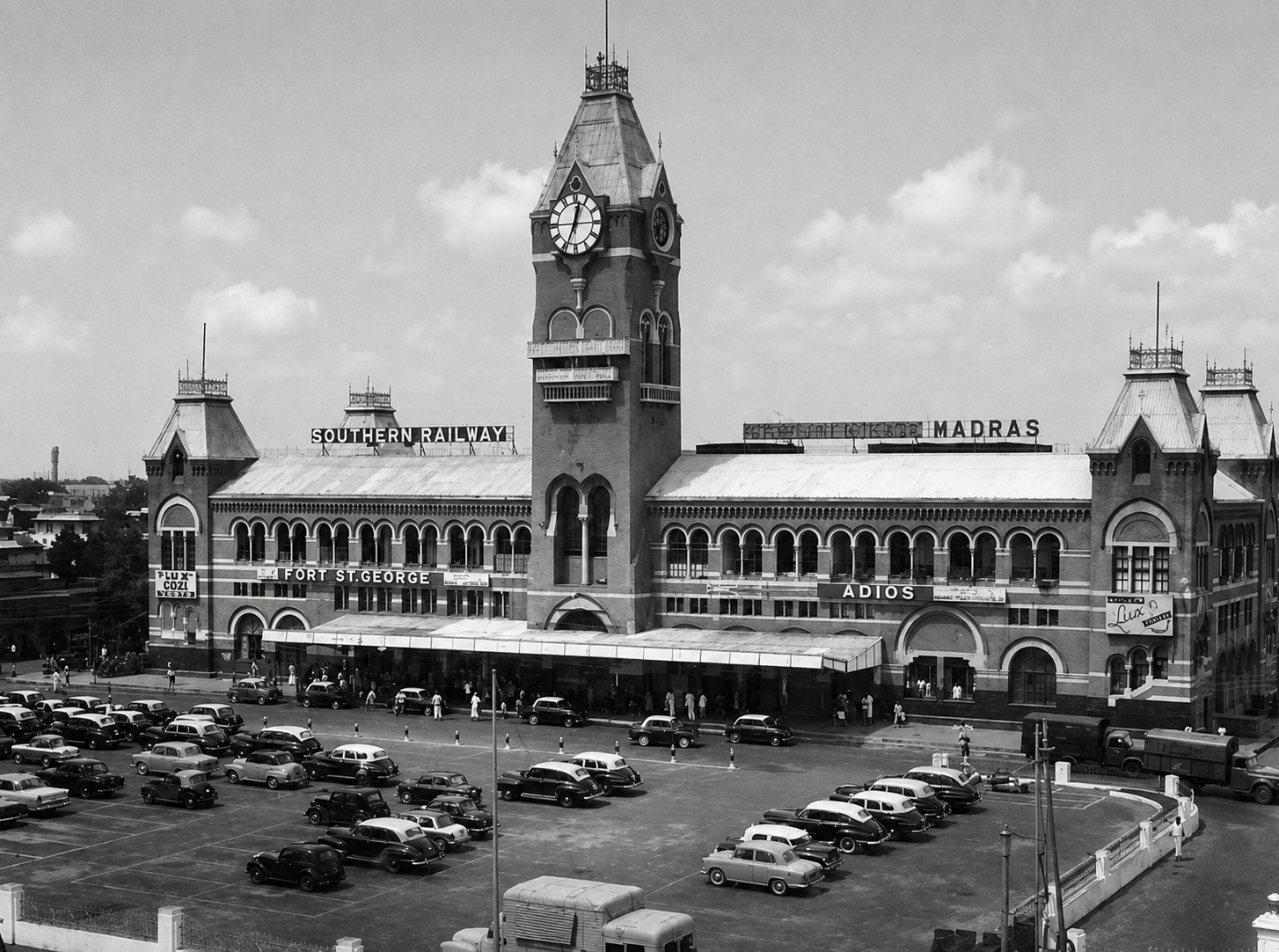
There’s a long-standing joke that Madras is a grand old dame… that she is too placid, stuck and reluctant to change. Well, in a number of ways, she is old. Founded in the 17th century as one of the earliest British settlements in India, Madras has witnessed centuries of history unfold in her terrain. But there was never just one Madras. The city wasn’t built in a day or by a single community. She grew because fishermen cast their nets before dawn, merchants crossed oceans, trains connected distant towns, visionaries built clubs and landmarks that shaped its citizens’ sensibilities, and thinkers exchanged ideas beneath ancient trees that gave breath to its identity. Together, these stories shaped the city we now call Chennai. This Madras Week, look beyond the familiar landmarks and discover five places that reveal the stories that built our city.
1. Kaasimedu fishing grounds
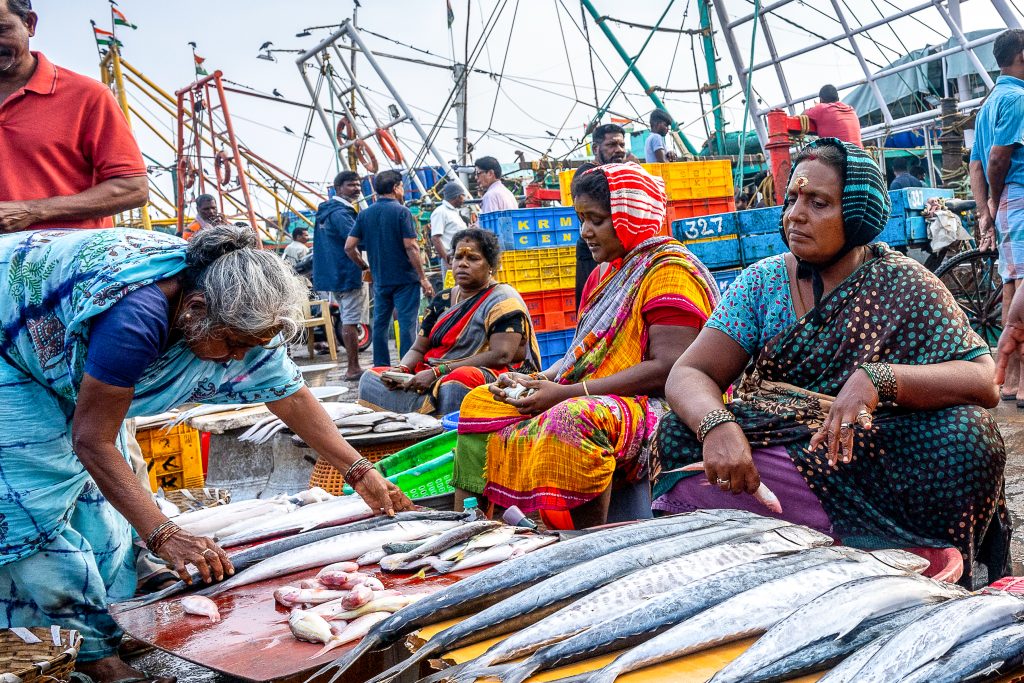
Long before a set of villages became Madras, fishing communities lived their extraordinary lives by mastering the language of the tides, the winds and the moods of the Bay of Bengal. When the city expanded under British rule, many of these families were relocated to move northwards, eventually finding a new home along the shores of Kasimedu.
Construction of a dedicated fishing harbour at Kasimedu began in the 1970s, and after years of work it became operational in 1984. Today, Kasimedu has grown into Tamil Nadu’s largest mechanised fishing harbour and the beating heart of Chennai’s seafood trade. It is not merely a relic of the past; it is a heritage still very much alive.
Well before dawn, the harbour explodes with teeming life as boats heavy with the night’s catch glide ashore and nets are stitched for yet another sojourn into the deep sea. Auctioneers call out prices above the cries of gulls, ice is shovelled into waiting trucks, and the scent of salt hangs thick in the morning air. Nearly 30,000 people pass through these waterside lanes each day, their livelihoods tied to the sea.
If you want to experience this smorgasbord of history, get here before sunrise – with plenty of change for shopping.
2. Armenian Church
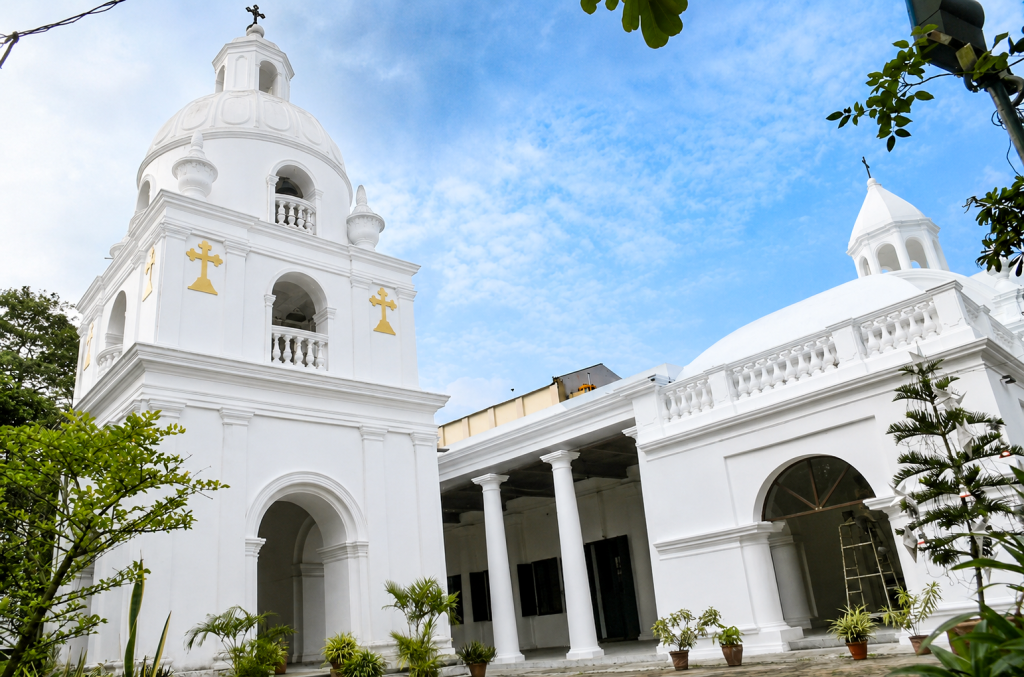
Let’s leave the aromatic and sustenance providing fishing grounds and step into a quieter realm. Tucked away in the bustling lanes of George Town lies one of Chennai’s quietest treasures, a modest, almost diminutive church serving as a reminder that Madras was once one of Asia’s great trading ports, of the Armenian ships that once connected Madras to the rest of the world. Built in 1712, it commemorates the Armenian merchant community that settled in Madras. Despite being just a stone’s throw away from the uber busy area of Parry’s Corner, the premises is peaceful, a hidden oasis amid the bustle of George Town. It has a quiet courtyard and possesses six large bells, which count as among the oldest in the city. Constructed on the graves of 300 Armenians who traveled to India for trading, the church is accessed from a chaotic lane but as soon as you enter, all the noise fades away, making you feel as if you have entered another dimension, perhaps one belonging to the past.
3. Royapuram train station
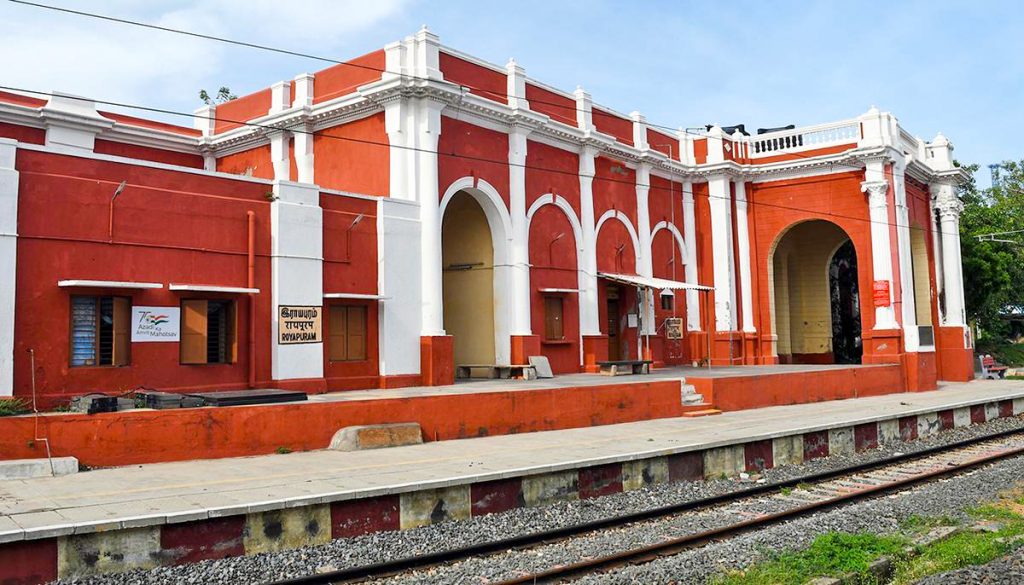
Did you think Central station was the oldest station in our state? No! Long before the bustle of Chennai Central, there was Royapuram. In 1856, beneath its graceful arches and Ionic columns, South India’s first passenger train sped towards Wallajah Road near Arcot, heralding a new age of transport. For a city built by the sea, the railways opened another horizon, shrinking distances and knitting together towns across the Madras Presidency. Royapuram thus remained the major gateway to Madras for decades, transporting goods from distant markets, government officials from their postings, and travellers arriving through its stately portico. Its lofty ceilings and elegant colonnades provide testament to an empire that believed the railway would reshape the subcontinent (and did). Today, Royapuram is the oldest surviving railway station in India, a reminder of the time when trailblazing developments kickstarted our city. While newer stations grew around it and Chennai Central took the spotlight, Royapuram remained as a stable, stately presence of times past and memories remembered. A Grade I heritage building, it exists today not merely as a station, but as a monument to the vision that connected South India, one steam whistle at a time.
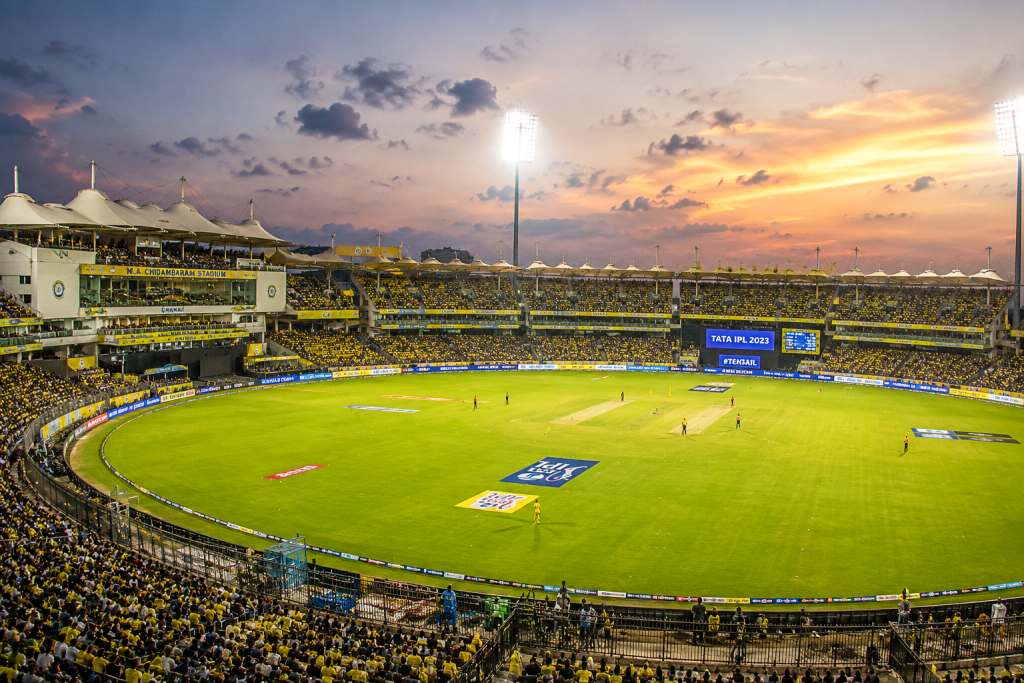
4. Chepauk Stadium
When the OG Madras Cricket Club was looking for a permanent home in the 1860s, Chepauk wasn’t the first choice. The government eventually allotted the land, as officials wanted to block rear access to the Chepauk Palace. A political decision unexpectedly gave Madras one of the world’s great cricket venues which became the birthplace of organized cricket in South India.
British official John Pennycuick – yes that Pennycuick, who built the engineering marvel of Mullaperiyar Dam and saved lakhs of Tamilians from famine – was not only a visionary who stood tall before naysayers that the wild Periyar river can never be dammed, he was also a passionate cricketer; as secretary of the Madras Cricket Club, he acquired the Chepauk grounds which eventually evolved into today’s M. A. Chidambaram Stadium.
A true Madrasvaasi will never miss watching a match at Chepauk at least once in their lifetime! Though general tours are not allowed, you can visit by purchasing tickets for international matches, domestic tournaments, or Indian Premier League (IPL) games. Tickets are generally sold online through authorized platforms like BookMyShow.
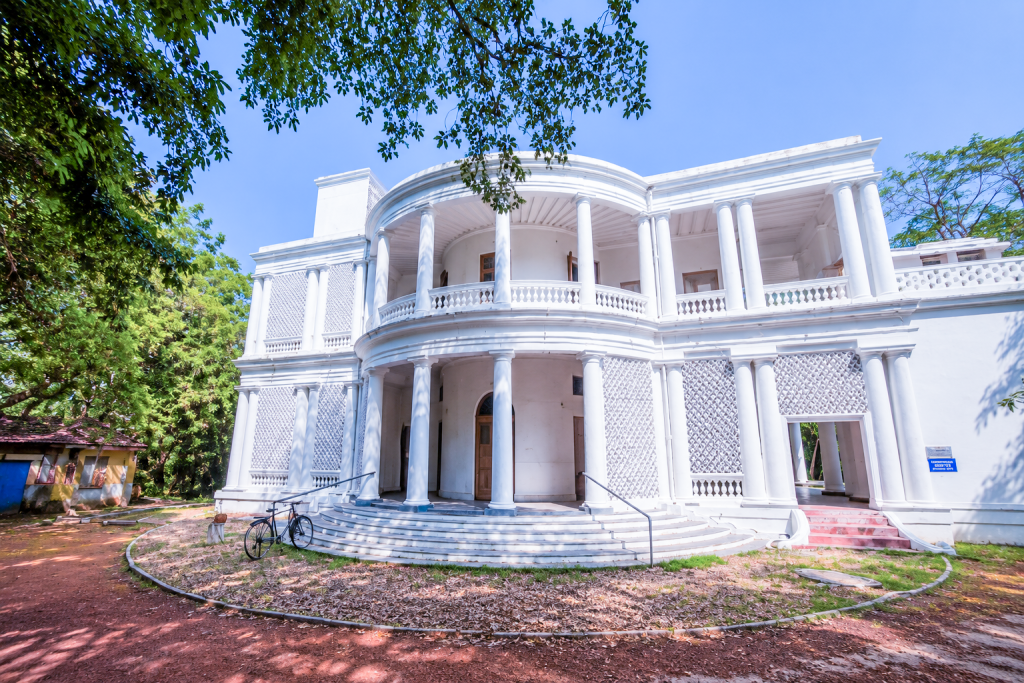
5. The Theosophical Society
You will never believe when the traffic-snarled Sardar Patel Road culminates into one of Chennai’s quietest places. The Theosophical Society in Adyar, characterized by the gentle rustle of tree murmurs, myriad birdsong and the pragmatic flow of the Adyar River (“Coovum” which has its own history, if you have seen the movie Madrasapattinam) is spread across 260 acres of woodland, a green sanctuary accessible to all within reasonable hours.
At the heart of the campus stands the legendary Banyan tree. Though the trunk was felled by a cyclone, its vast roots live on, a formidable symbol of resilience and legacy. Shrines representing many of the world’s faiths grace the grounds, reflecting the Society’s belief in universal brotherhood.
Founded in New York in 1875, the Theosophical Society chose Adyar as its international headquarters in 1882, transforming a riverside estate into a meeting place for philosophers, scholars and seekers from around the world. Here, Annie Besant championed education, social reform and the Home Rule movement, while the renowned Adyar Library hosted priceless manuscripts and rare books.
If Kasimedu told the story of how Madras earned its living and Royapuram how it found its way through transport, Adyar reminds us that great cities are also built by ideas.
Madras is often remembered for Marina Beach or Fort St. George. Yet its true character lies in places that are tied irrevocably with history and culture. So, this August on Madras Day, take a detour from the familiar. You may discover that the city’s greatest stories are still waiting to be told!