

From the thundering cascades of Great Falls to the storied halls of Mount Vernon, I recently discovered that the Old Dominion still has the power to astonish. The wheels touched down at Washington Dulles just as the late afternoon sun was painting long shadows across the tarmac. Eighteen hours earlier, I’d boarded a Lufthansa flight in Bangalore, chased the sunrise over the Arabian Sea, and watched Europe slide beneath the clouds during our Frankfurt layover, I was finally stepping into the arrivals hall with that particular bone-deep weariness only transcontinental travel can produce. I had one thought in my mind…Virginia was calling.
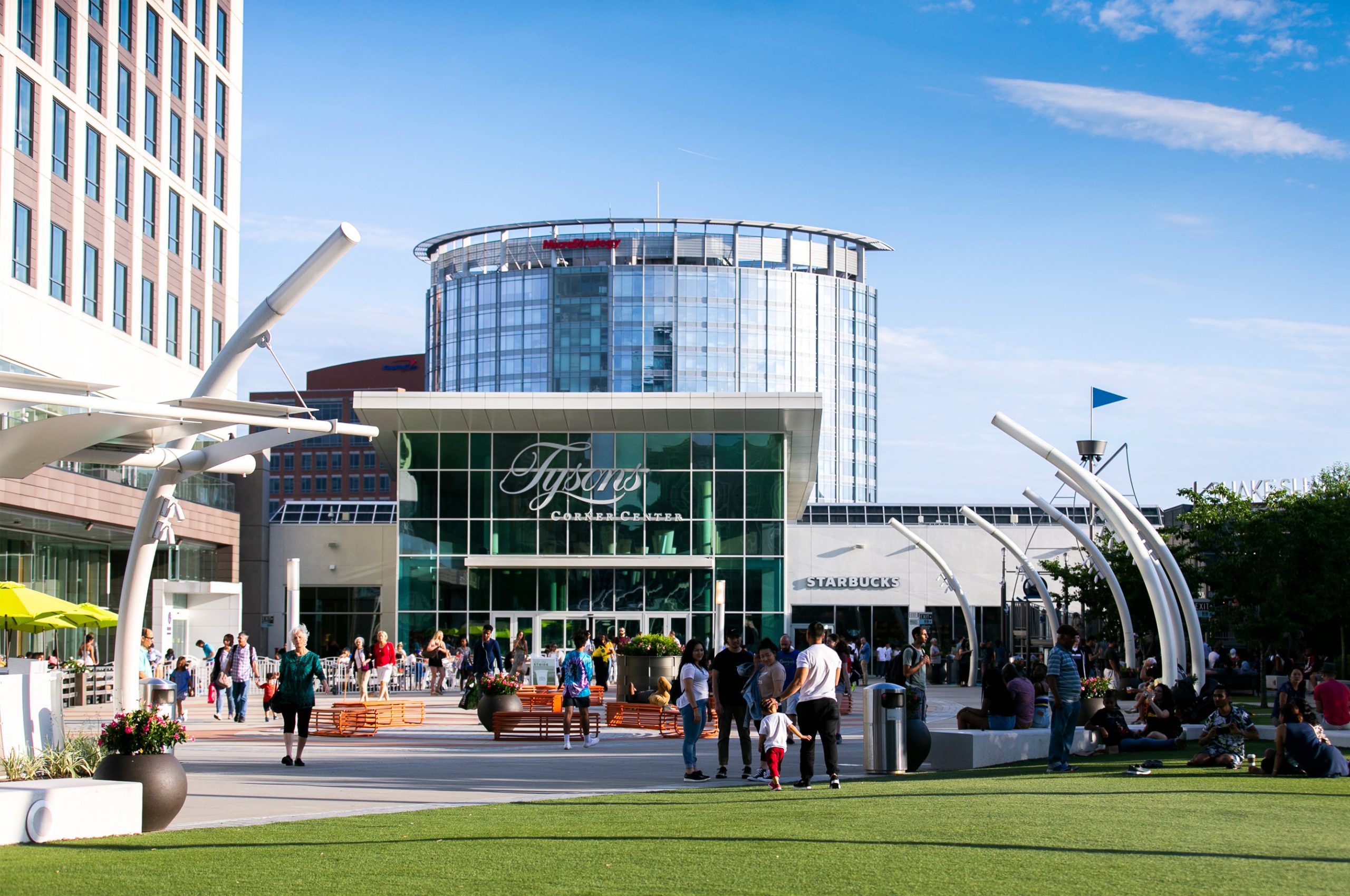
My base for the first leg of this journey was the Hyatt Regency Tysons Corner Centre, a sleek, modern property that sits directly connected to one of the East Coast’s most impressive shopping destinations. I’ll admit, I wasn’t expecting to indulge in retail therapy on my first evening here. But there’s something about jet lag that makes wandering through three hundred specialty stores feel almost meditative. Tysons Corner Centre unfolded like a small city: department stores anchored each corner, restaurants spilled out onto open-air plazas, and the evening crowd moved with that particular American energy, unhurried but purposeful. I found myself lingering over my butter garlic prawns at Barrel & Bushel, watching the lights come up across PenFed Plaza, already feeling the fatigue lift. I only wished I’d had another day to explore and shop here. But Virginia had other plans for me.
The Roar of the Potomac
This was my first visit to Virginia. Morning arrived crisp and clear, the kind of Northern Virginia day that makes you want to be outdoors. Our destination for the day was the Great Falls Park, a mere 15 miles from the nation’s capital yet a world removed from its marble corridors and motorcades.
Ranger Mark Maloy met us at the visitor centre with the easy confidence of someone who has spent years learning every contour of this landscape. “People come here expecting a waterfall,” he said, leading us down the trail toward the overlooks. “What they find is something wilder.” He wasn’t exaggerating.
At Great Falls, the Potomac River doesn’t simply fall, it hurls itself over a series of steep, jagged rocks with a force that you feel in your chest before you see it. The water builds speed through the narrow Mather Gorge, churning white against ancient stone, the sound rising to a roar that drowns out everything else. There are three overlooks here, each offering a different vantage point. The first gave us the wide panorama, the classic postcard view. The second brought us closer, close enough to feel the mist on our faces. The third…stopped me in my tracks.
From that final overlook, the cascades seemed to stretch endlessly, layer upon layer of falling water disappearing into the gorge below. I stood there longer than I’d planned, watching the Potomac do what it has done for millennia.
Before we left, Ranger Maloy pointed out the remnants of the Patowmack Canal, George Washington’s ambitious engineering project from the 1780s, designed to make the river navigable for commerce. The old locks are still visible, moss-covered and silent now, a reminder that this landscape has been shaping American ambition since before there was an America.
Touching the Edge of Space
I thought I was prepared for the Smithsonian’s National Air and Space Museum Steven F. Udvar-Hazy Centre. I’d seen photographs. I’d read the statistics, nearly 3,000 artifacts spanning the entire history of human flight. But nothing prepares you for walking through those hangar doors.
Our guide, Alison Wood, smiled as our group collectively inhaled saying “Wow”. “That’s the reaction we get. Wow. It’s almost always the first word,” he said.
The Udvar-Hazy Centre is the lesser-known sister site to the famous Air and Space Museum on the National Mall, and in many ways, it’s the more spectacular of the two. Located near the end of Dulles International’s runways, you can actually watch commercial jets taking off and landing from the observation tower, the facility houses the artifacts too large or too numerous for the downtown museum.
The Space Shuttle Discovery dominates the James S. McDonnell Space Hangar, its thermal tiles still showing the scorch marks of 39 missions and nearly a year spent in orbit. I stood beneath its belly, craning my neck, trying to comprehend the violence of re-entry that those tiles absorbed. Nearby, a NASA android, an early prototype for robotic space exploration, waited in eternal patience.
In the aviation hangar, history took a darker turn. The B-29 Superfortress Enola Gay sits in careful preservation, the aircraft that dropped the first atomic bomb on Hiroshima. It’s smaller than you’d expect, almost delicate-looking, which somehow makes its history more unsettling. Our group fell silent in front of it.
But it was the SR-71 Blackbird that held me longest. That sleek, impossibly black silhouette, still the fastest air-breathing manned aircraft ever built, looks less like something engineered and more like something dreamed. Designed in the 1960s, it could cruise at three times the speed of sound at the edge of space, outrunning any missile fired at it simply by accelerating away. Standing beneath its swept wings, I felt the particular thrill of being near something that shouldn’t quite be possible.
By the time we left, my phone gallery was bursting. I could have spent another two hours there easily.
In Washington’s Footsteps
Lunch was waiting for us at Mount Vernon Inn, on the grounds of George Washington’s estate, and I arrived hungry enough to be adventurous.
“You have to try the Virginia Peanut Soup,” our hostess said, with the knowing smile of someone who’s watched countless visitors take their first spoonful. “And the hoecakes with honey, that was Washington’s favourite.”
The soup arrived in a wide bowl, the colour of burnished gold, steam curling into the air. I’d never encountered peanut soup before, and I’ll confess to a moment of hesitation. But one spoonful dissolved any doubt. Rich, creamy, with a depth of flavour that builds slowly across your palate, not sweet, not savoury, but something in between that hinted at the ingenuity of early American kitchens. My fish was grilled to perfection. The hoecakes, simple cornmeal cakes, crisp at the edges and tender within, made the perfect vehicle for raw honey, and I understood immediately why the Father of the Country requested them repeatedly.
Properly fortified, I walked to George Washington’s Mount Vernon itself.
I’ve visited historic homes before. I’ve walked through restored mansions and admired period furniture. But Mount Vernon operates on a different register entirely. Perhaps it’s the scale, the estate sprawls across five hundred acres overlooking the Potomac, encompassing the mansion, restored gardens, a working 18th-century farm, and dozens of outbuildings. Perhaps it’s the meticulous restoration, which extends to the crops growing in the fields and the heritage breeds grazing in the pastures. Or perhaps it’s simply the accumulated weight of knowing that this was where Washington spent his happiest years, that these were the views he returned to whenever he could escape the burdens of command.
The mansion itself anchors the estate, its distinctive red roof and white wooden columns instantly recognisable from countless paintings and photographs. Inside, the rooms are surprisingly intimate. Washington was a tall man for his era, and you can see where the doorways and ceilings were built to accommodate him. The study where he managed his correspondence, the parlour where he received visitors, the beautiful blue room, the bedroom where he died in 1799, each space carries a presence that transcends its furniture.
Outside, the New Tomb lies at the end of a shaded path. George and Martha Washington rest here together, behind a brick enclosure and a simple iron gate. Wreath-laying ceremonies take place year-round, but even without ceremony, the spot invites reflection. I stood there in the afternoon quiet, listening to the birds and the distant sound of the Potomac, thinking about legacy and mortality and the strange persistence of memory.
But Mount Vernon isn’t content to be merely a memorial. The estate’s newest exhibition, “George Washington: A Revolutionary Life,” opens in July 2026 with an ambitious reimagining of how we tell the story of America’s first president. Blending rare artifacts with interactive storytelling and cutting-edge media, the experience promises to explore not just Washington’s achievements but the personal qualities, decisions, and contradictions that defined him, including the perspectives of the enslaved community that lived and laboured at Mount Vernon.
The Revolutionary War Encampment offers a more tactile kind of history. Here, you can step inside soldiers’ tents and officers’ quarters, handle the actual implements of camp life, wash clothes in the laundry yard, and examine the cooking utensils used by the camp followers who travelled with the Continental Army. It’s the kind of hands-on attraction that transforms history from something you read about into something you experience.
An Army’s Memory
The National Museum of the United States Army surprised me.
From the outside, the building doesn’t announce itself as anything remarkable, modern glass and steel, large, sleek and clean. But inside, the scale shifts dramatically. This is the first comprehensive national museum dedicated to the U.S. Army, and it tells the service’s 250-year story through the eyes of the soldiers who lived it.
The exhibits move chronologically, from the Revolutionary War through the present day, but what elevates them beyond standard military history is the focus on personal narrative. Each display centres on individual soldiers, their letters home, their equipment, their fears and triumphs. A multisensory 300-degree theatre plunges visitors into key battles with surround sound and environmental effects that make you flinch. A tranquil rooftop garden offers a contemplative counterpoint, a place to process what you’ve seen.
The museum’s newest addition, “Call to Arms: The Soldier and the Revolutionary War,” examines the Army’s origins with particular depth, appropriate for the nation’s 250th anniversary. And an Augmented Reality Exhibition promises 360-degree realistic recreations of key historical moments that helped forge American democracy.
It was almost closing time in the evening so I couldn’t spend a long time here, as I moved through galleries that contained artifacts I’d never known existed. By the time I emerged, afternoon had turned to evening.
Tuscan Farmhouse, Virginia Soul
Dinner that evening was at Farmhouse Tuscan, where Old World elegance meets contemporary comfort. The space itself evokes the Italian countryside, warm earth tones, rustic wooden beams, that particular European attention to atmosphere that makes a meal feel like an occasion. But the food is grounded firmly in Virginia’s farm-to-fork philosophy. Each ingredient traces back to local cultivators and artisans, people dedicated to their craft and the land they work. The freshest seasonal vegetables, meats sourced from nearby farms, pastas made in-house, it’s the kind of cooking that reminds you why simplicity and quality will always triumph over complexity. I lingered over dessert, watching the last light fade from the windows, already looking forward to the next day’s journey south.
Virginia’s Historic Triangle
Williamsburg, Jamestown, and Yorktown, Virginia’s Historic Triangle occupy a unique place in the American story. This is where England’s colonial experiment took root, where the Revolution was won, where the contradictions and aspirations of a new nation first took shape.
I’ve written extensively about Williamsburg in my previous travelogue, so I won’t repeat myself about the living museum town here. But the American Revolution Museum at Yorktown demands attention, particularly for anyone who considers themselves a history enthusiast.
The museum tells the story of the nation’s founding from the twilight of the colonial period through the dawn of the Constitution and beyond. Indoor galleries feature period artifacts and immersive environments, but the centrepiece is “The Siege of Yorktown”, a film experience with a 180-degree surround screen and dramatic special effects that place you inside the decisive battle that ended the Revolutionary War.
Outside, a re-created Continental Army encampment brings the daily life of an 18th-century soldier into vivid focus. Rangers demonstrate medical treatment of the era (terrifying), camp cooking (surprisingly sophisticated), and flintlock musket firing (exhilarating even from a safe distance). A nearby revolution-era farm, based on a real 18th-century family, shows a kitchen, tobacco barn, and gardens, the kind of immersive experience that makes history real in a way that books and films never quite achieve.
That evening, I dined at Riverwalk Restaurant, nestled along the serene banks of the York River. The setting alone would justify a visit with breathtaking water views, the soft sounds of the current, that particular golden-hour light that Virginia does so well. But the menu delivers equally: fresh seafood pulled from local waters, pasta dishes with seasonal ingredients, steaks prepared with care. Each course became a journey of flavours, amplified by the tranquil beauty surrounding us.
Where the Bay Meets the Ocean
The drive from Williamsburg to Virginia Beach traces the edge of the Chesapeake Bay, the landscape flattening as you approach the coast. I arrived at the Moxy Hotel on the Virginia Beach Oceanfront in that particular mood of anticipation that precedes a beach town, ready for salt air, seafood and the particular rhythm that waterfront communities share.
Virginia Beach has earned its recognition as one of the New York Times’ “52 Places to Go in 2026.” The city sprawls across 35 miles of sandy beaches where the Chesapeake Bay meets the Atlantic Ocean, a geography that creates remarkable ecological diversity and a culinary scene built on some of the freshest seafood on the Eastern Seaboard.
My first stop was Chick’s Oyster Bar, a Virginia Beach institution that’s been holding down the waterfront for over 25 years. What started as a seafood shack has quietly grown into something of a pilgrimage spot, and I understood why the moment I found a seat on the deck. Boats drifted out toward the Bay, the air smelled like salt and old wood, and I ordered exactly what anyone around me seemed to be having: fresh oysters, local catch, cold beer. No menu deliberation needed. What made it surreal, though, was the view on the other side, sitting pretty across the waterway was the home of Pharrell Williams. Just a Grammy-winner casually being your neighbour while you slurp oysters and tuck in some calamari. Very Virginia Beach, somehow.
The afternoon led to an unexpected discovery: Edgar Cayce’s Association for Research & Enlightenment (A.R.E.), the international headquarters of the man known as “The Sleeping Prophet” and the Father of Holistic Medicine. The complex houses one of the world’s largest metaphysical libraries, including more than 14,000 of Cayce’s insightful readings. Even for the sceptically minded, there’s something compelling about exploring the legacy of someone who shaped so much of modern alternative health philosophy.
From there, I drove through the ViBe Creative District and it doesn’t take long to understand why locals are fiercely proud of it. Every surface feels intentional: murals climb building walls, spill onto light fixtures, even sprawl across sidewalks, turning an ordinary neighbourhood stroll into something closer to an open-air gallery. The annual Mural Festival adds ten new works each year, so the place is always mid-sentence, always becoming something new. What surprised me was how naturally the surf culture threads through it all, coastal edge, 17th Street, shops that belong equally to the beach crowd and the creative one. ViBe doesn’t separate those identities. It’s where Virginia Beach’s artistic soul and its board-shorts energy just coexist.
Afternoon Tea with Thomas Jefferson
Richmond’s Jefferson Hotel represents a different kind of Virginia entirely, the grandeur of the Gilded Age, preserved and polished to a gleam. Opened in 1895, this Beaux-Arts and Renaissance Revival landmark has welcomed dignitaries, celebrities, and discerning travellers for more than a century. But I had come for one particular experience: Afternoon Tea in the breathtaking, light-filled rotunda.
The setting defies adequate description. A stunning stained-glass dome arches overhead, filling the space with diffused natural light. A marble statue of Thomas Jefferson presides over the proceedings with quiet dignity. Live music drifts through the air with delicate, unobtrusive, perfectly calibrated. And then the tea service arrives.
This is not casual tea-drinking. This is ceremony with silver pots and fine china, tiered trays bearing finger sandwiches and scones and petit fours, each element presented with meticulous attention. I found myself slowing down, savouring not just the flavours but the entire experience, the deliberate elegance that the Jefferson has cultivated for over a century.
A quick stop at Lolly’s Creamery provided the perfect counterpoint with artisanal ice cream in creative flavours, the kind of quality that justifies queuing. Sometimes contrast is its own pleasure.
Nikkei Nights and Historic Ghosts
My final evening dinner was at Orion’s Roof, where Asian-fusion dining reaches new heights. The restaurant with a 360 degree of the ocean celebrates the best of land and sea, with a particular focus on sushi and sashimi prepared in the Japanese-Peruvian Nikkei tradition, a culinary style that originated with Japanese immigrants to Peru and has evolved into something singular and extraordinary.
Across the street, the great lawn of the Historic Cavalier Hotel beckoned. This Marriott Virginia Beach Oceanfront sister property dates to the Roaring ’20s, when it welcomed 10 U.S. Presidents and countless stars of stage, sports, and screen. The grande dame of the oceanfront has been restored to its original glory, and even an evening stroll across its grounds evokes an era of glamour we rarely encounter today.
The Pull of Virginia
As I packed my bags the next morning, watching the sunrise paint the Atlantic in shades of rose and gold, I found myself cataloguing everything Virginia had offered in just a few days. The thundering power of Great Falls, the haunting silence beneath the Space Shuttle Discovery, the rich, unexpected pleasure of Virginia Peanut Soup, the weight of history at Washington’s tomb, the salt air of Virginia Beach, the elegance of Jefferson Hotel tea service and the thousand small memorable moments, a sunset over the York River and the way the Blue Ridge Mountains appeared and disappeared in the distance as I drove.
Virginia calls itself the “Old Dominion,” and it’s easy to assume that label refers only to the past. But what I found was a state that holds its history as a living thing, continuously reinterpreted, continuously relevant. From Revolutionary War encampments to Augmented Reality exhibitions, from colonial recipes to Nikkei fusion, Virginia understands that heritage isn’t a museum, it’s a conversation.
That’s what Virginia does. It gets under your skin. And it waits, patiently, for your return. Virginia is for lovers as it has something for everyone… a wide range of experiences with rich history (more than 400 years of history come alive through iconic sites), serene natural beauty, an unparalleled culinary scene (known as the “Birthplace of American Cuisine”, it offers unparalleled culinary delights), and outdoor activities (year-round outdoor activities, with numerous state and national parks, and nearly 900 kms of the Appalachian Trail) from beach getaways (over 100 kms of shoreline) to mountain adventures.
My flight home would take me back to Bangalore and then to Chennai, back to the familiar rhythms of my own life. But part of me remained behind, walking the gardens at Mount Vernon, visiting Geroge Washington’s house and Jamestown, where the first permanent English settlement made it the birthplace of America, standing in the mist at Great Falls and feeling my feet on the soft sands at the beautiful beaches in Virginia, watching the ocean waves come and go.