

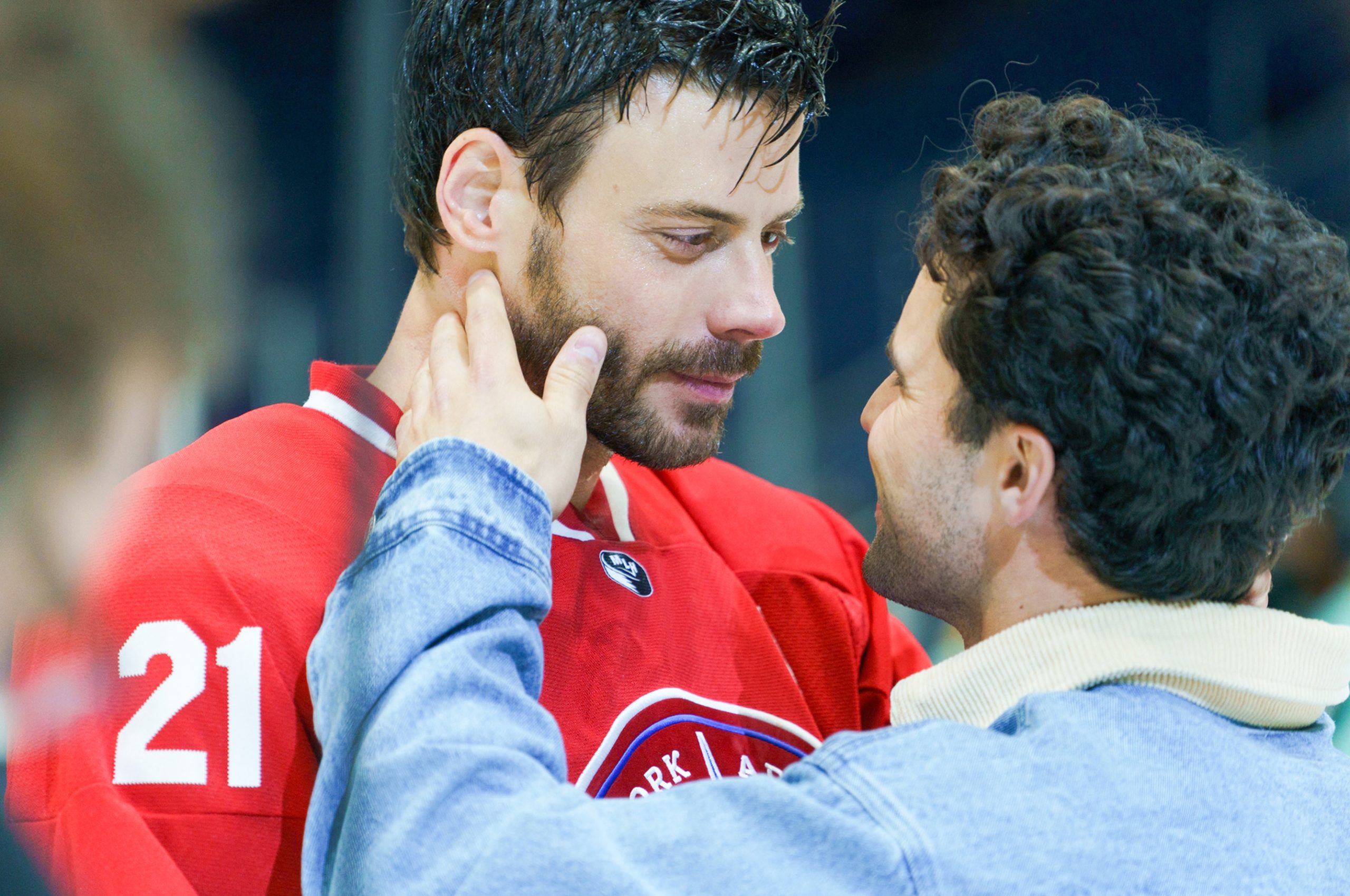
When Heated Rivalry won the prestigious Peabody Award and joined the hallowed list of queer dramas like Baby Reindeer and Fellow Travellers, more than a few stunned jaws touched floors, especially of those who had dismissed the series after barely two episodes.
“People have reduced the show to p*rn, and reduced women to p*rn consumers. But it is so much more,” says Surabhi Katyal, therapist. Indeed, the modest adaptation of a hockey romance book has become a full-fledged global phenomenon, leading the way to explosive cultural commentaries, dominating awards conversations, spawning spirited online discourse, raves and watch parties across continents.
The show’s impact has even spilled into the real world, with athletes publicly crediting it for inspiring their own coming-out. So how exactly did this niche queer sports drama become such a global sensation?
HOW IT ALL BEGAN
Rachel Reid, Canadian author and lifelong hockey fan, began writing the first book of her Game Changers series as a hobby. In Macleans.ca, she writes, “(I was aware) of the problems with the sport’s culture more broadly. I thought a lot about how difficult it would be to be a closeted pro player—and what it might be like if they came out.” But she never imagined it could be made into a tv show, because she thought the books were just too raunchy.
Whether in spite of it or because of it, the books became a hit with queer romance readers. Out of the seven, it’s the second book, Heated Rivalry, featuring the story of two (male) hockey players belonging to rival teams, that has become the most popular in the series. Jacob Tierney, Canadian actor, producer and a gay man, was so impressed when he read it, he slid into Reid’s DMs and optioned it.
A SHOW RUNNER WITH PRINCIPLES
Tierney had his own hero’s journey while making the show. He refused to bow down to industry expectations until he found a network, Crave, and government grants, which gave him both the freedom and funds to shoot the show according to his own vision.
Tierney said later that many were “titillated and interested” by the story, but wanted to make major changes. He refused, arguing that the book had a dedicated fanbase since the pandemic (it was published in 2019) because of what it already was. His now famous quote is a founding principle for everyone who wants to adapt bestselling books: “What is the point of IP if you’re not respecting the people that made the IP valuable, which is the fans?”
But of course, without the actors, there would be no show. Tierney really hit the casting jackpot when he hired unknown talents Connor Storrie and Hudson Williams to bring fan-favourite characters Ilya Rozanov and Shane Hollander to life. These two Gen Zers and former waiters played their roles so well they are now the most sought after in Hollywood.
WHY IS THE SHOW A HIT IN INDIA?
It is perhaps less surprising that the show became a massive success in parts of the West, where there are, comparatively, more queer-friendly spaces. But why has Heated Rivalry found such a passionate fanbase in India, where queerphobia still remains deeply normalised? And perhaps the bigger question is this: why are so many women – who form the largest demographic of the show’s audience – so invested in queer romance at all?
Food and travel blogger Trupti Marolia, who runs an Indian fan account dedicated to the show on Instagram, says, “When I watched the finale, the storytelling simply blew me away. I immediately made a reel sharing my thoughts, and it amassed nearly half a million views. I was so happy to find like-minded fans of the show, and it inspired me to create this fan page.
“Yes, I do get hate in my inbox, mostly from men, never from women, make of that what you will, but the good comments vastly outnumber the bad ones. The show is about people unconditionally loving each other, supportive parents, and pure queer joy. Why shouldn’t I watch it! We should all be watching inclusive, game-changing shows with happily-ever-after endings.”
THE GIST OF IT
Inceldom and manospheres are erupting across the globe, and toxic ideas of masculinity, the toughnesss, the grit, the violence of it is being spoonfed even to children. “In the midst of it, gay romances allow women to witness and vicariously experience something they search for in their own relationships, men’s tenderness,” opines Surabhi, whose clients include queer minorities.
“Women are paid less than men, respected less than men, believed less than men,” says Nisha, an IT specialist whose favourite pastime is watching multicultural BL media. “I read fiction to escape reality and maybe that’s why I’m drawn to queer stories, which blessedly lack the traditional gender hierarchies that shape heterosexual relationships.”
Perhaps, it’s as simple as that. The genre of romantic fiction is all about gratifying, heart melting fantasy. The biggest satisfying fantasy for an Indian woman, especially, has to be a happily-ever-after romance trope featuring two characters who are truly equals, without the expectation of one of them giving up their career to take care of children or be the unpaid labourer of the patriarchal family system.