

Influencers are returning to photos after burning themselves out churning out Reels. “Baddies” and Bollywood stars are dissolving their face filler. The full beat has been replaced with the clean girl aesthetic. Single people are deleting dating apps, ready to make connections face to face. Gen Alpha kids are embracing dumb phones and digital cameras, nostalgic for a time they never knew.
It’s clear that one of the themes for 2026 is a return to basics. Whether it’s beauty, technology, or how we interact with each other, people seem to be yearning for simplicity, privacy, and authenticity.
I might be biased in forecasting this as a trend, because it aligns neatly with my personal philosophy. When I compare my current habits to my pre-pandemic lifestyle, the change is drastic. Back then, I was the ideal target audience for beauty marketing: makeup tutorial videos sent me scouring e-commerce sites for products, or using my husband and parents as mules for bringing back hauls from abroad that I couldn’t source locally. I tried undereye filler, and went back twice more to dissolve and refill until the quantity was just right. I patronised fast-fashion sites with no concerns for the quality of the clothing, only excitement that they fit me after losing the weight from back-to-back pregnancies.
I also shared my life plentifully on social media: stories galore of my two sons being cute while wreaking havoc; selfies of my full face of makeup (because what was the point of mastering contouring if you didn’t get to show it off?); and boomerangs from girls’ nights and family holidays.
It tickles me to observe how different I am now. I rarely buy beauty products, instead sticking to the same old ones that have served me well. When my husband travels abroad, I only ask him to bring back chocolate and candy–for the kids, of course! I let my filler dissolve naturally and never went back for more. And if you read my previous column on beauty trends to say goodbye to, you’ll know I even eschew chemical hair processing treatments, because of the unnatural look they often create. As for clothes shopping, a shift from quantity to quality has made me choosy – and I love that my closet is tidy and manageable, without overflow.
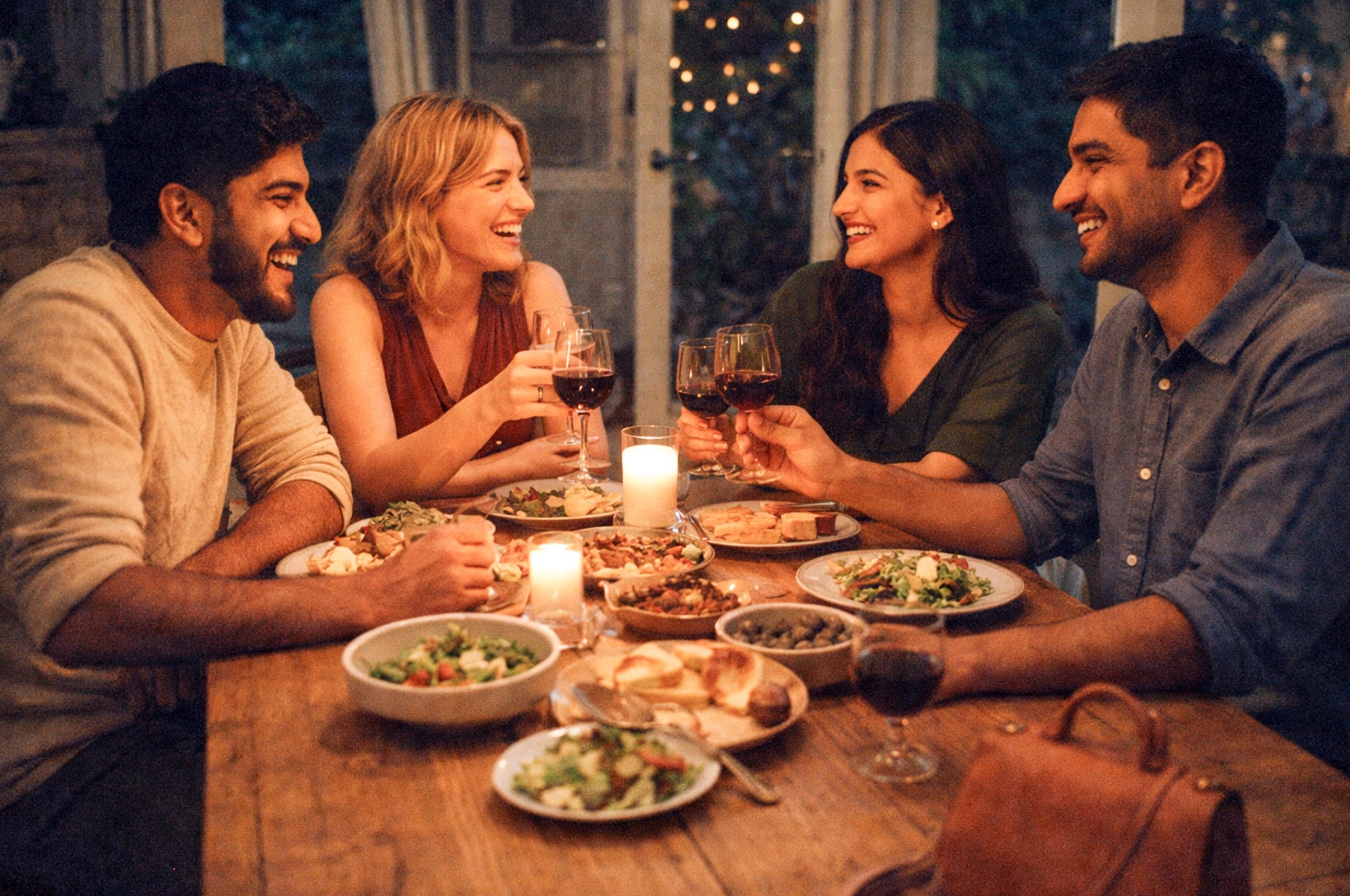
The biggest change of all, however, is how little I post on social media. While I’ll always love how it lets me share tidbits of my life and stay connected to friends around the world, there is less and less that I feel compelled to put out there. My children, for one, are old enough to have a say in the matter – and their say is usually “no” when it comes to posting them. My subtle, standard make-up and outfits don’t merit selfies. And when I am socialising or enjoying a good meal, the sign of a really great gathering is phones staying inside handbags, with no one clamouring “Let’s take a photo!” Instead, we stay present and enjoy the moment, rather than fixate on capturing it.
Interestingly, even people who make their livelihood on social media are rebelling against the algorithm, choosing to post what feels authentic to them rather than constantly keeping up with trending Reels. And who can blame them? It used to be that a single beautiful image was the standard, and there was pleasure (and slowness) in staging the photo, shooting it, and maybe doing a bit of editing. But with the pivot to short-form video, content creators have to worry about audio, filming, editing, and syncing. A single post can start to feel like a mini-production, only for the result to be “old” in a day or two, because it’s already time to post again. Creative burnout is inevitable, and for many, it’s nudging them back to the style of content they began with in the first place.
If you notice any of your favourite creators going back to basics this way, support them with real engagement. Together, audiences and creators might just wrestle the algorithm back into something fun, and genuinely beneficial, rather than a content-churning mill.
The return to simplicity is also evident among the youngest technology users. In the US, many schools have instituted smartphone bans that led to students seeking out flip phones, digital cameras, and even portable CD players. Some youngsters are choosing this on their own, too, fed up with the hold smartphones have on their time and attention. As a mother this fills me with hope, because even here in Chennai, parents worry that school-aged children are interacting with each other more over WhatsApp than in person. We yearn for our children to experience childhood the way we did: getting together without any agenda, just chatting or playing made-up games, with any boredom forcing more interaction rather than retreating into your devices. In schools that have restricted smartphone use, many educators have described improvements in focus, behaviour and socialising. If that holds, it’s one trend I hope lasts far beyond 2026!
And then there’s dating – perhaps the most exhausting “optimisation project” of all. After years of treating romance like a shopping app (swipe, shortlist, compare, repeat), it’s no surprise that people are tired. Dating apps promised efficiency, but they also quietly trained us to see human beings as endless options, and to dismiss someone over a single awkward line, a photo we didn’t love, or the dreaded “bad texter” label. More and more singles seem to be choosing something that sounds almost radical now: meeting people the old-fashioned way. Saying yes to a friend’s dinner even when you’d rather stay in. Making eye contact at a café. Joining a class not because you’re trying to “meet someone,” but because you’re trying to have a life. The irony is that the less we chase a curated connection, the more room we create for the kind of chemistry that can’t be contained to a handheld device.
At the risk of sounding like a sanctimonious elder, I find this return to basics genuinely comforting. Not because the past was perfect, but because it was quieter: less performative, less frantic, and far less obsessed with constant proof. A simpler beauty routine, a less cluttered wardrobe, a dinner table where no one reaches for their camera – these aren’t moral victories so much as small acts of reclaiming our attention. And perhaps that’s what this whole trend is really about: choosing to be a participant in our own lives again, rather than a documentarian. If 2026 brings us a little more privacy, a little more presence, and a little more willingness to look up from our screens and meet each other as we are – unfiltered, unedited, and imperfectly human – then I’m all in.